SmartPOS and RestoPOS Desktop POS are two separate products. Both run on Windows at your counter. The difference is where your data lives and how you want to run.
Part of cloud RestoPOS · subscription
Choose this if you want to see your restaurant while you are away, run more than one branch, or use the RestoPOS apps together.
About Desktop POS →Standalone · one-time licence
Choose this if you want everything on one machine, no monthly fee, and nothing about your restaurant leaving it.
Twenty-two modules, all running on the counter PC. Which ones your licence unlocks depends on the plan you buy — the four marked CORE are always on. Each is shown in full below, with the screens it actually uses.
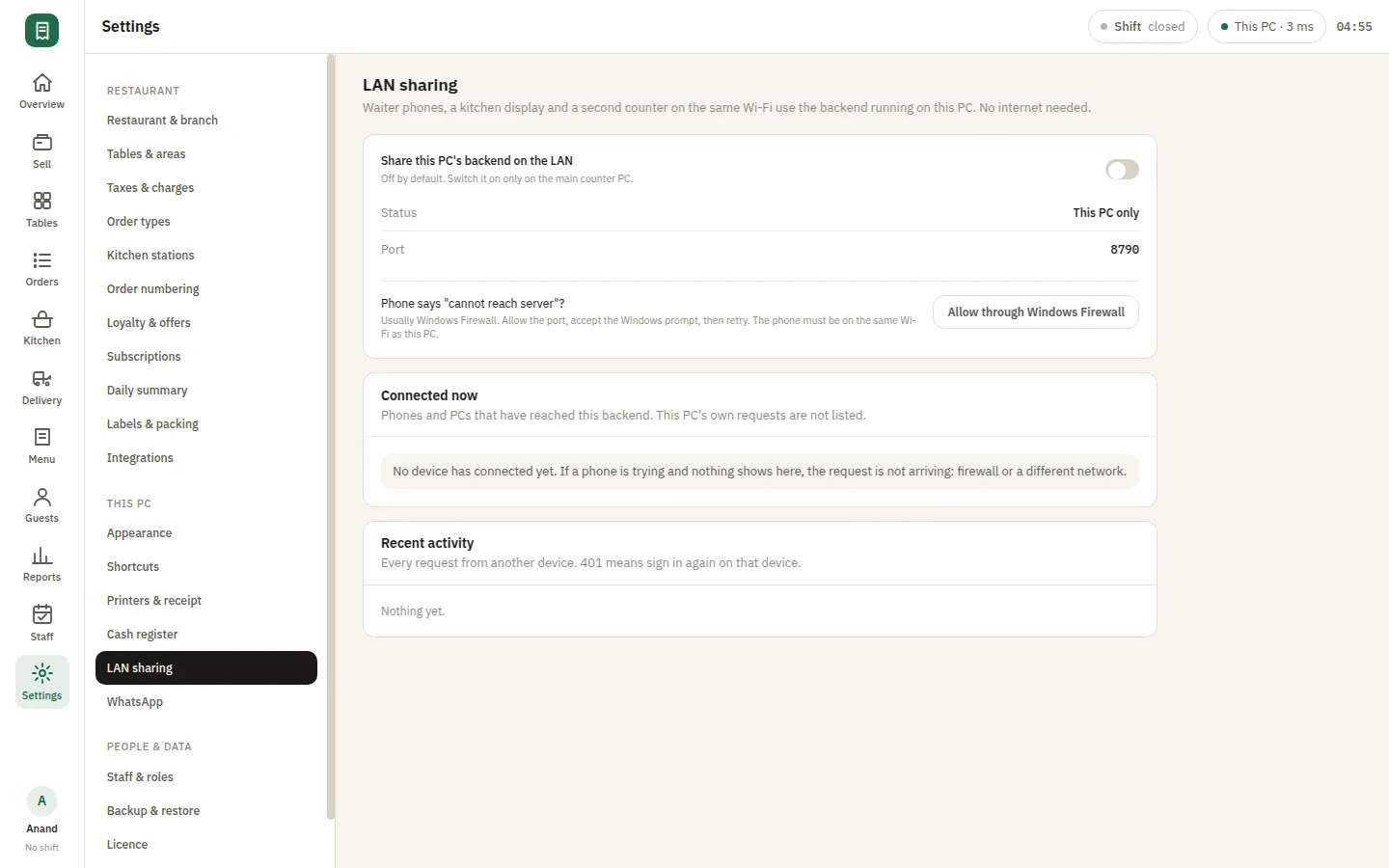
Switch on LAN sharing and the counter PC serves the rest of your floor over your own Wi-Fi. No internet, no extra hardware, no per-device fee.
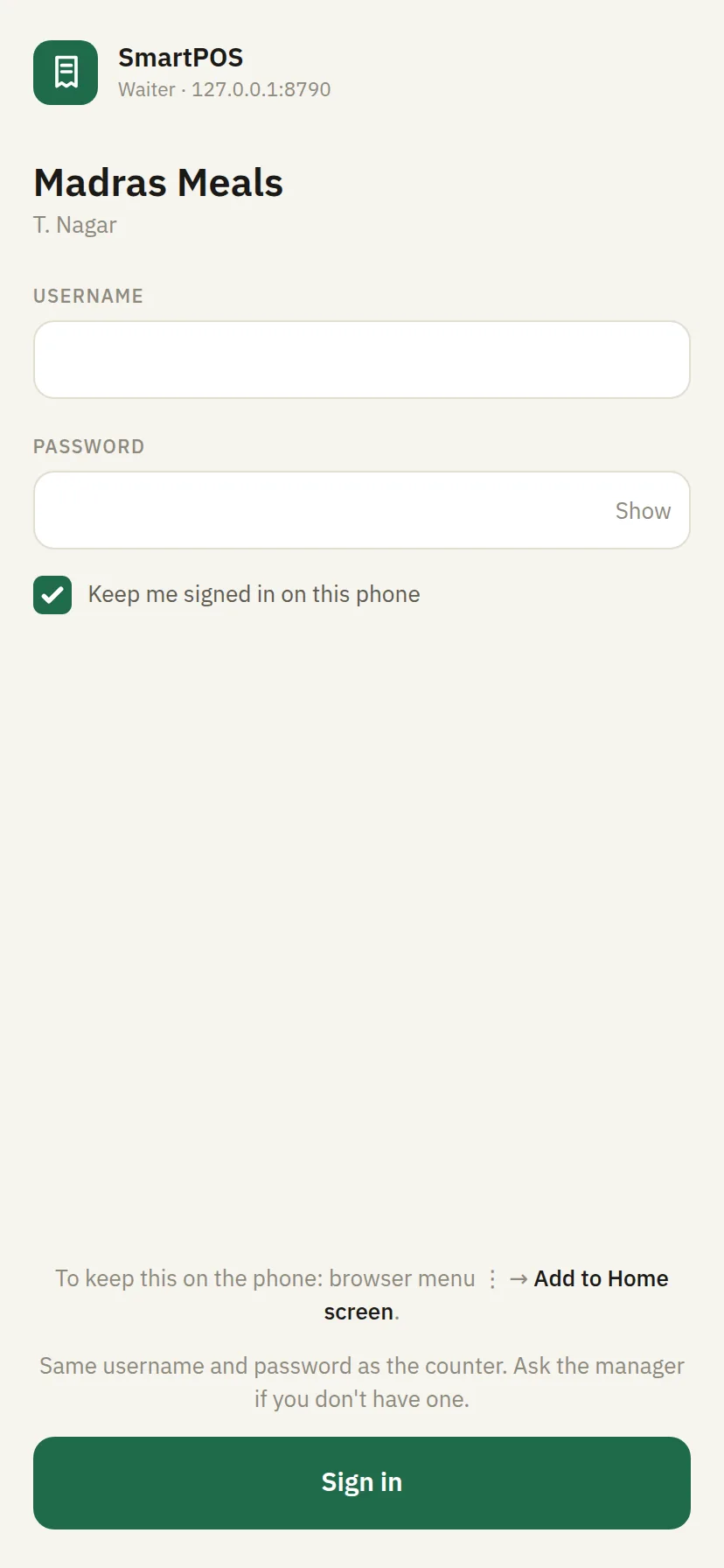
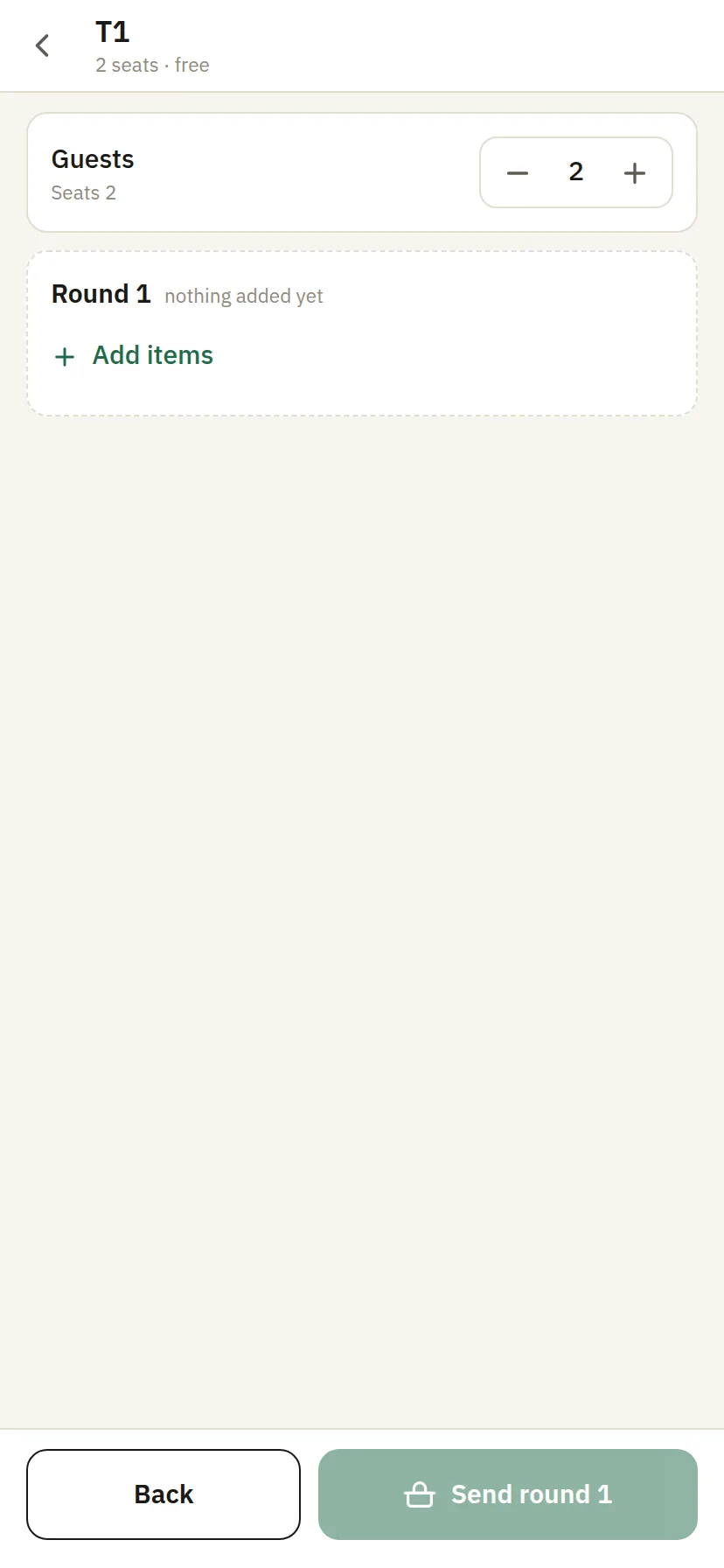
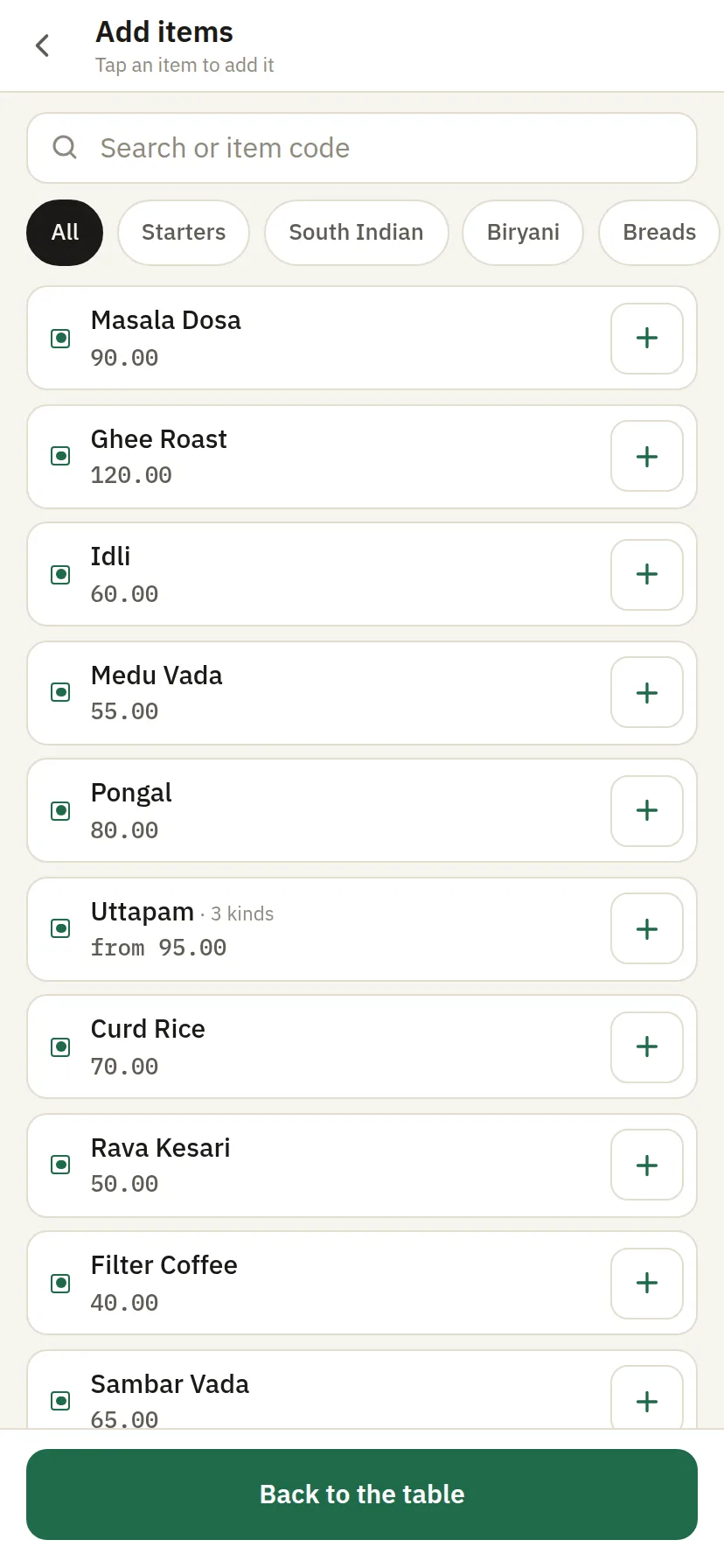
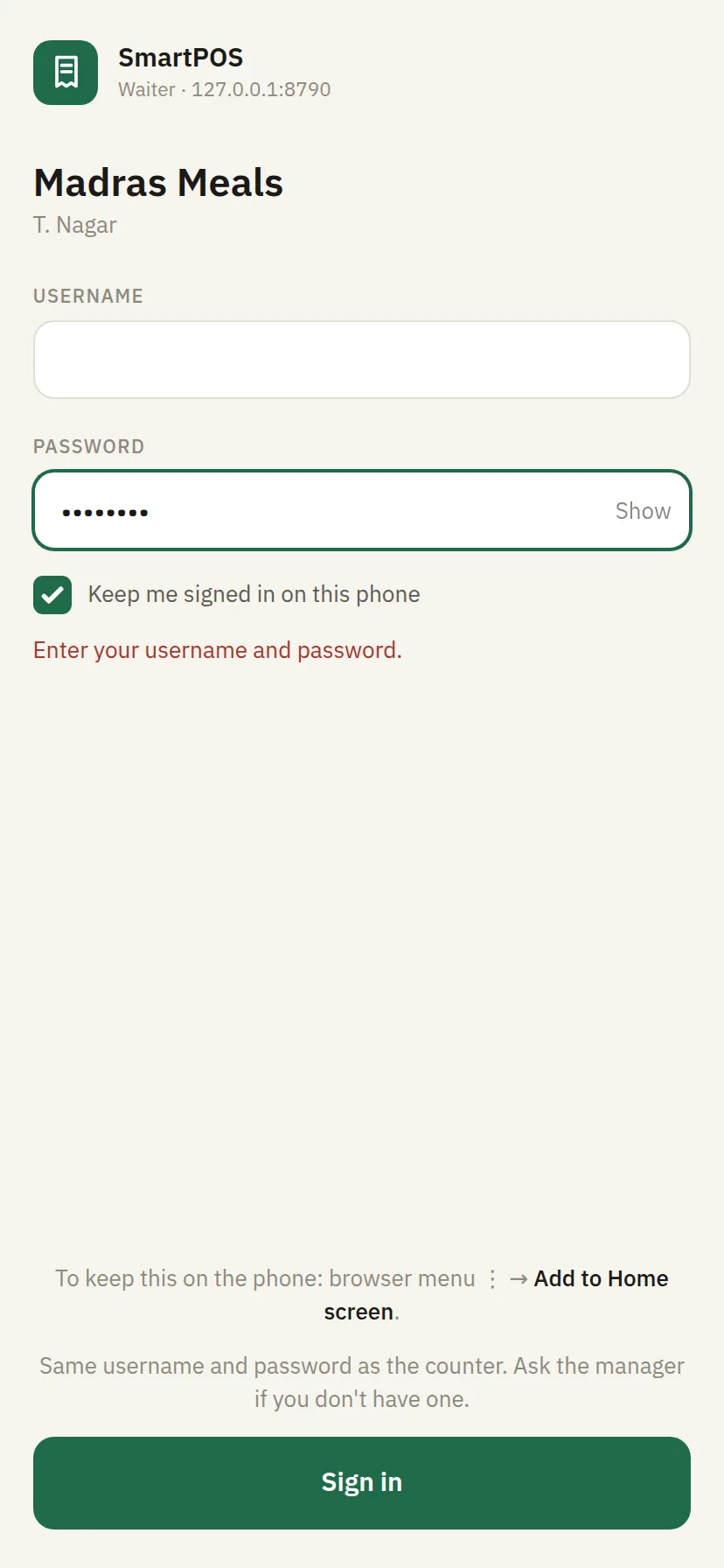
Waiters take orders at the table on their own phone. Add it to the home screen and it behaves like an app.
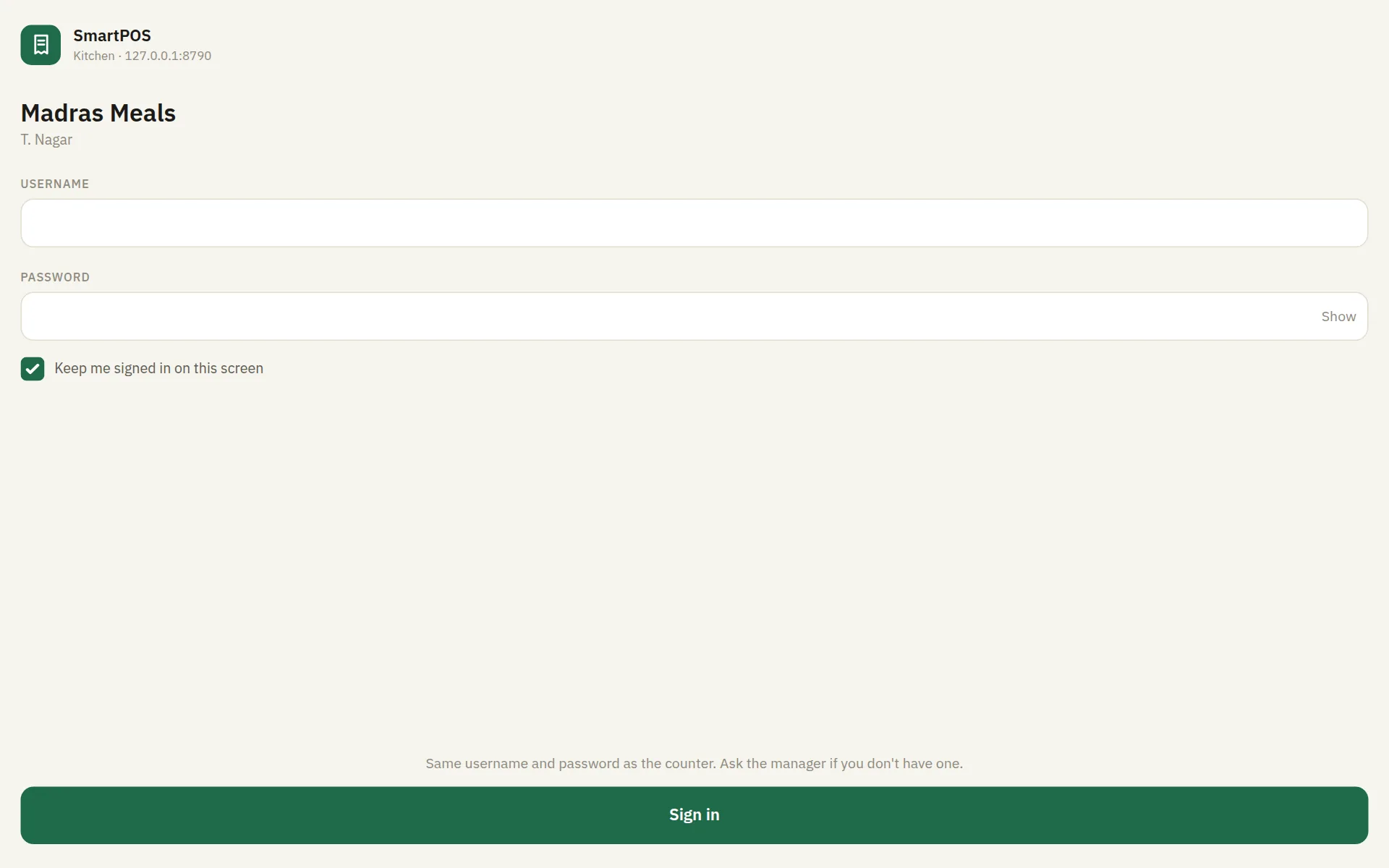
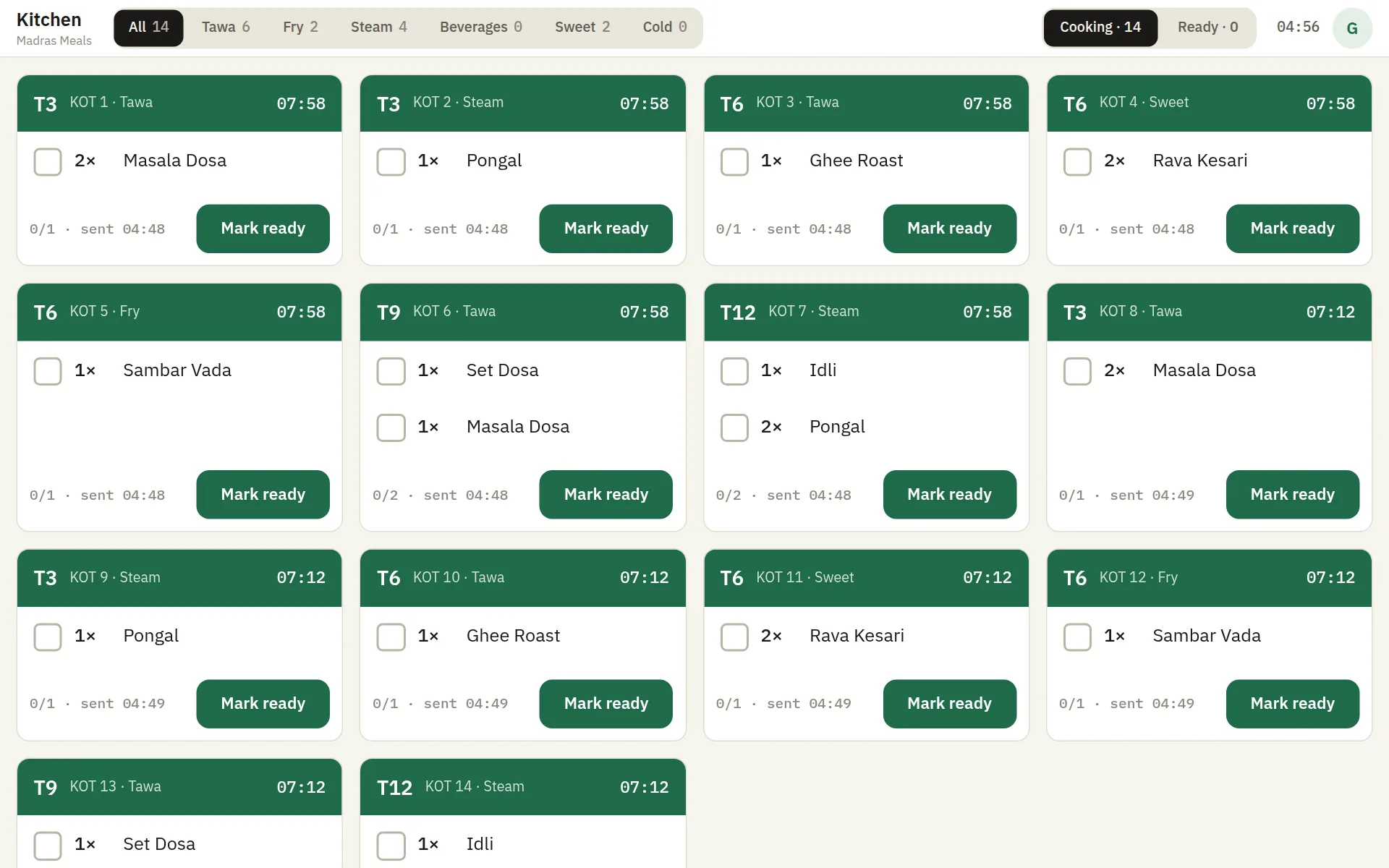
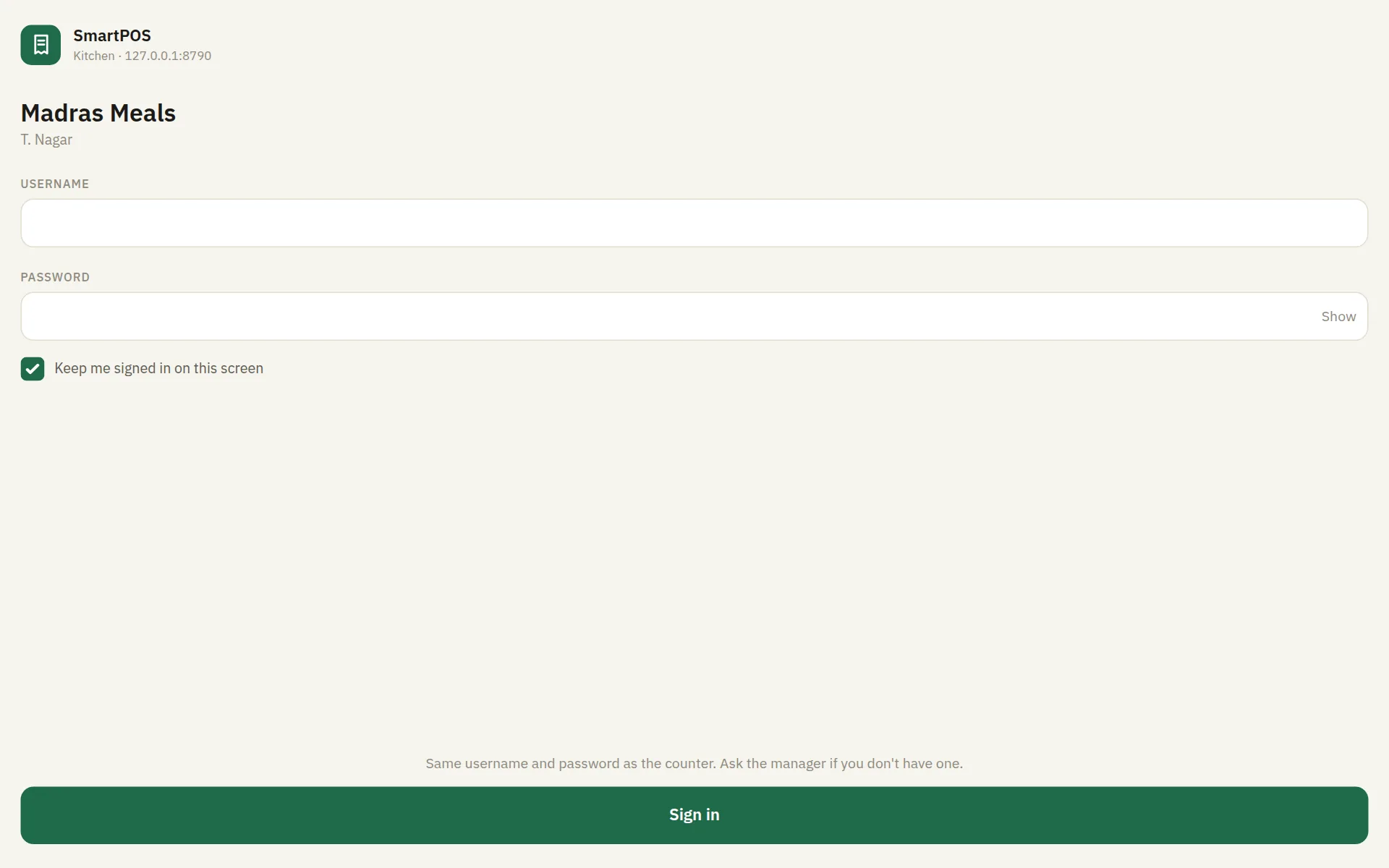
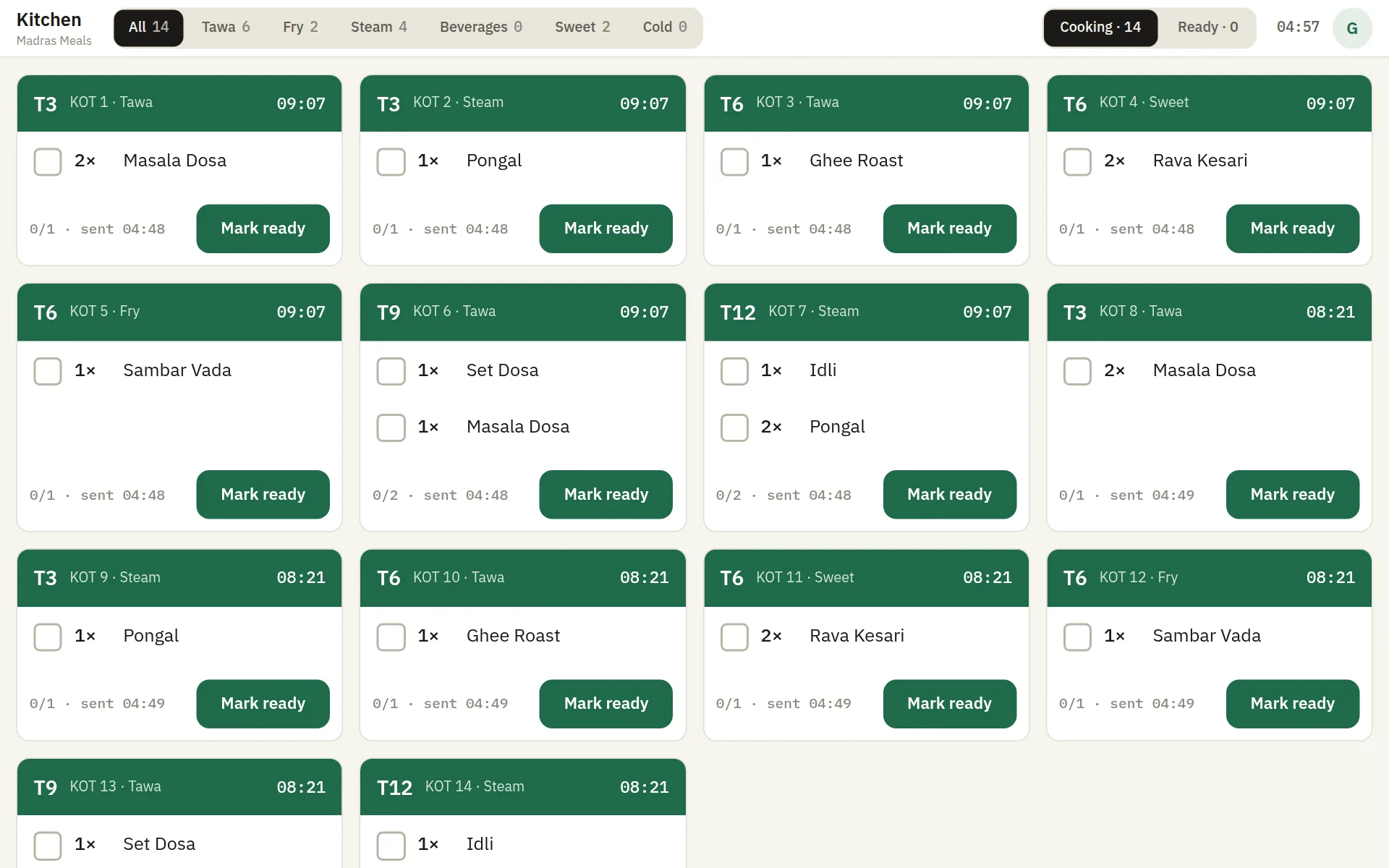
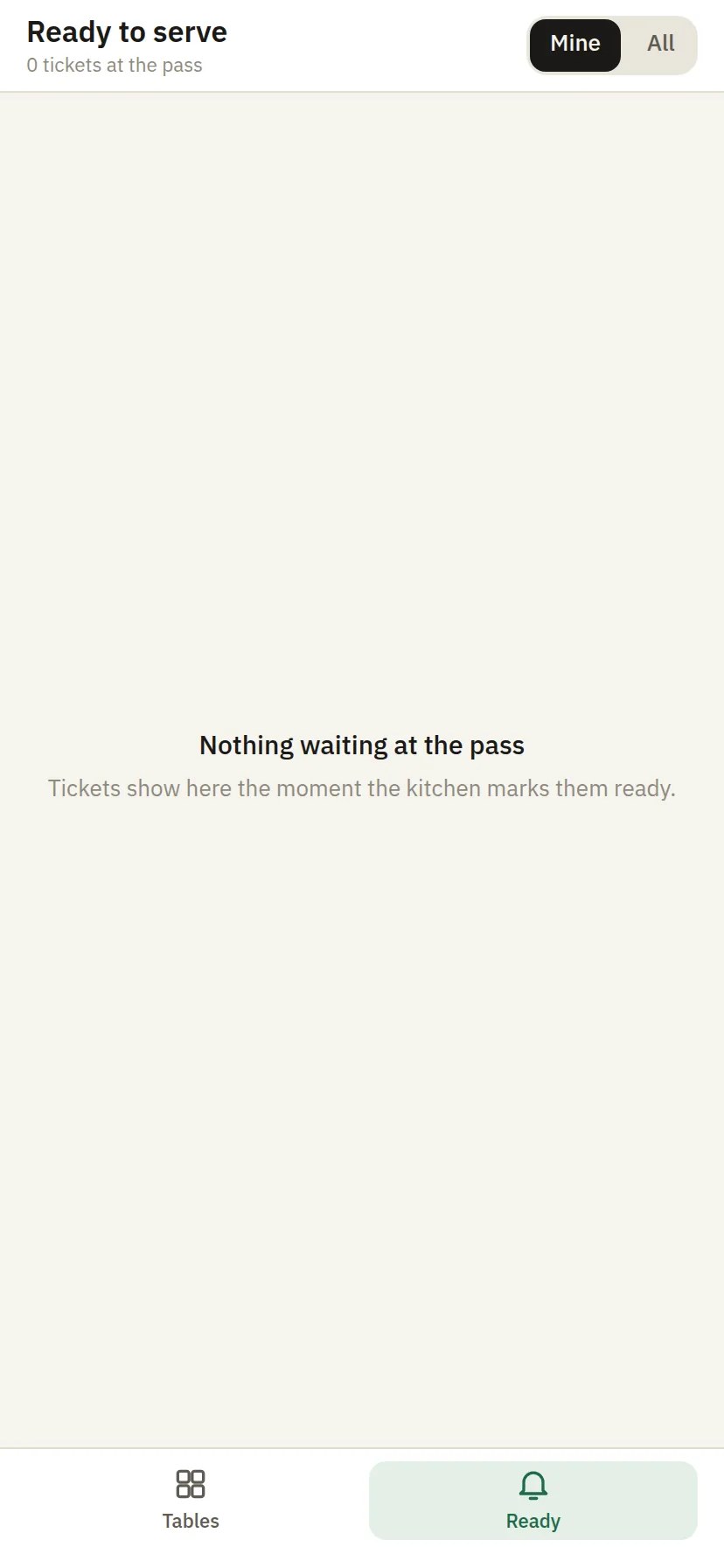
A tablet at the pass shows live tickets per station, so the kitchen stops chasing paper KOTs.
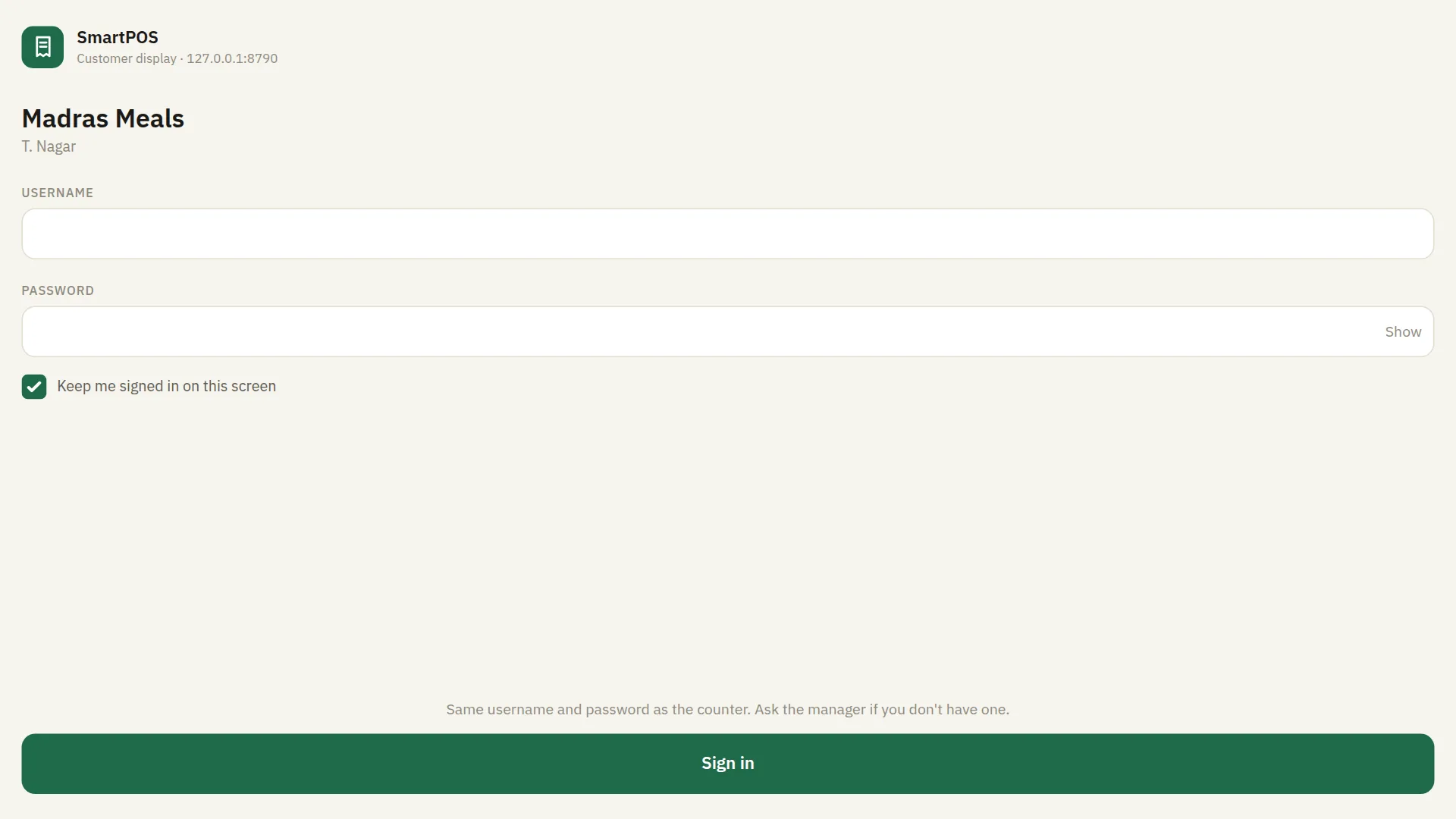
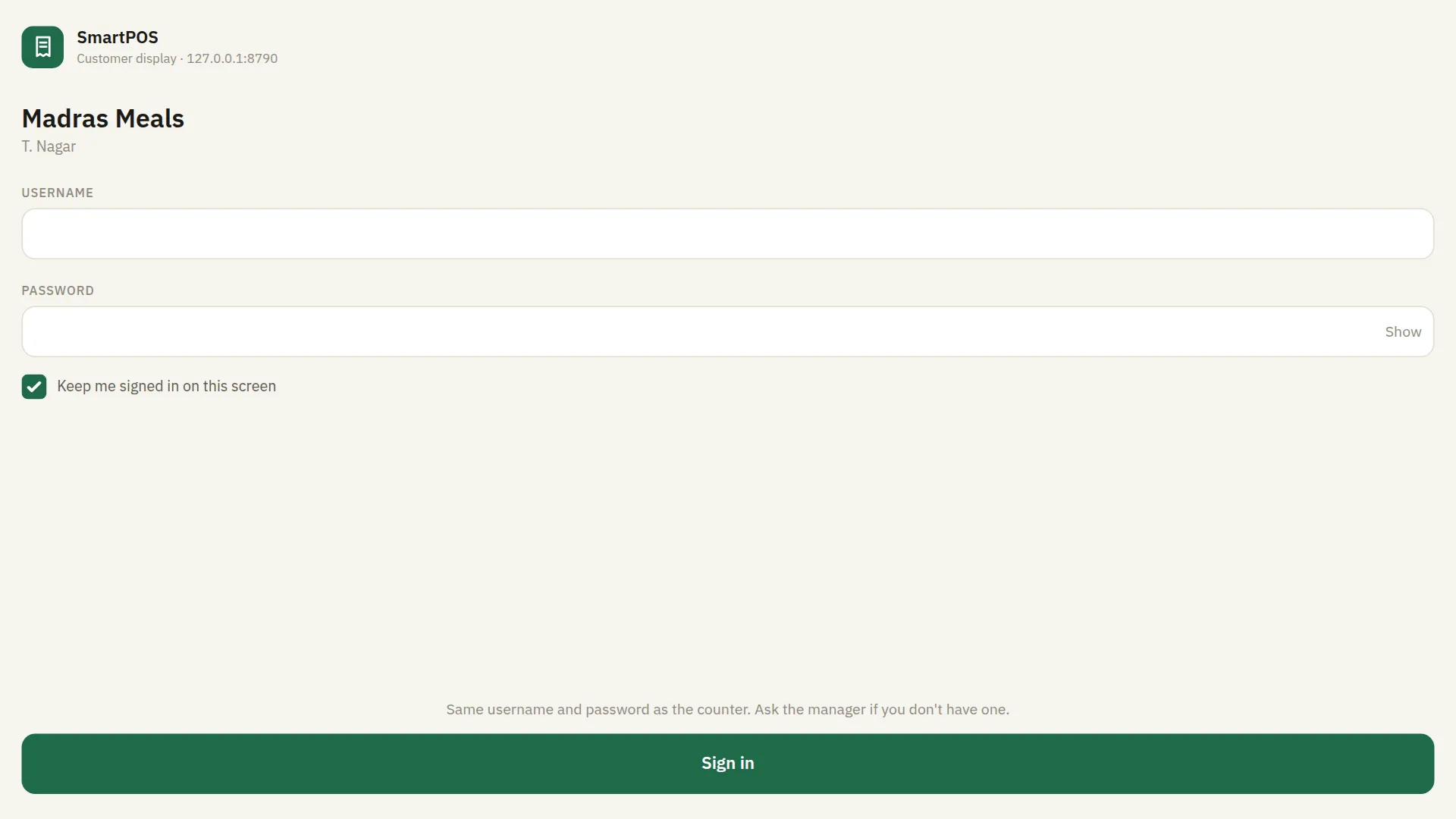
A second screen facing the guest shows the bill as it is rung up.
Most POS software that calls itself offline is quietly talking to someone. Here is the complete list for SmartPOS, so you can judge it for yourself.
| What | Where it goes | Internet needed | Optional? |
|---|---|---|---|
| Billing, KOTs, printing, tables, reports | Your counter PC | Never | — |
| Waiter phones, kitchen screen, customer display | Your own Wi-Fi | Never | Off by default |
| Thermal printers | USB or your network | Never | Per printer |
| Backup | A folder on your disk | Never | Optional |
| Licence activation | TechSlide licence server | Once, at activation | Required once |
| Licence re-check | TechSlide licence server | Whenever the PC is online | Runs in the background |
| Swiggy and Zomato orders | The Dyno service on this PC | Only for online orders | Optional |
| App updates | GitHub Releases | Only to fetch an update | Can be turned off |
| Import from RestoPOS cloud | Your RestoPOS tenant | Only during the import | Optional, one-time |
There is no analytics, crash reporting, telemetry, remote logging or cloud sync of your orders in SmartPOS. Your menu, your bills and your guests are on your disk and nowhere else.
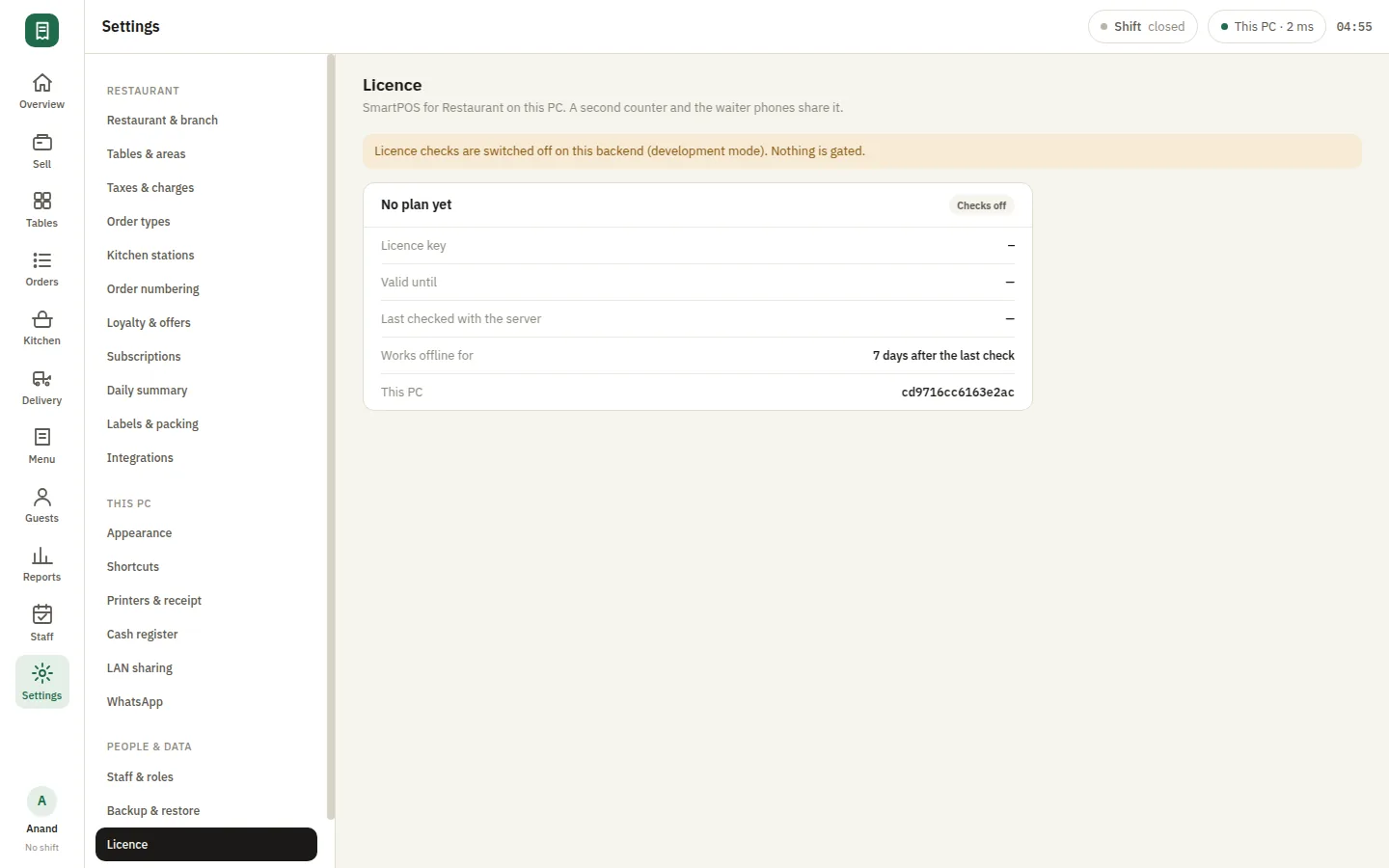
The licence is checked once when you activate, and quietly re-checked whenever the PC is online. A counter that stays disconnected for more than a week will ask you to reconnect it briefly before it carries on.
One licence per restaurant, bought once.
What each part of SmartPOS does, shown on the screen it actually runs on.
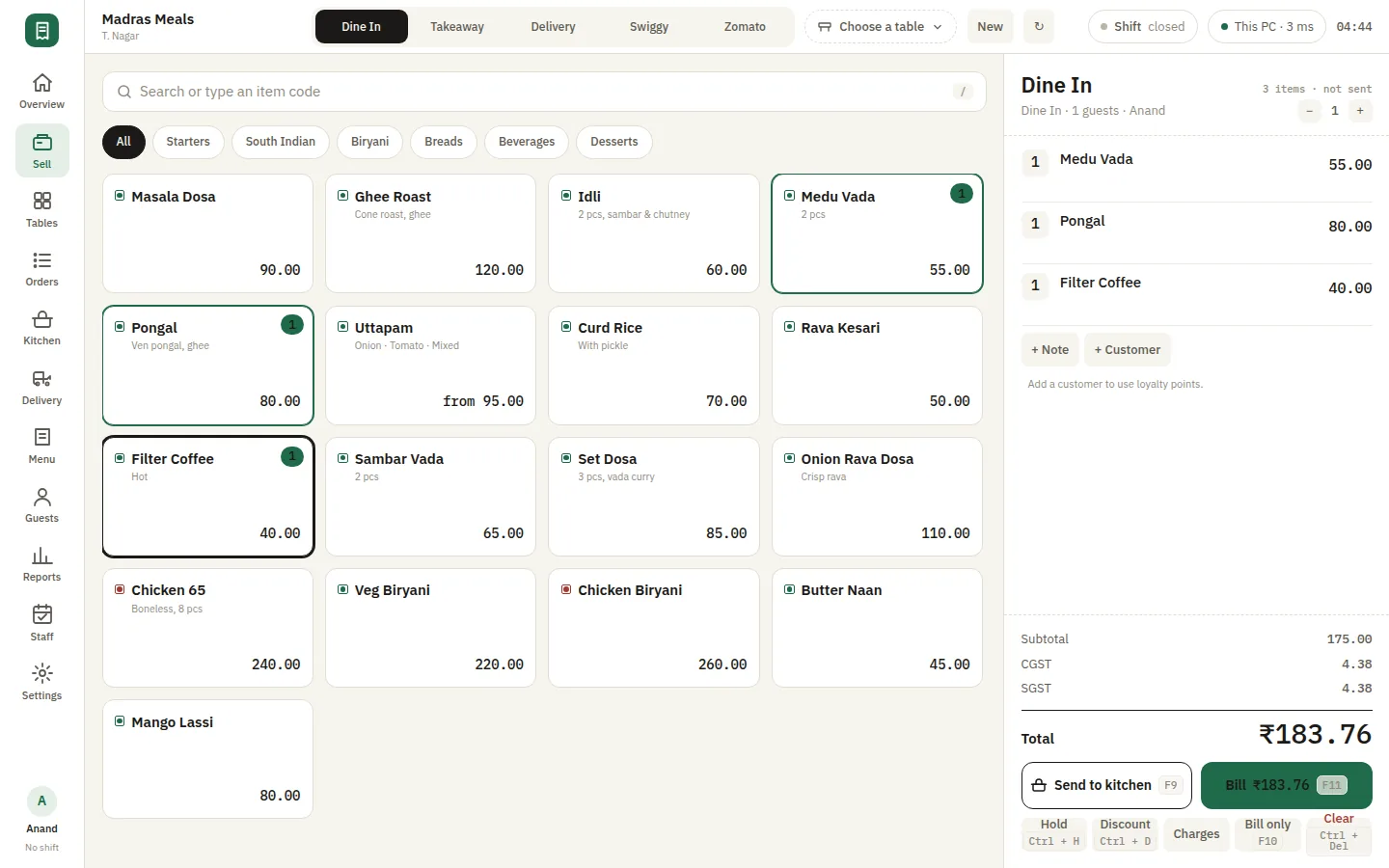
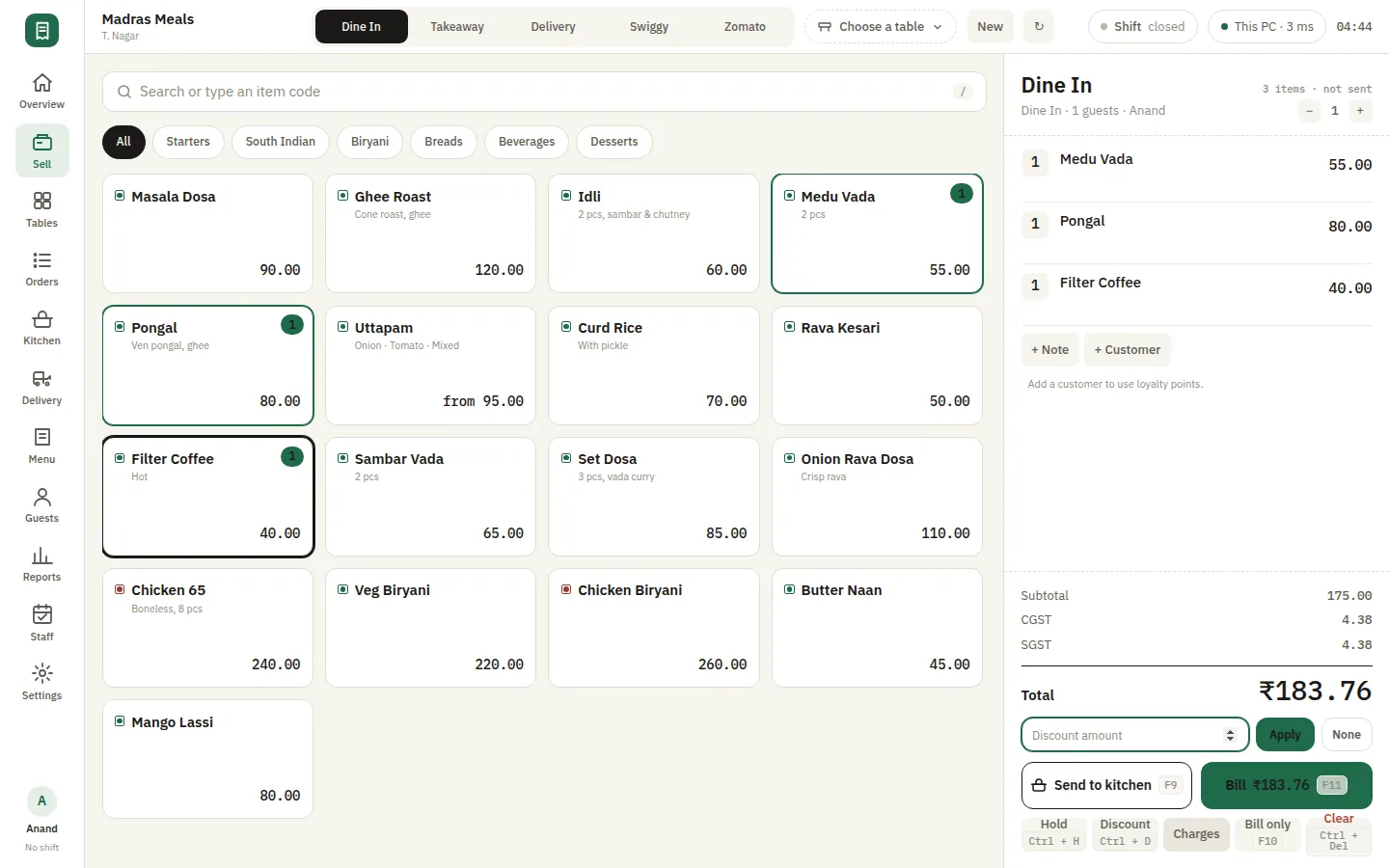
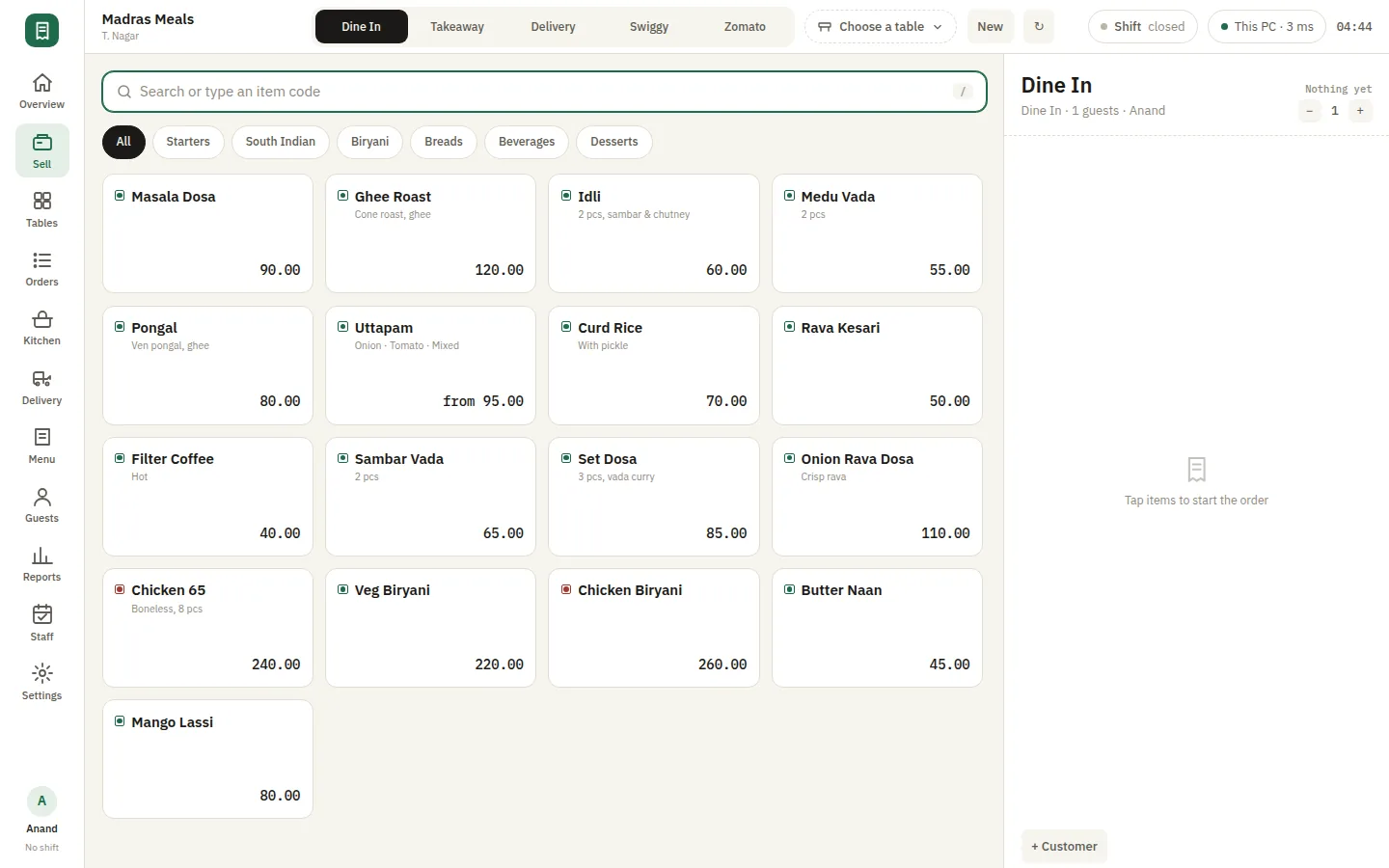
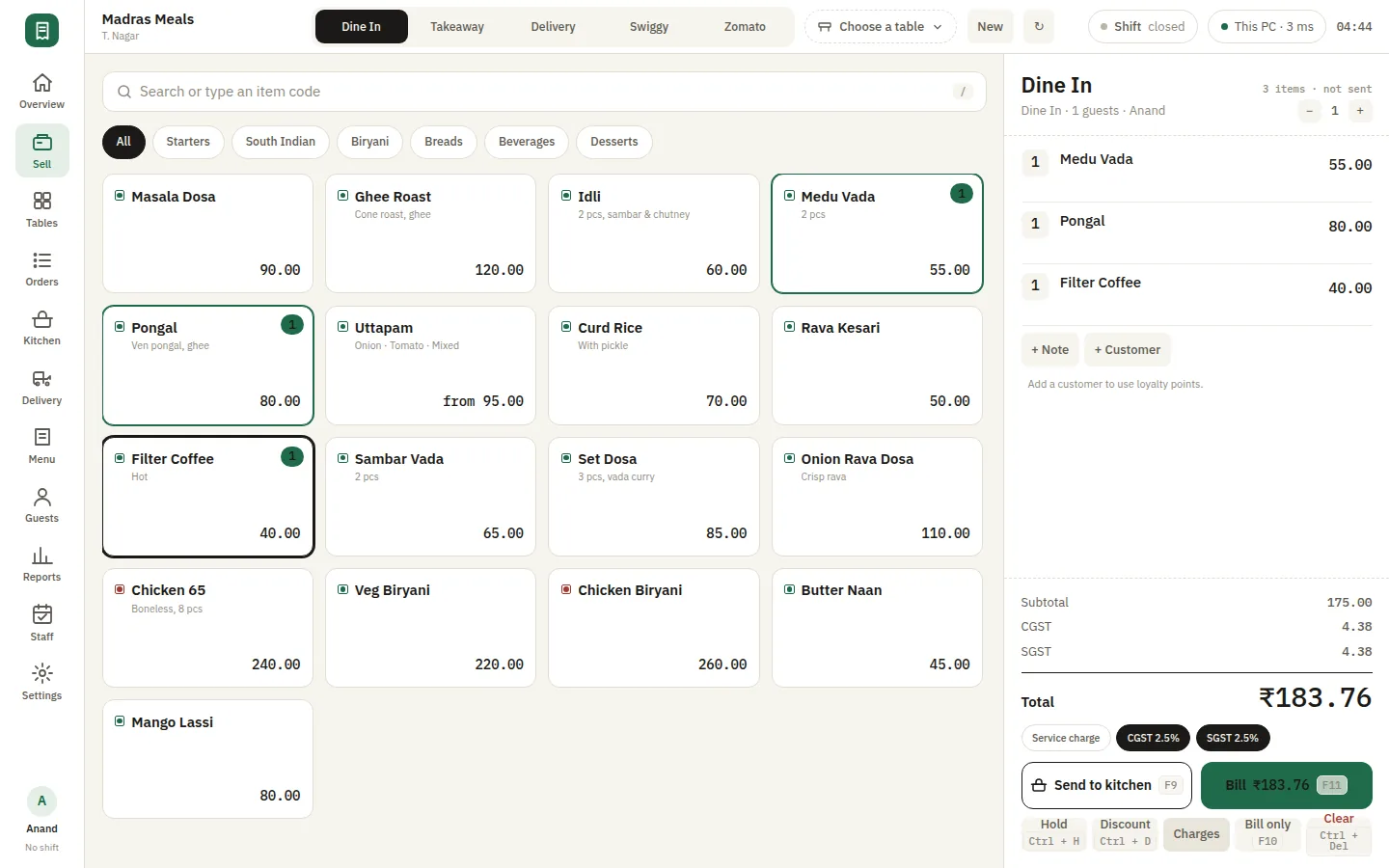
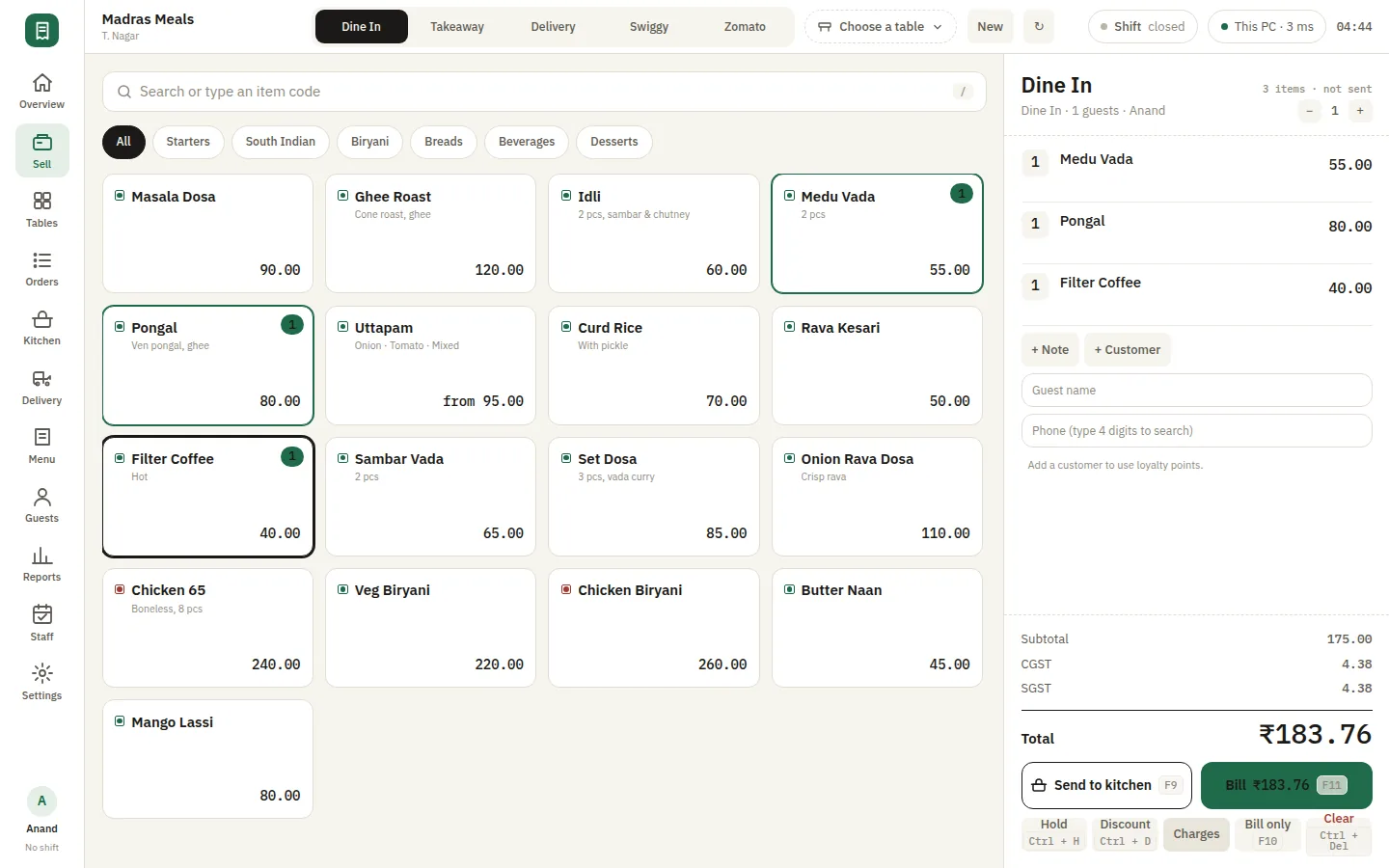
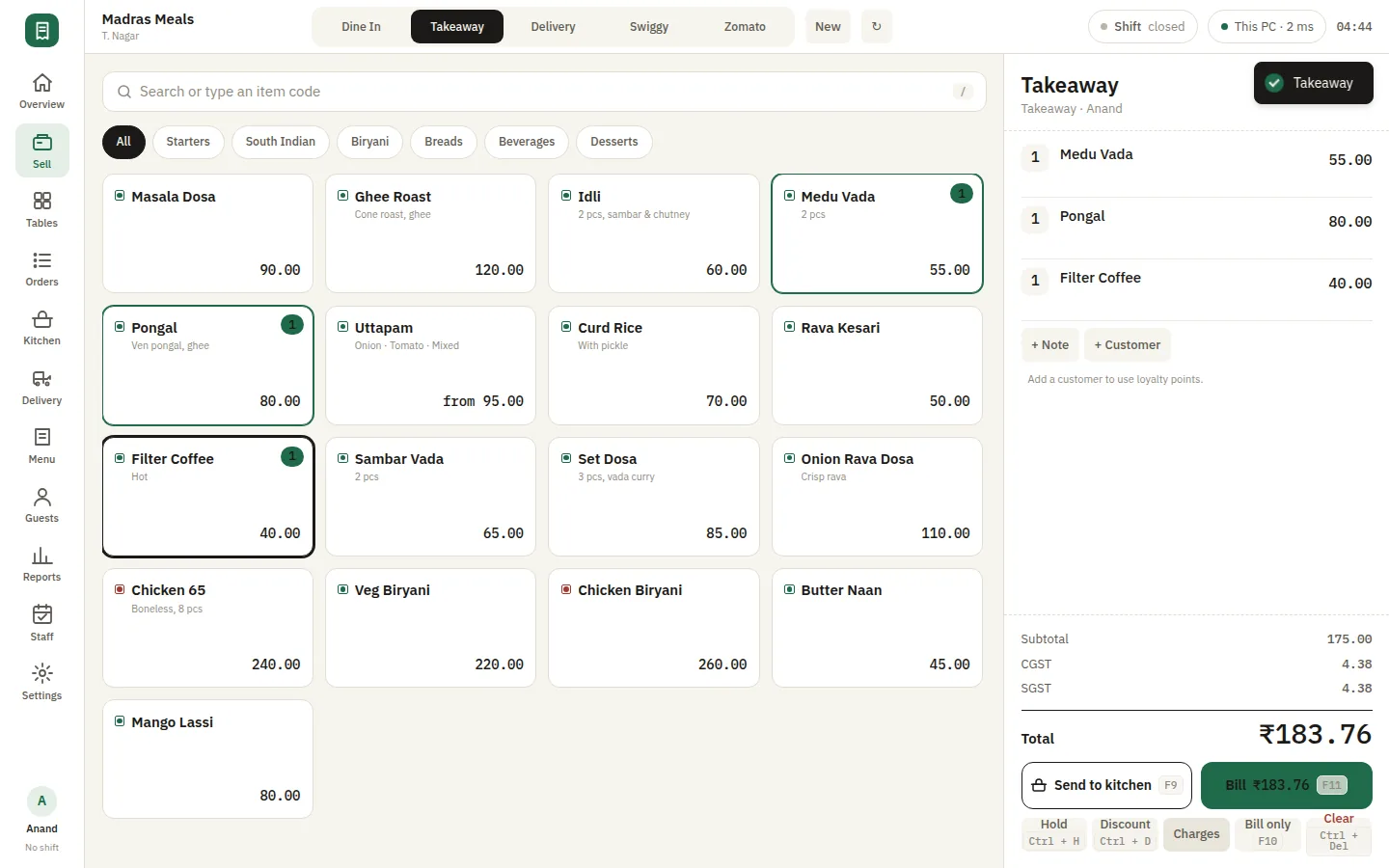
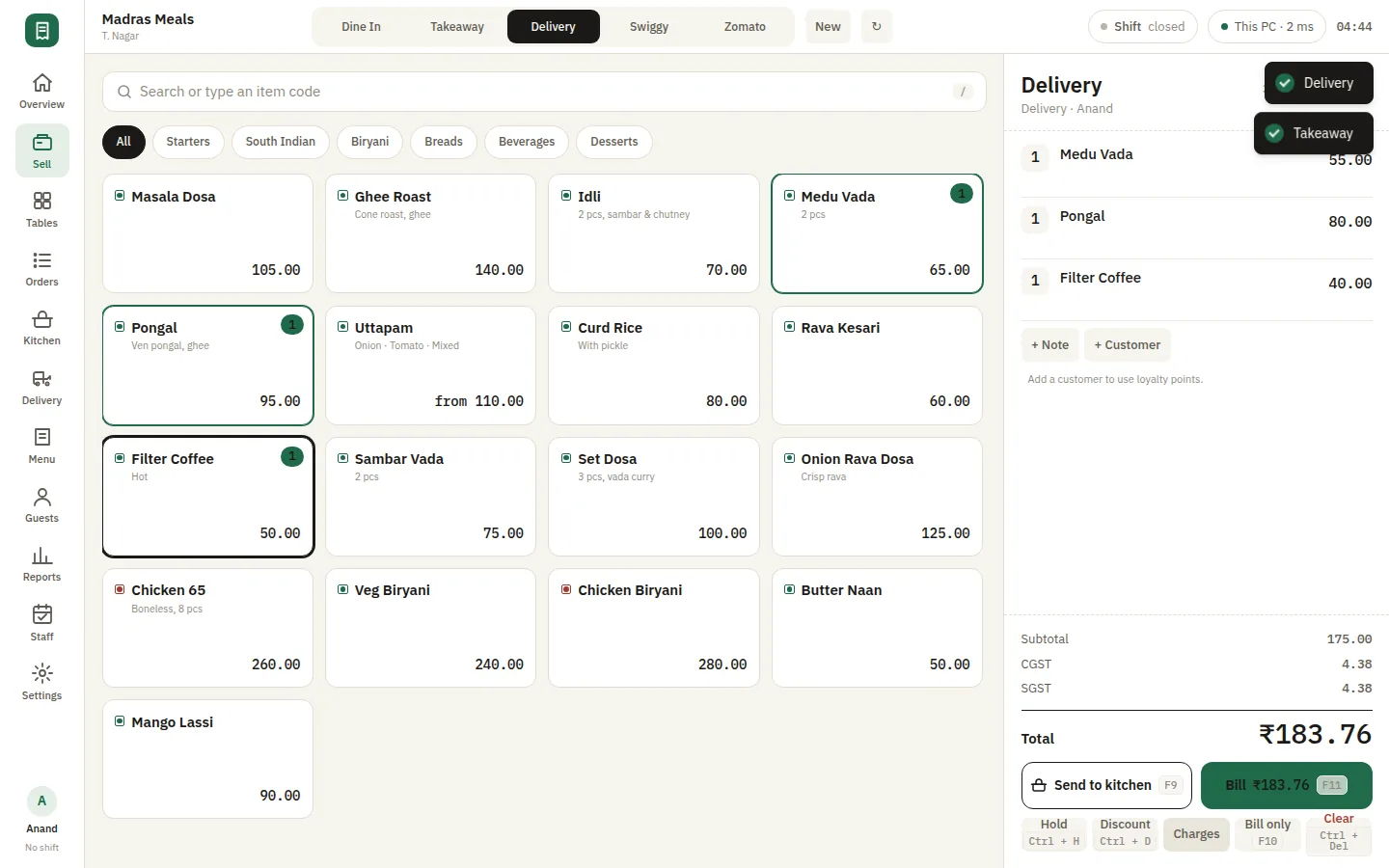
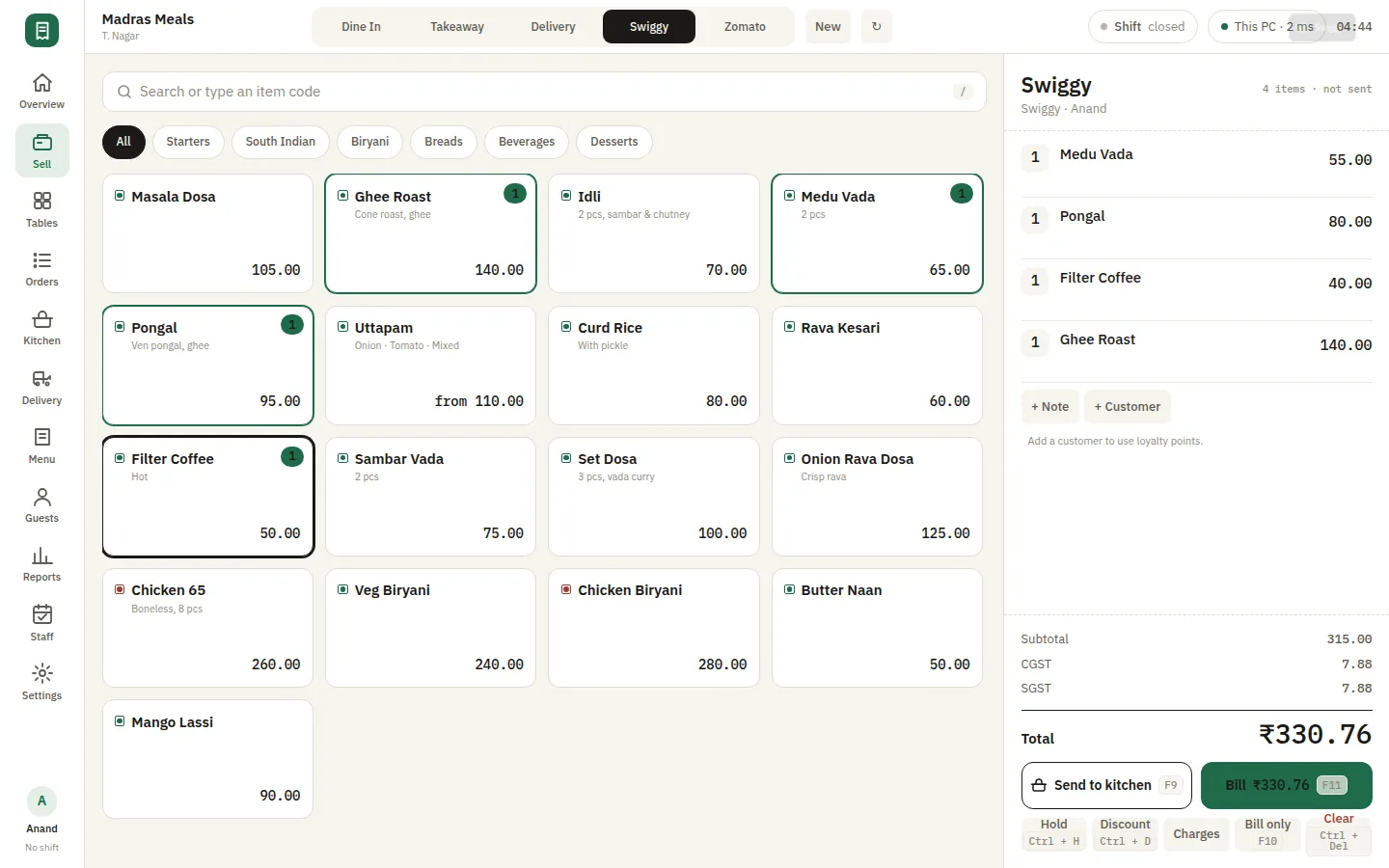
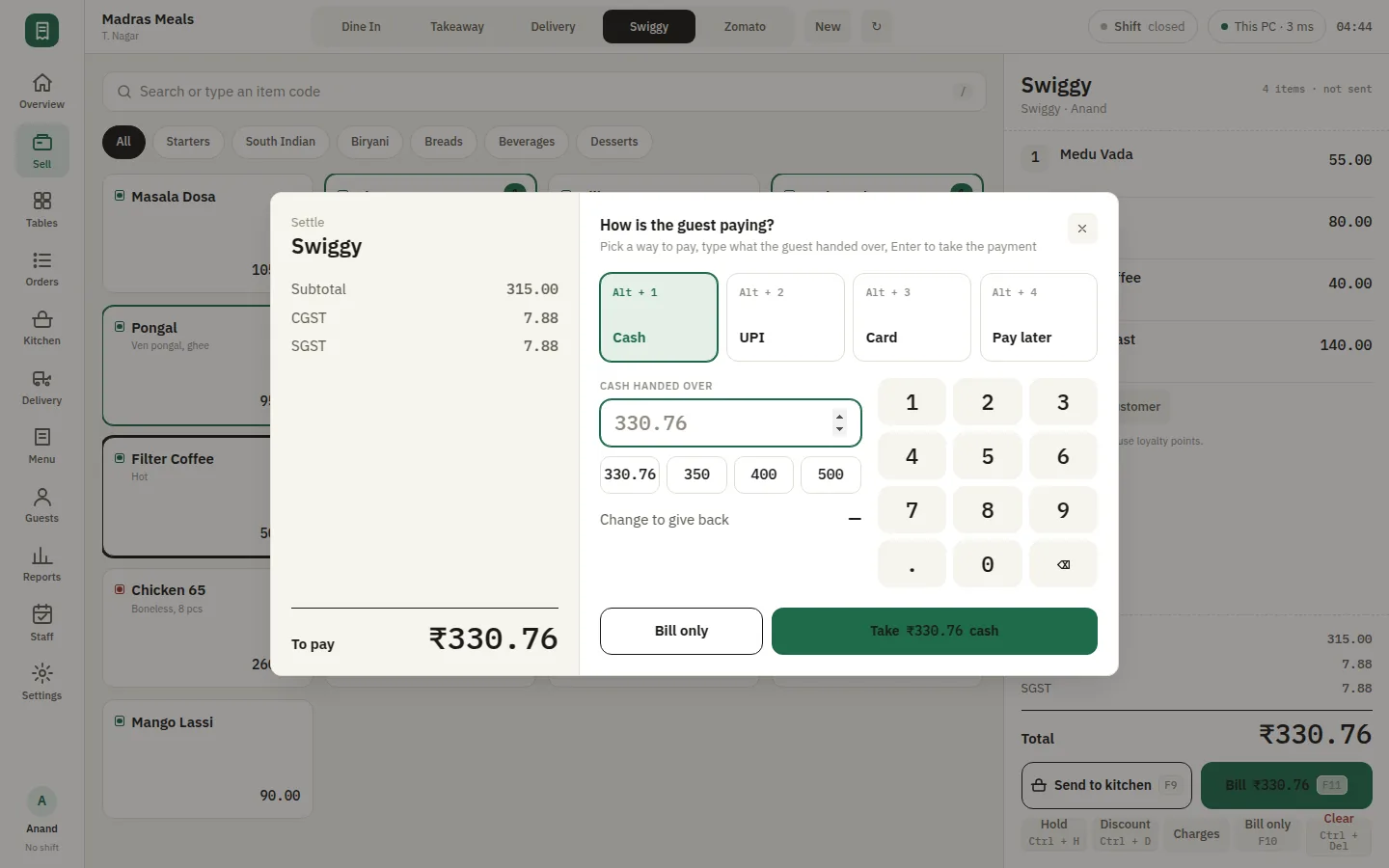
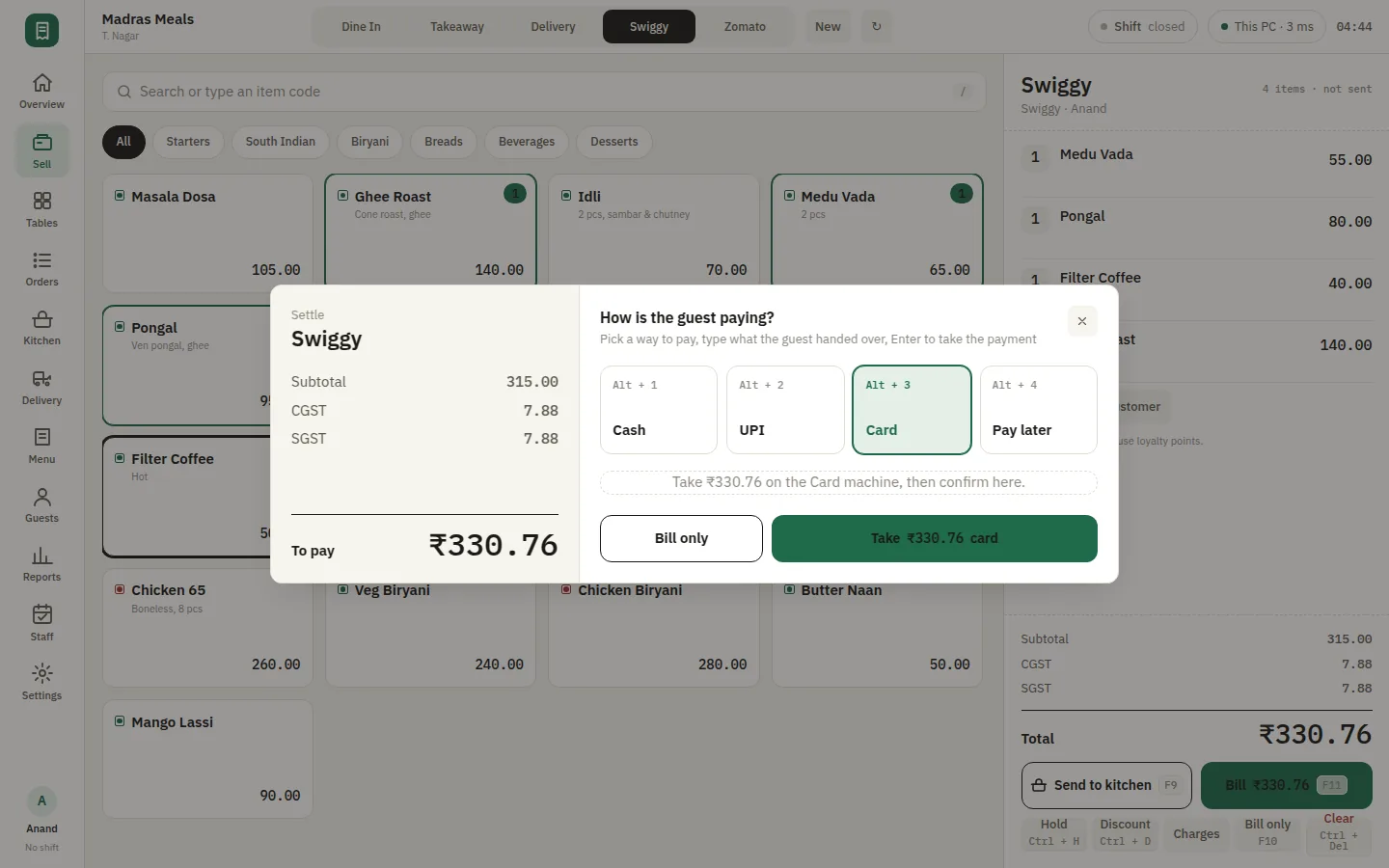
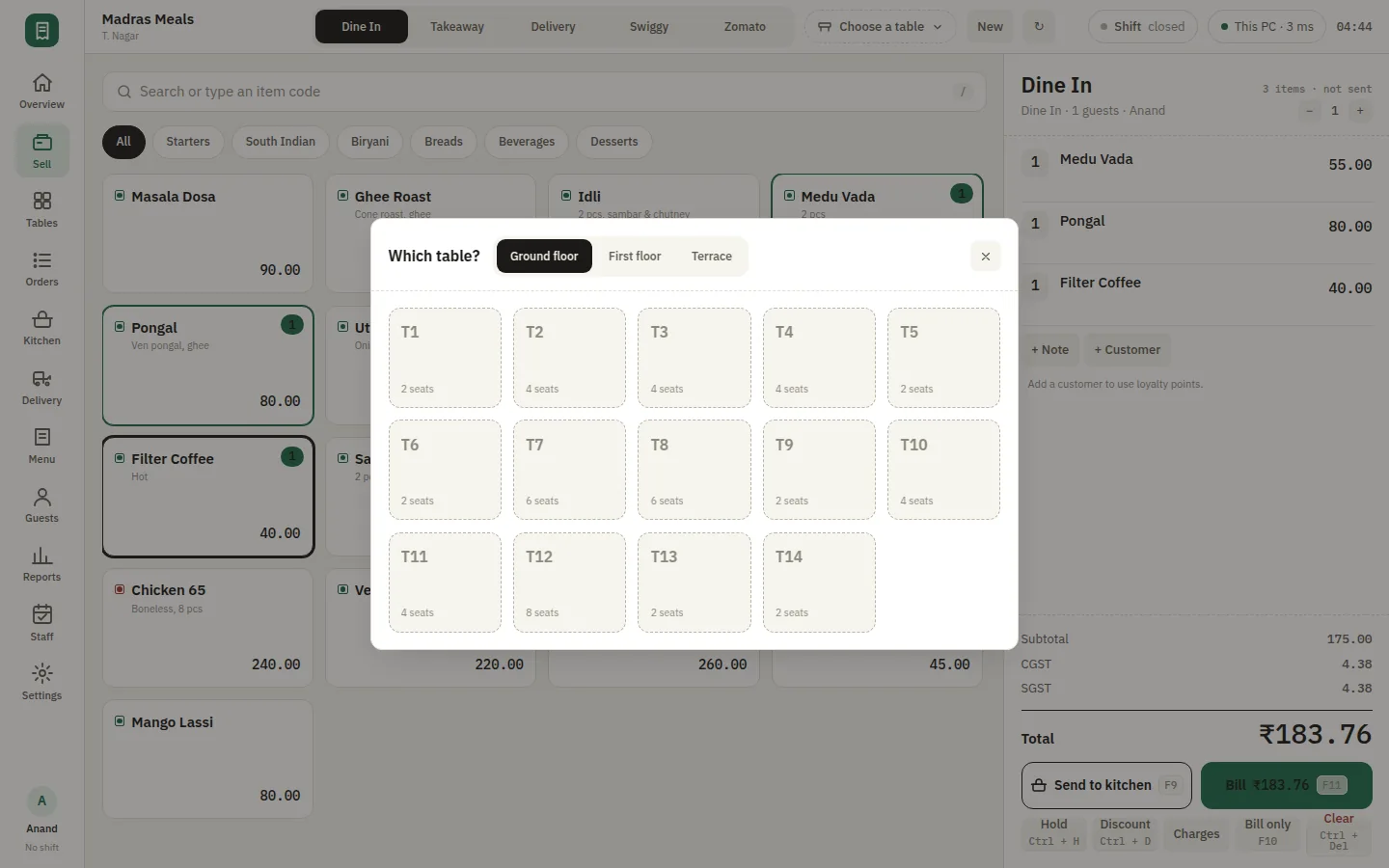
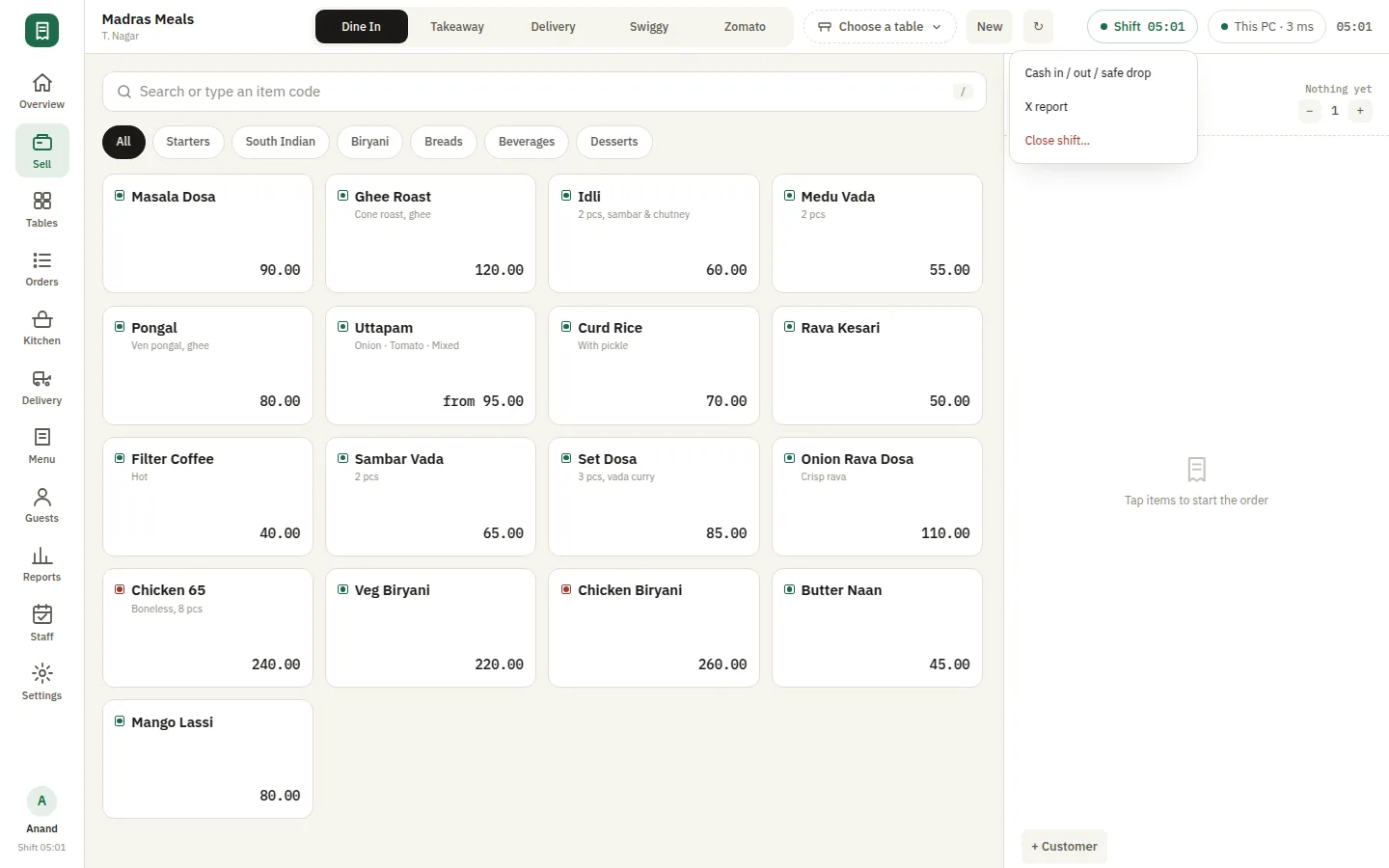
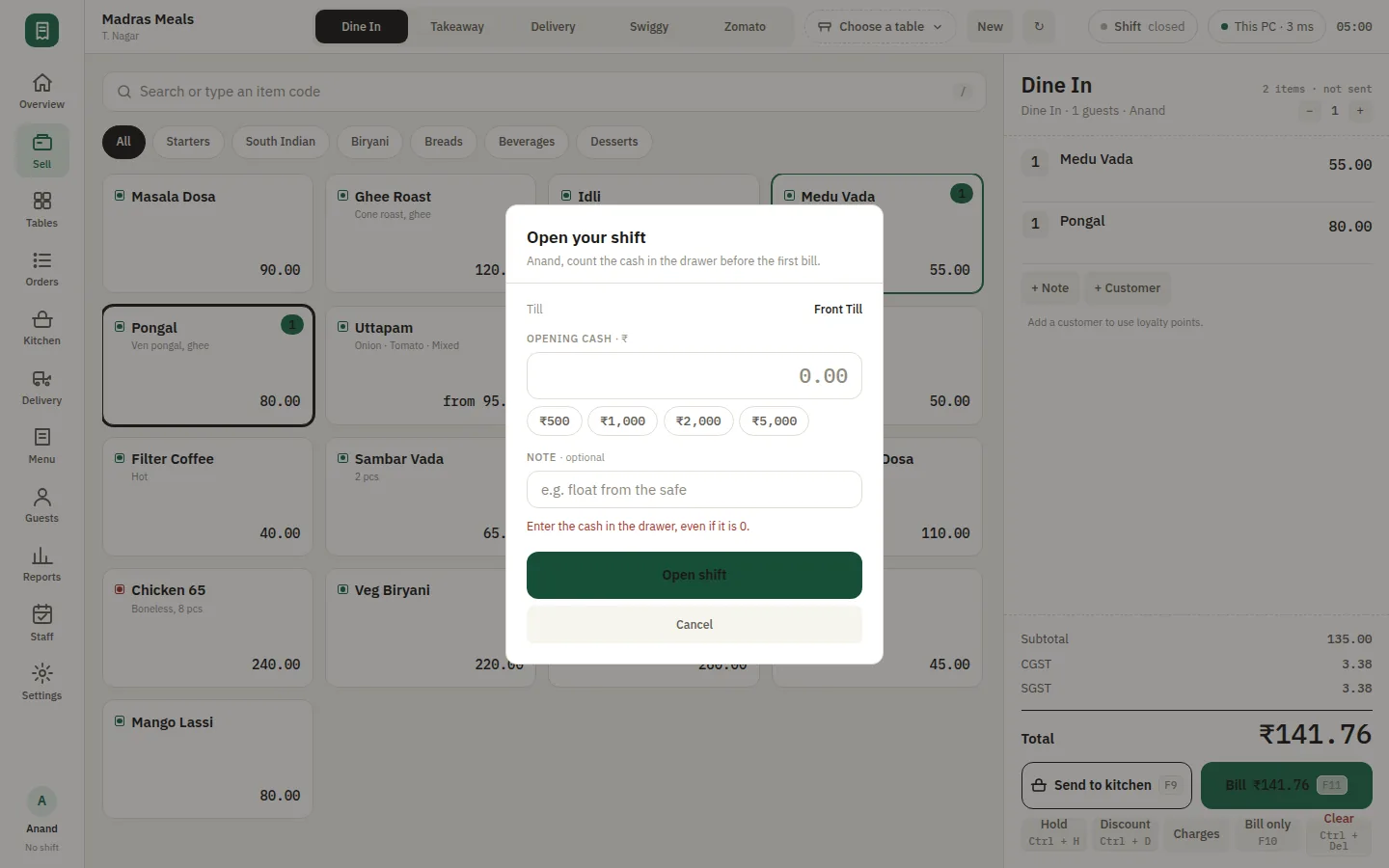
The Sell screen is where the day happens: tap items off the menu grid, pick variations and add-ons, and send the KOT to the kitchen without leaving the keyboard. Charges and discounts apply to the bill in one step, and settlement takes cash, card, UPI or a split across them. Every GST-compliant receipt prints to your thermal printer straight from the counter PC, with no internet in the path and nothing to wait for.


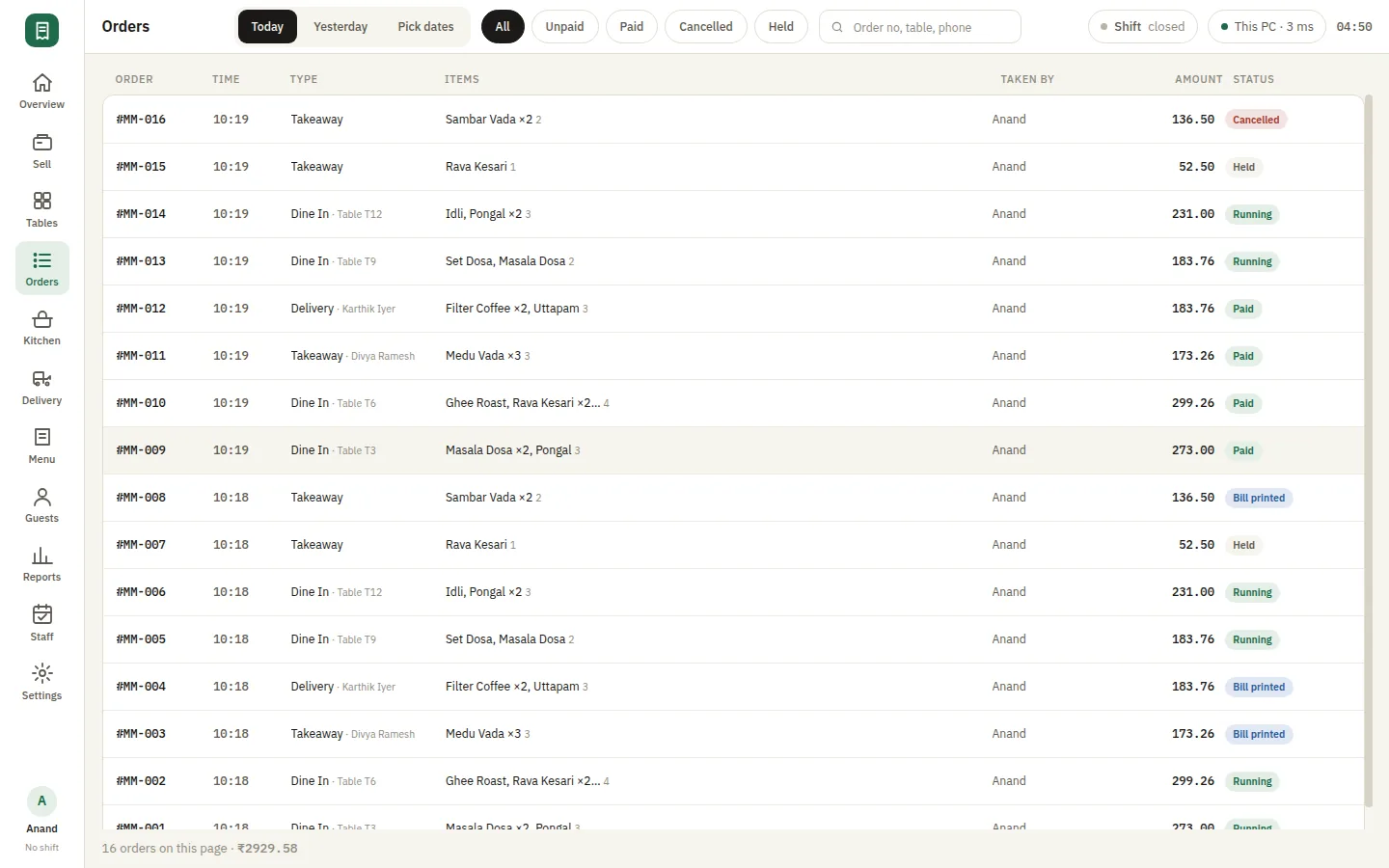
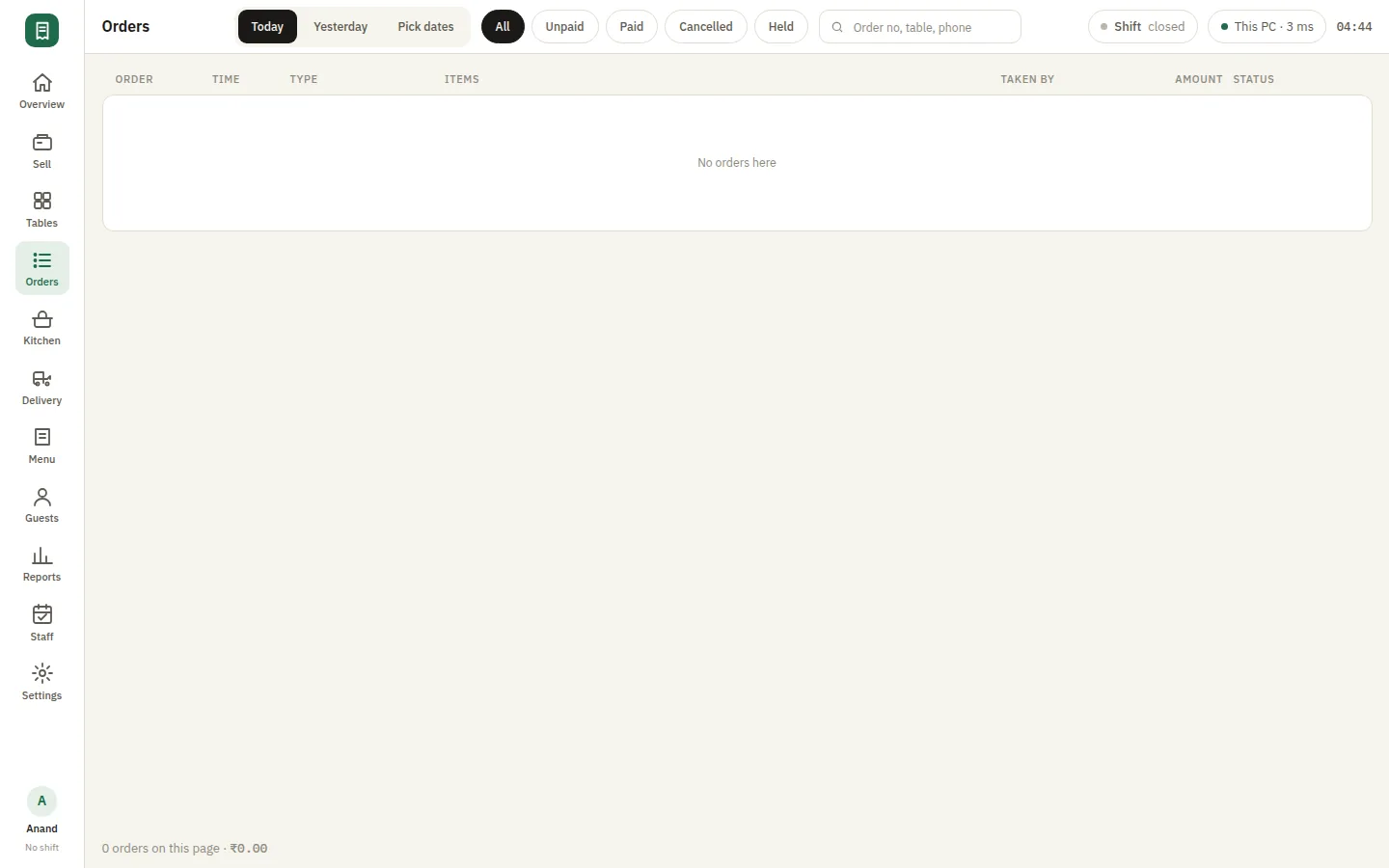
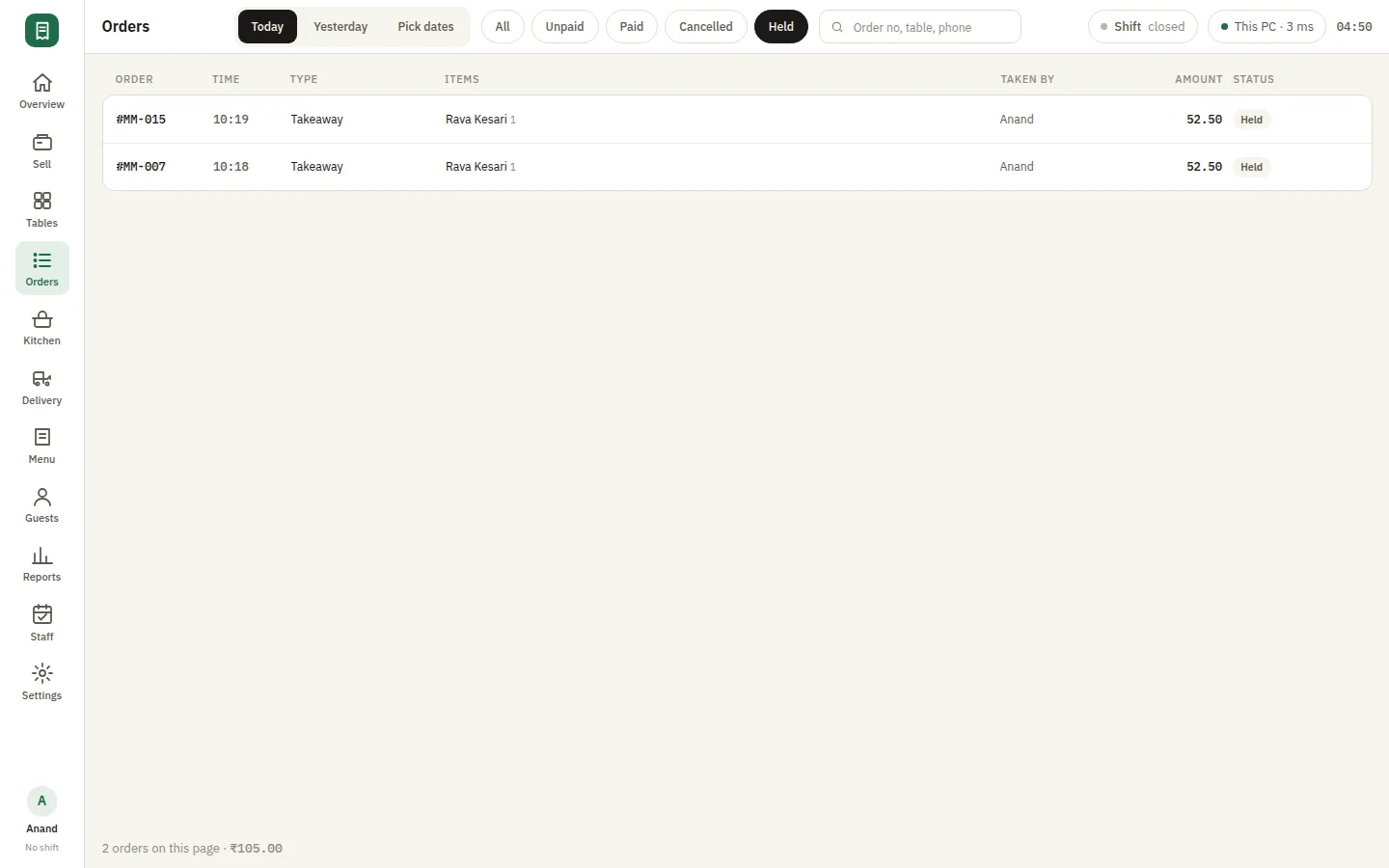
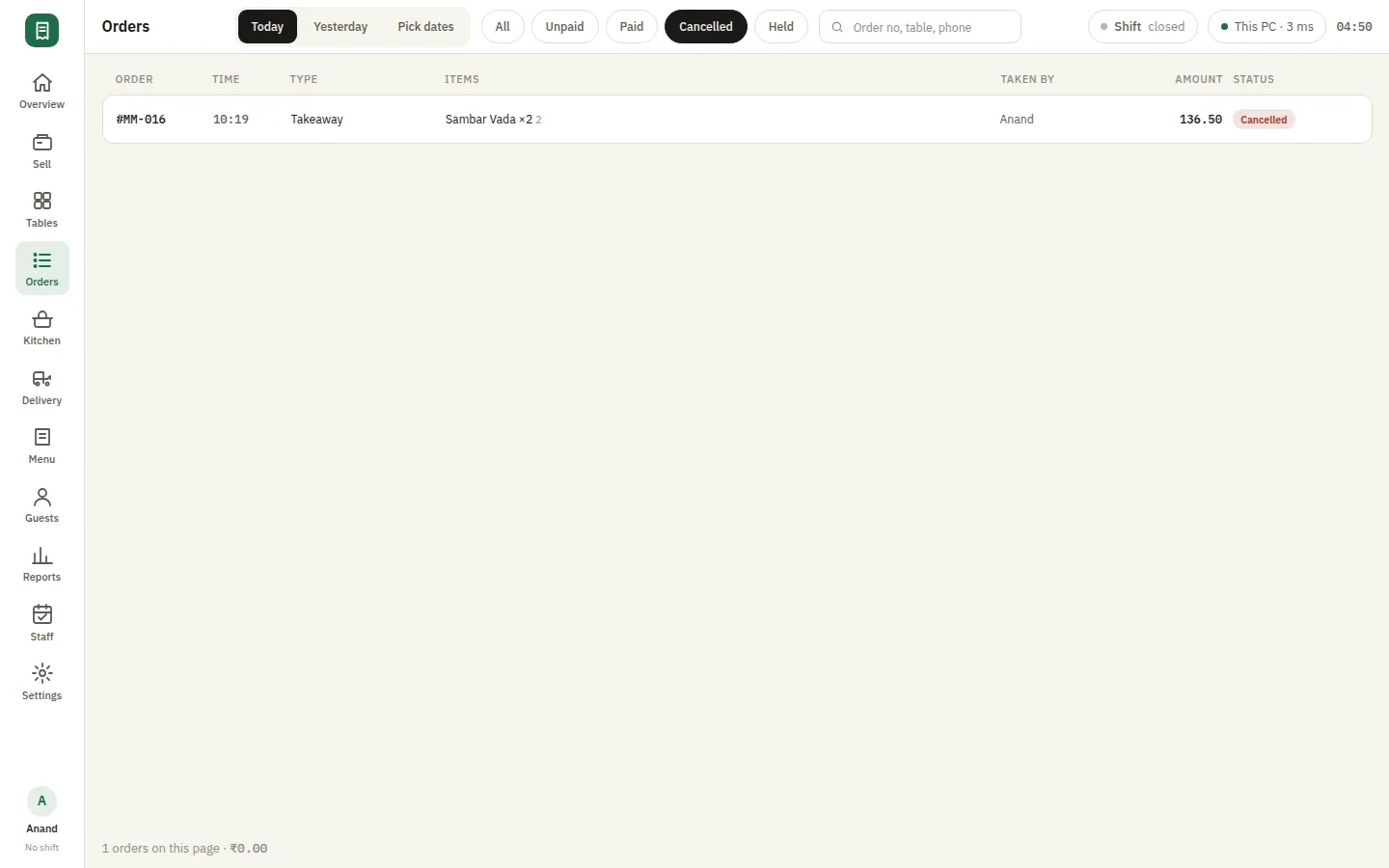
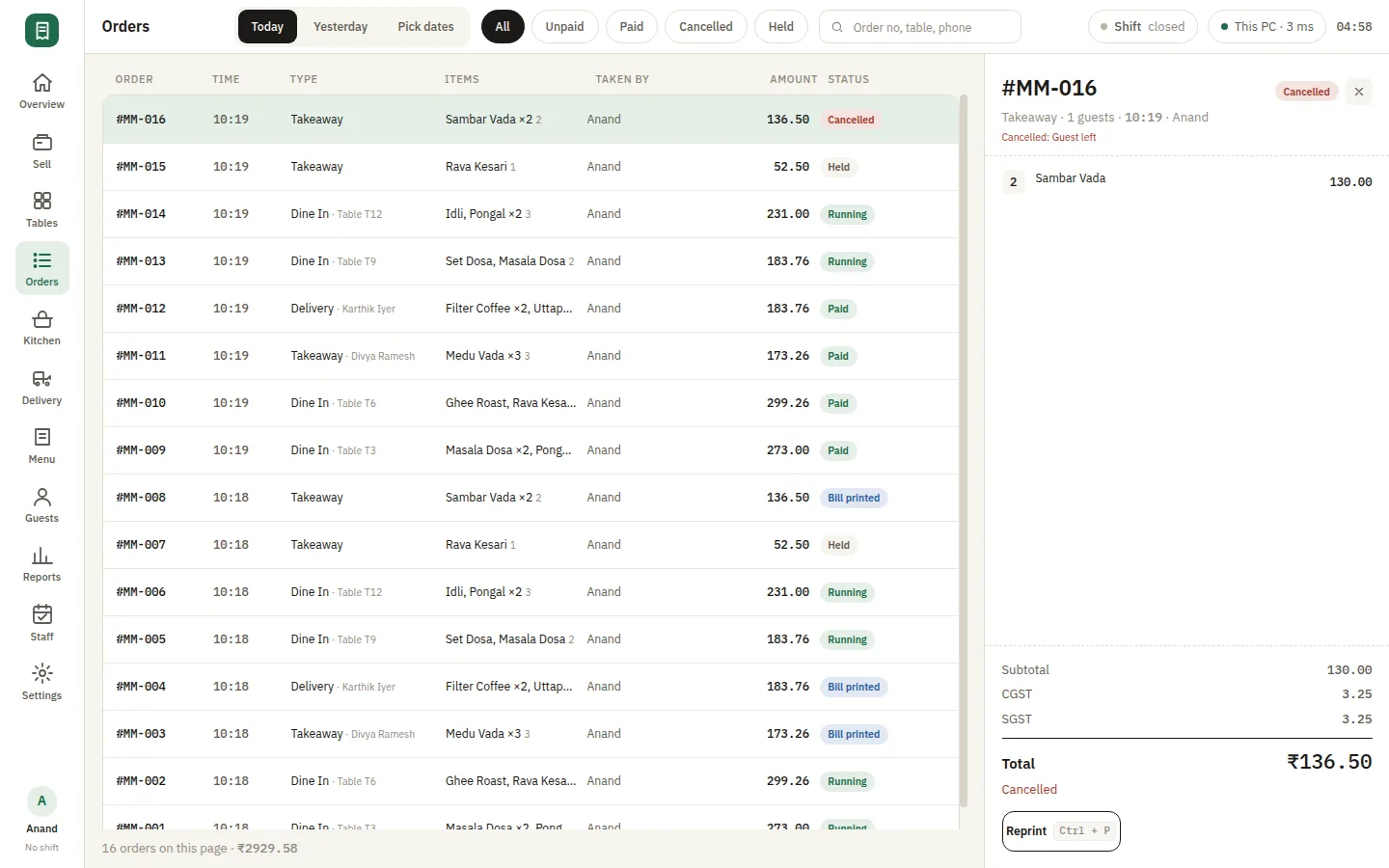
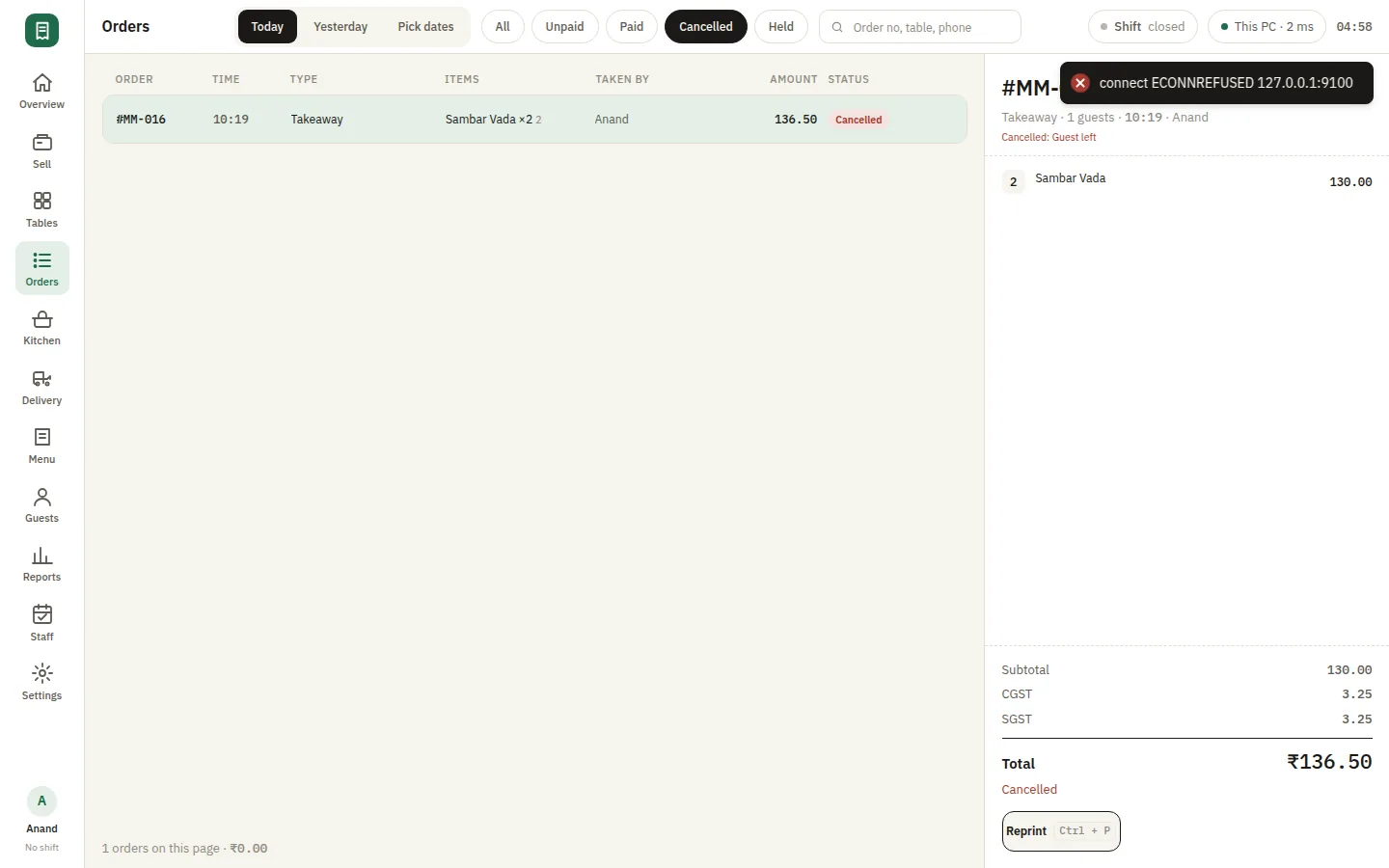
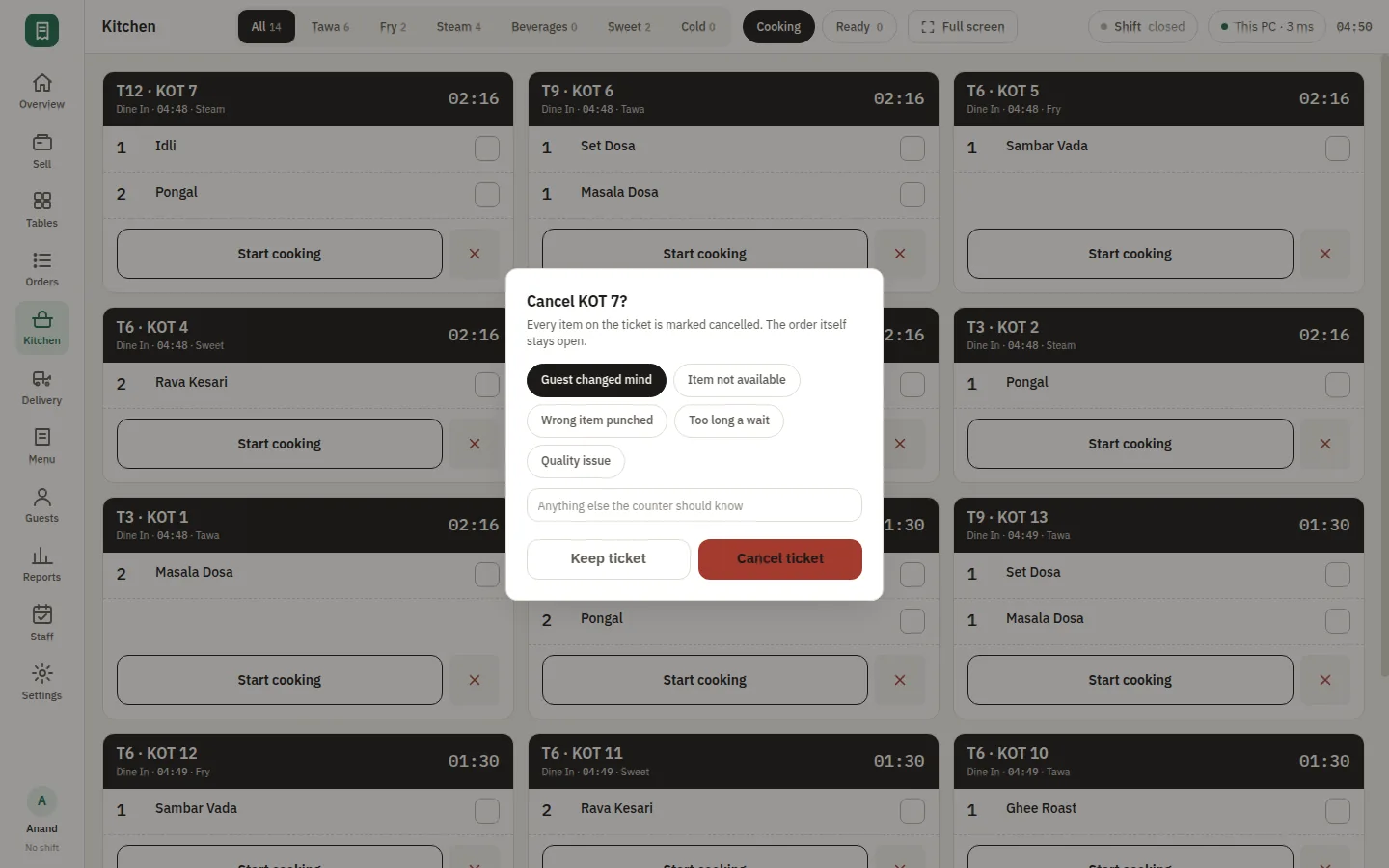
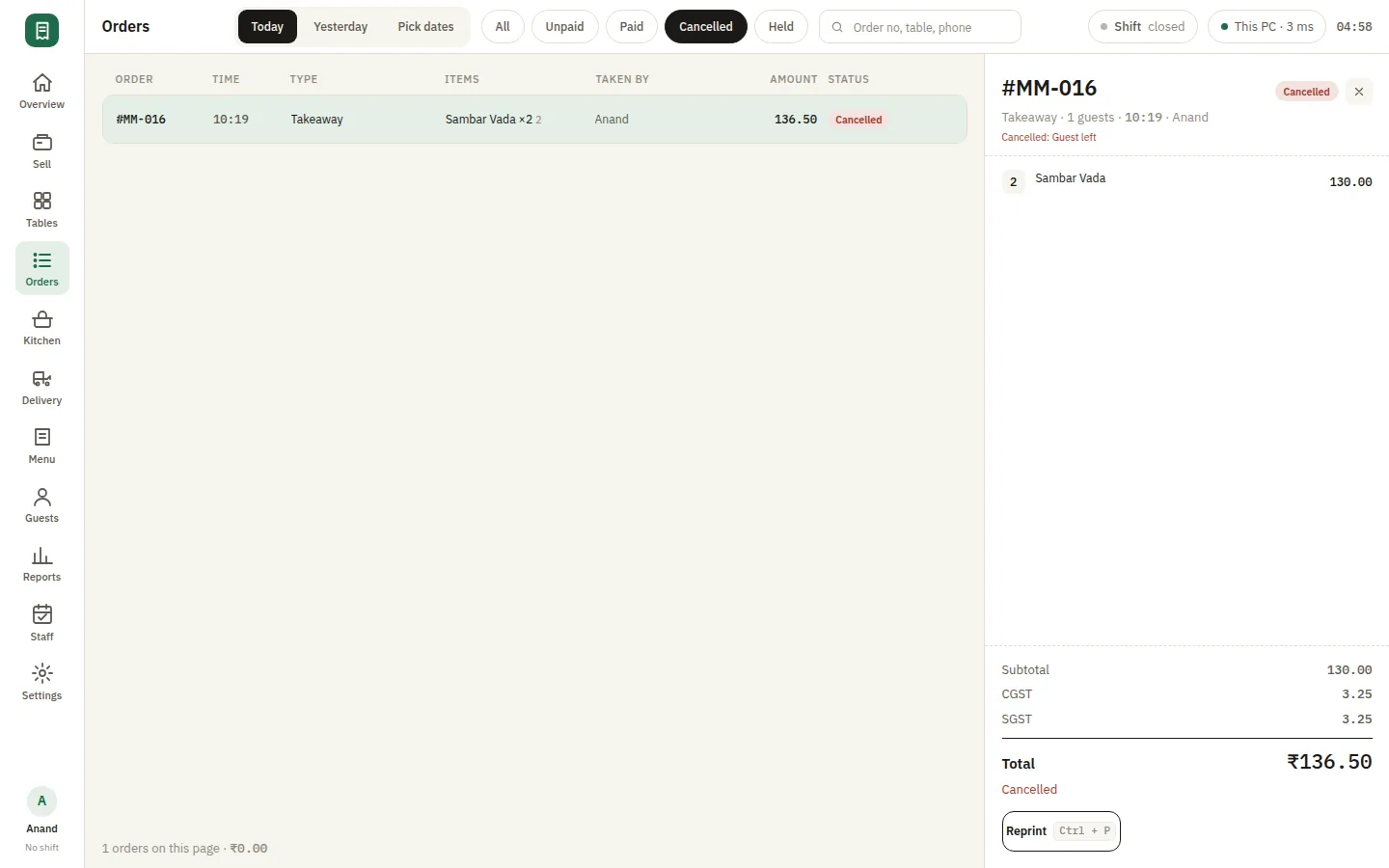
Orders keeps the full history of what you sold — running, held, settled and cancelled — on the counter PC rather than in somebody's cloud. Open any bill to see what was ordered, who took it and how it was paid. Reprint a lost receipt, cancel with a reason that lands in the audit log, or refund a line without unpicking the whole bill. Nothing ages out and nothing needs a connection to look up.

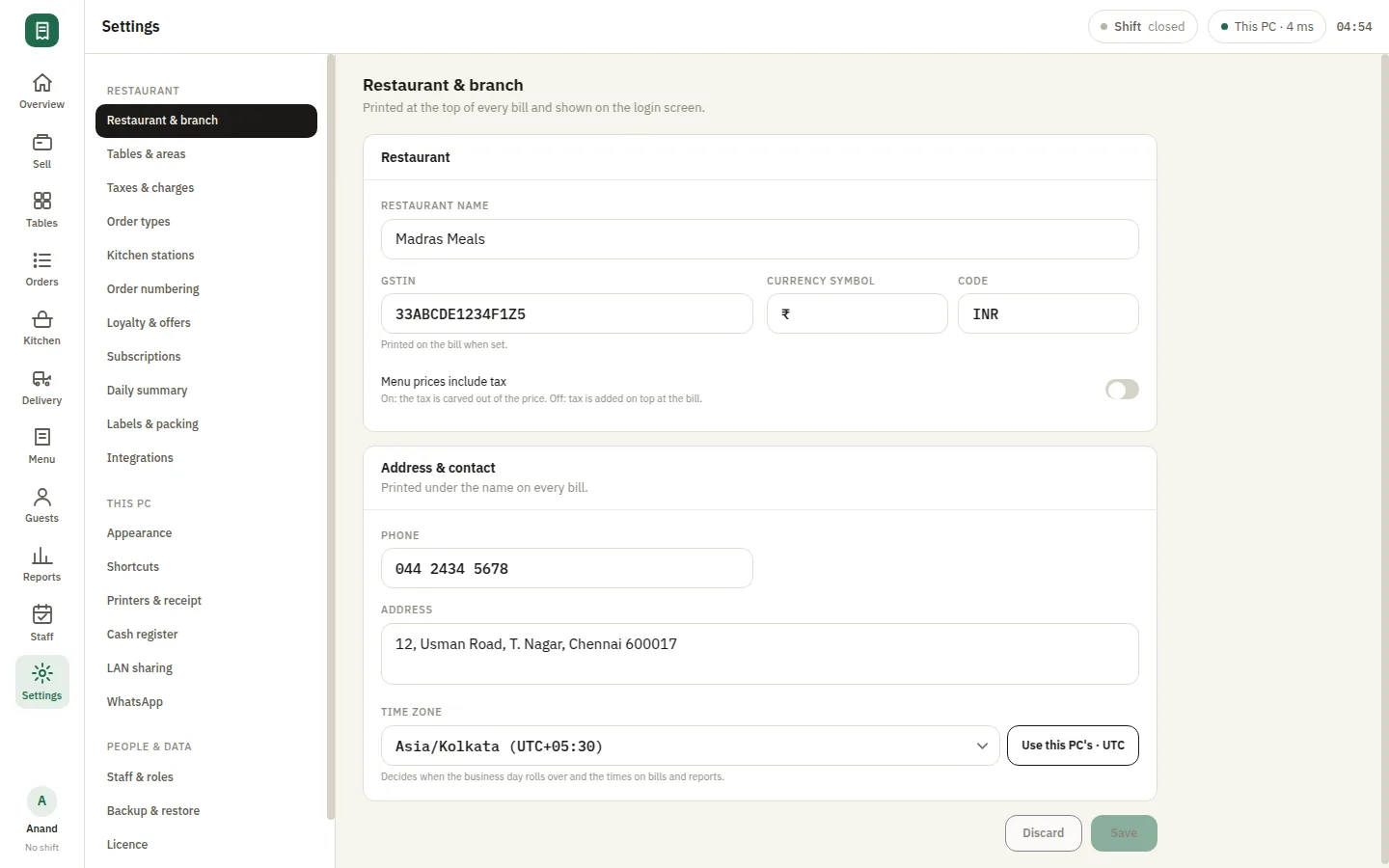
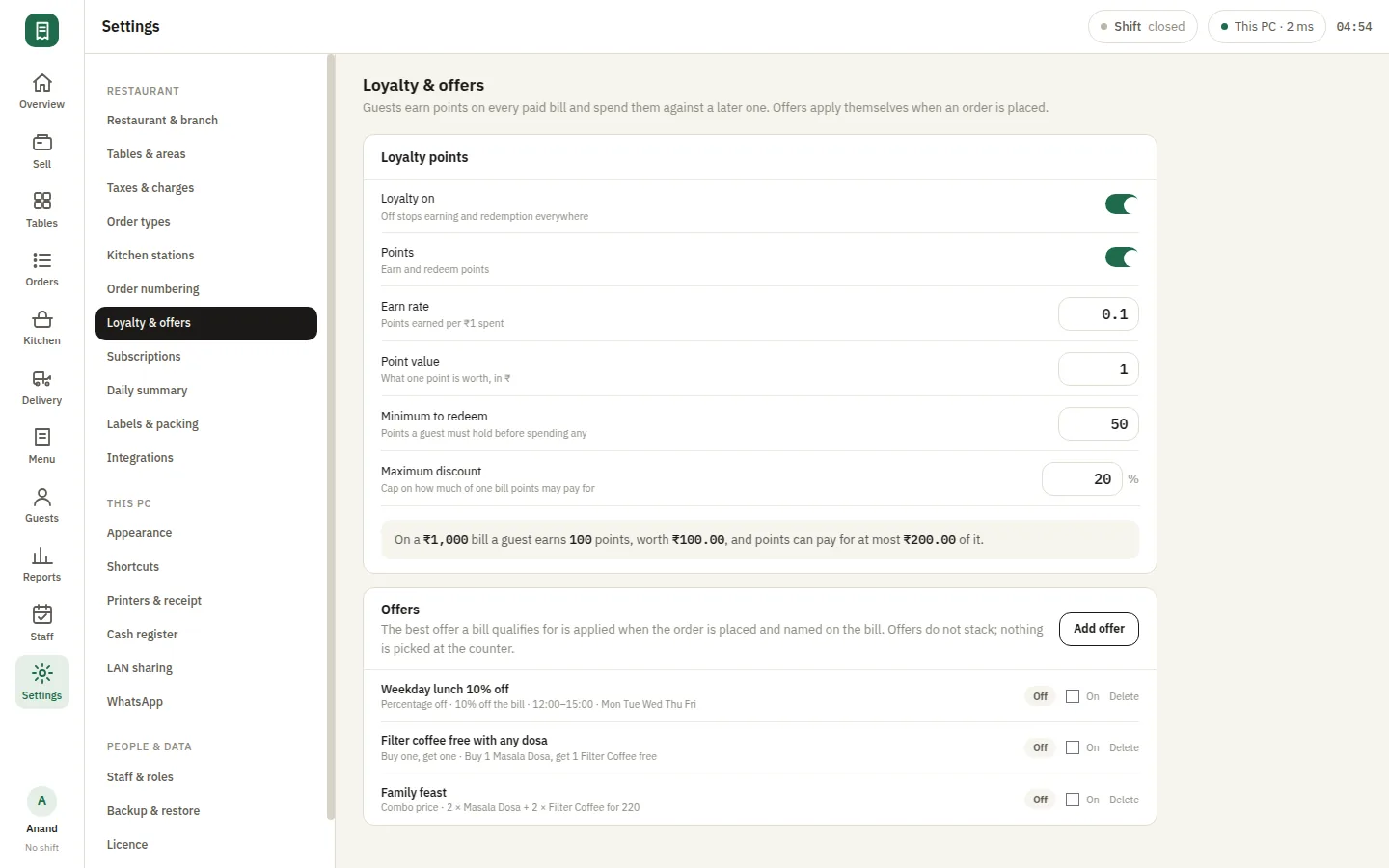
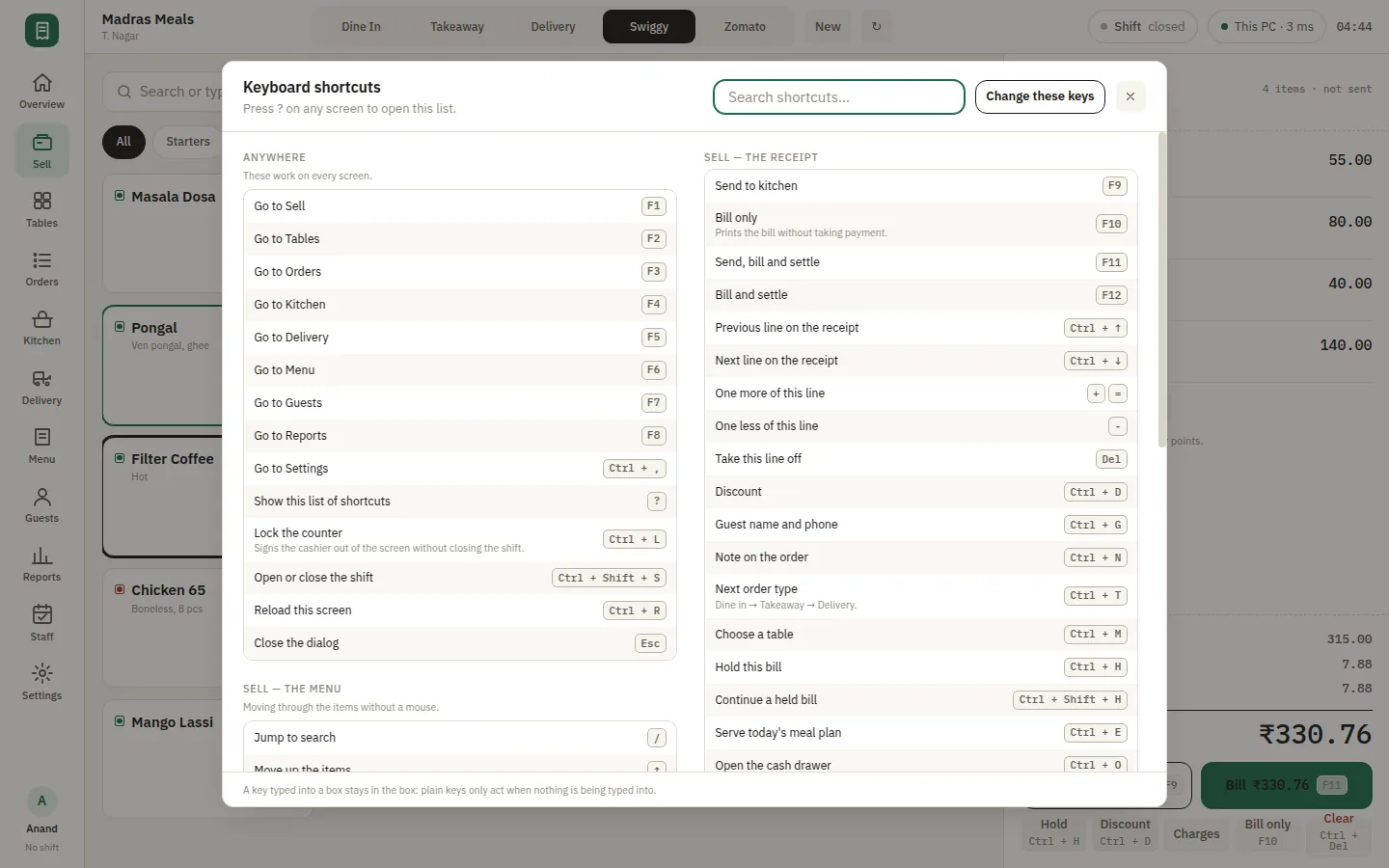
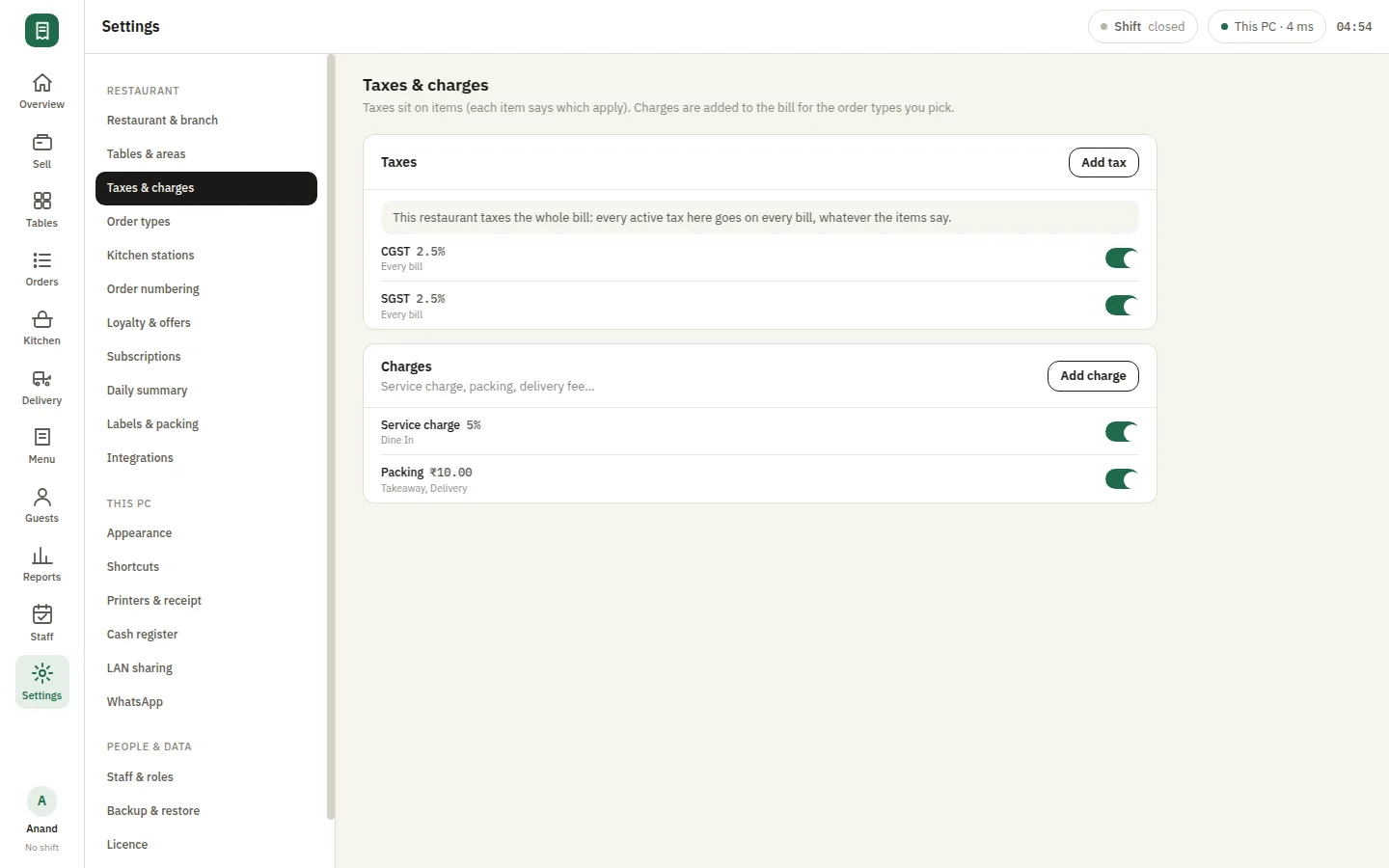
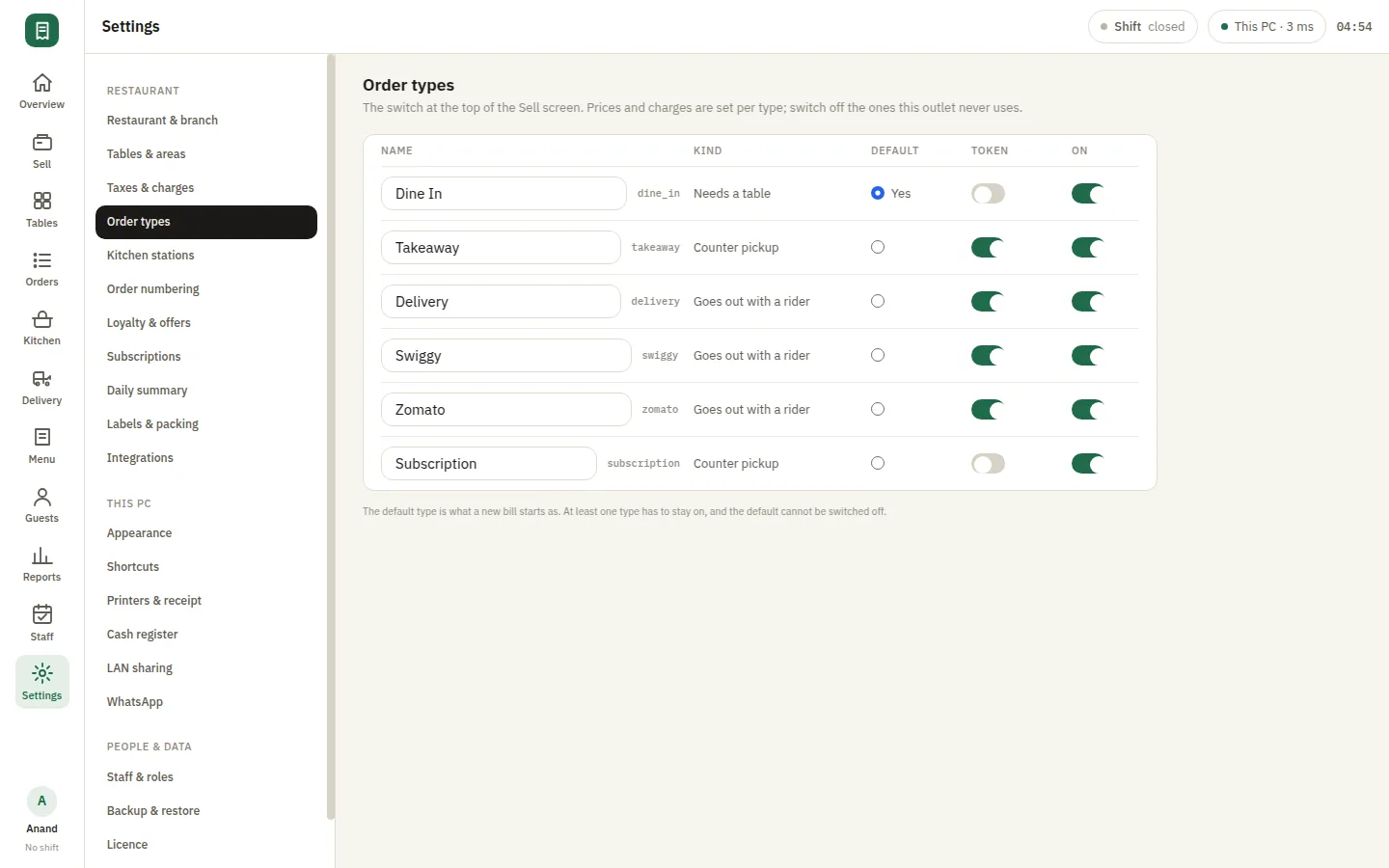
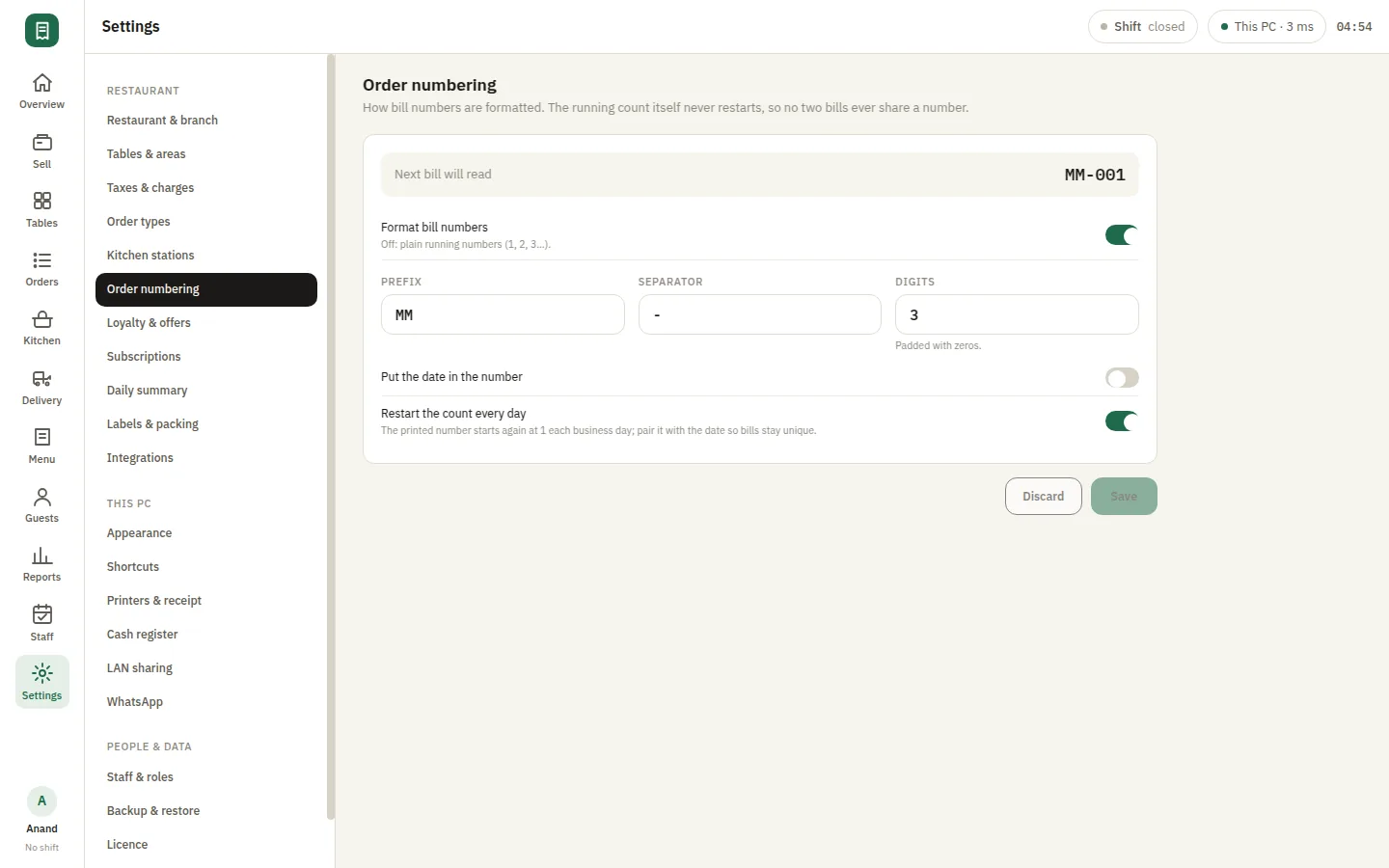
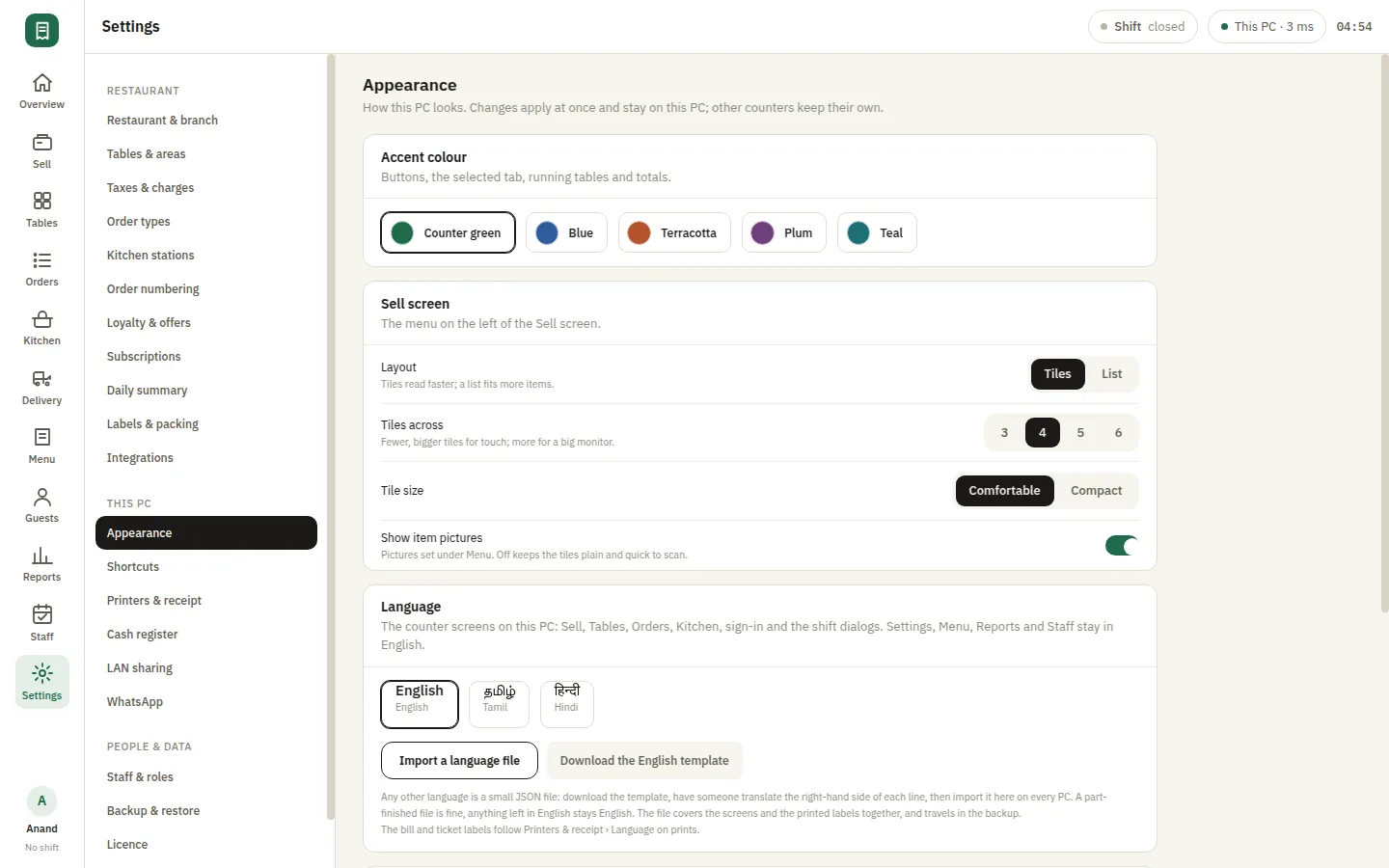
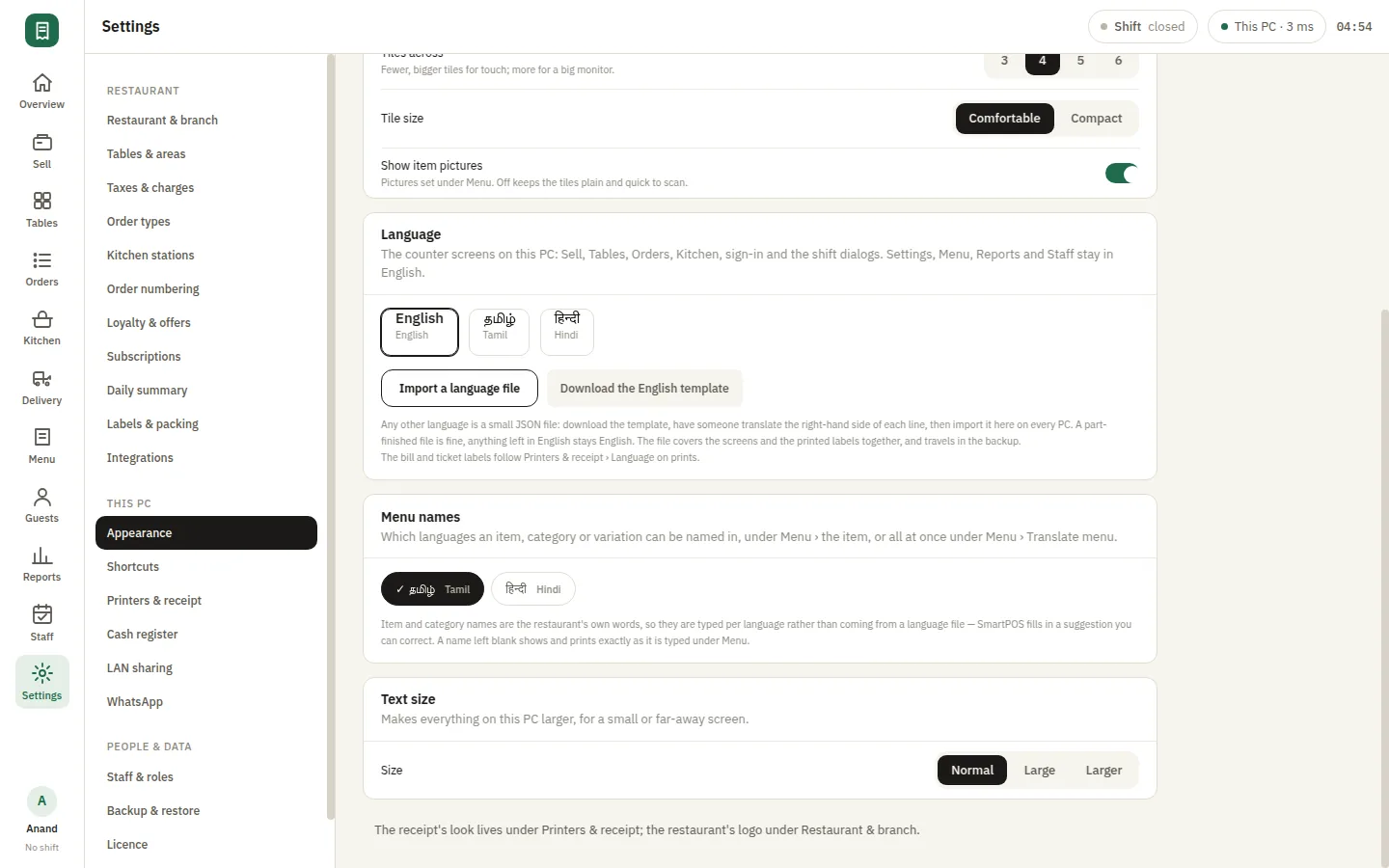
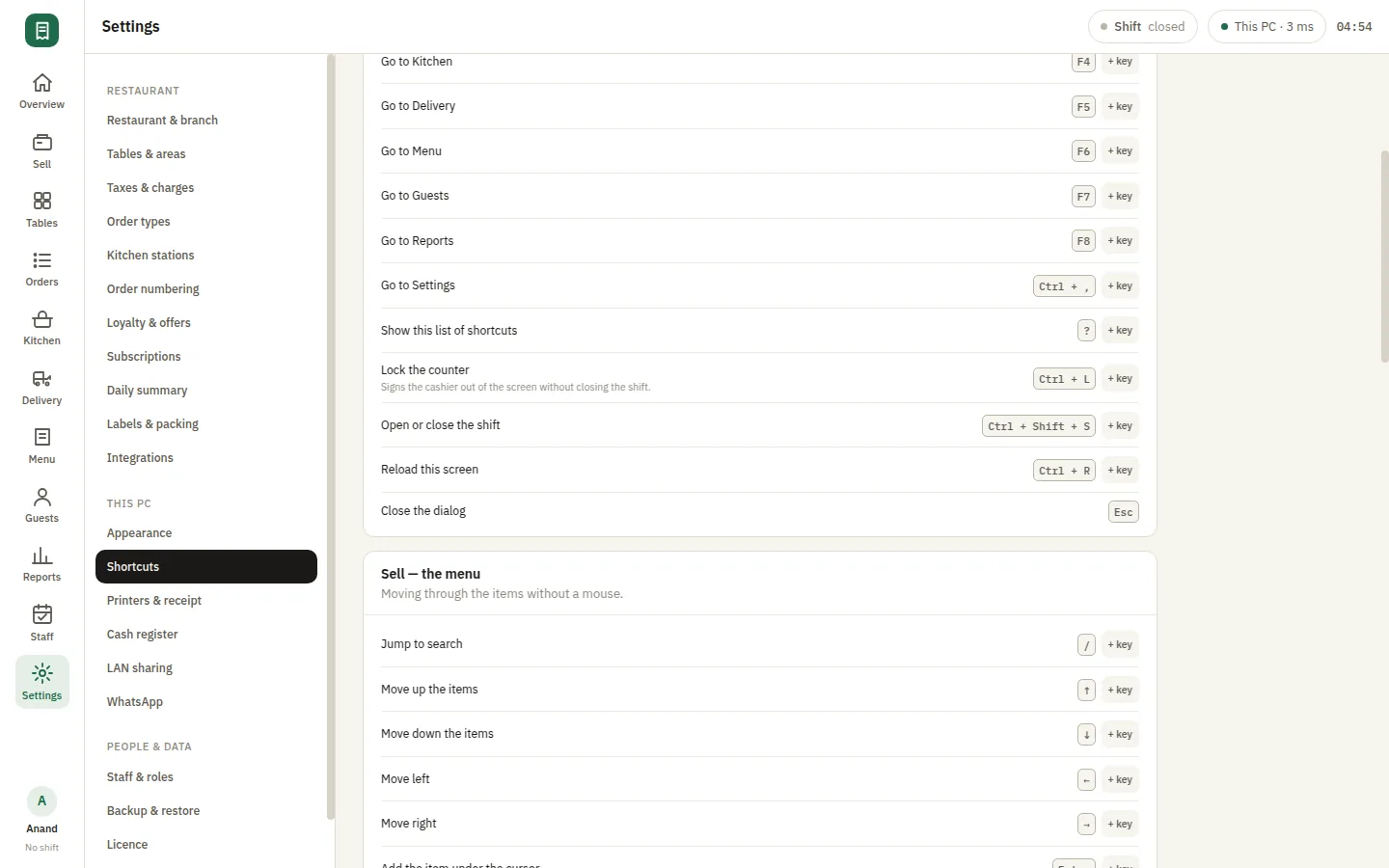
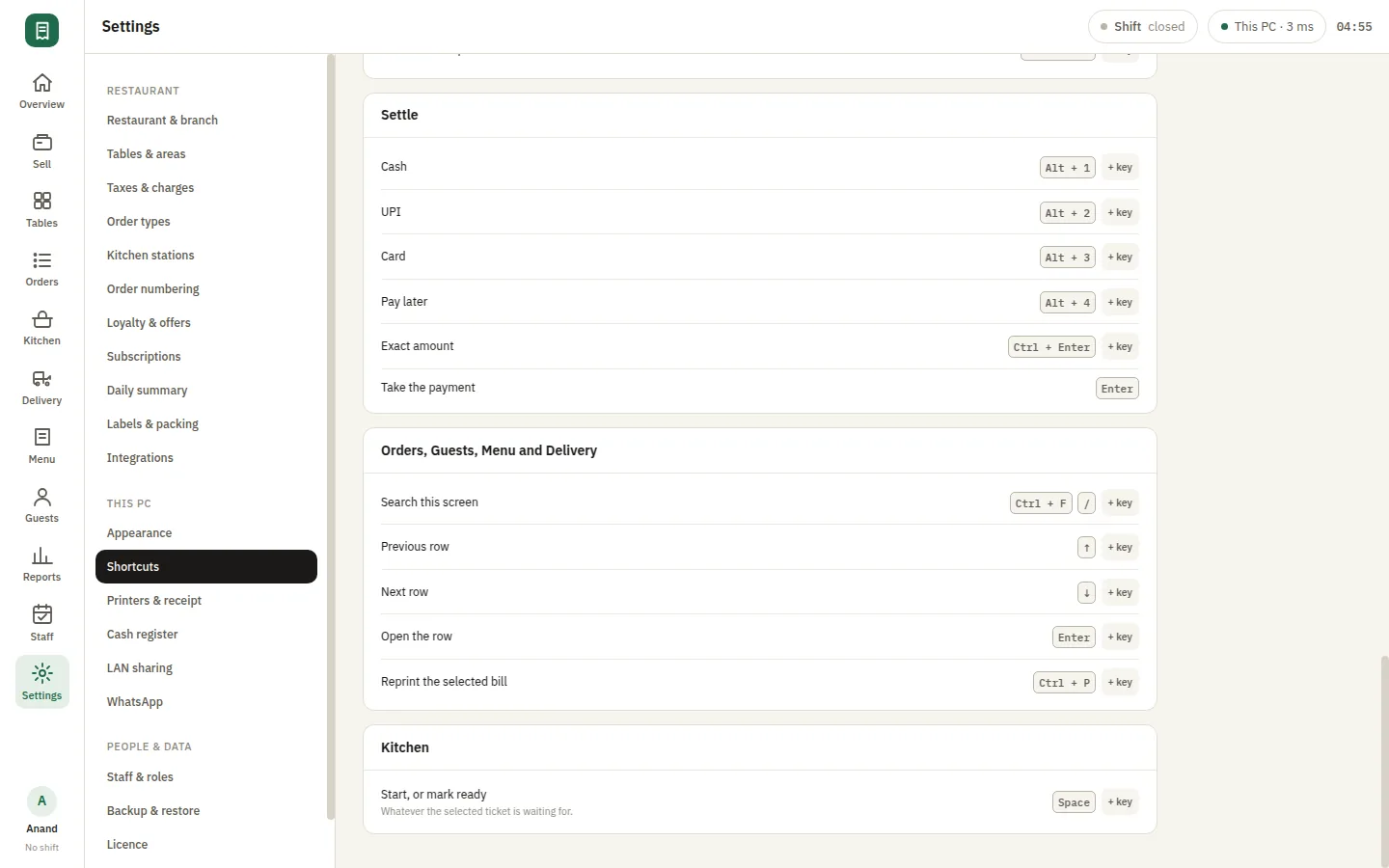
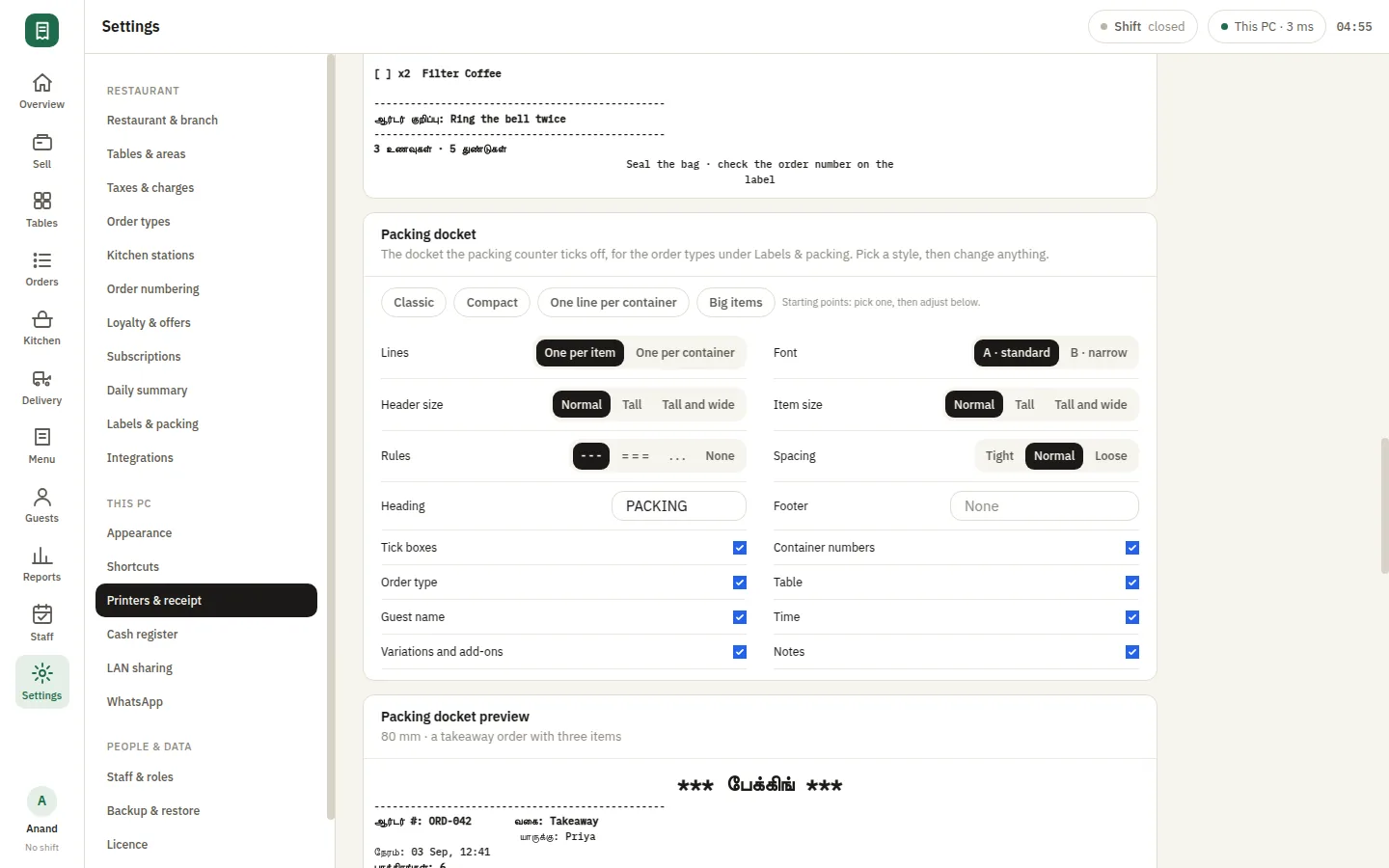
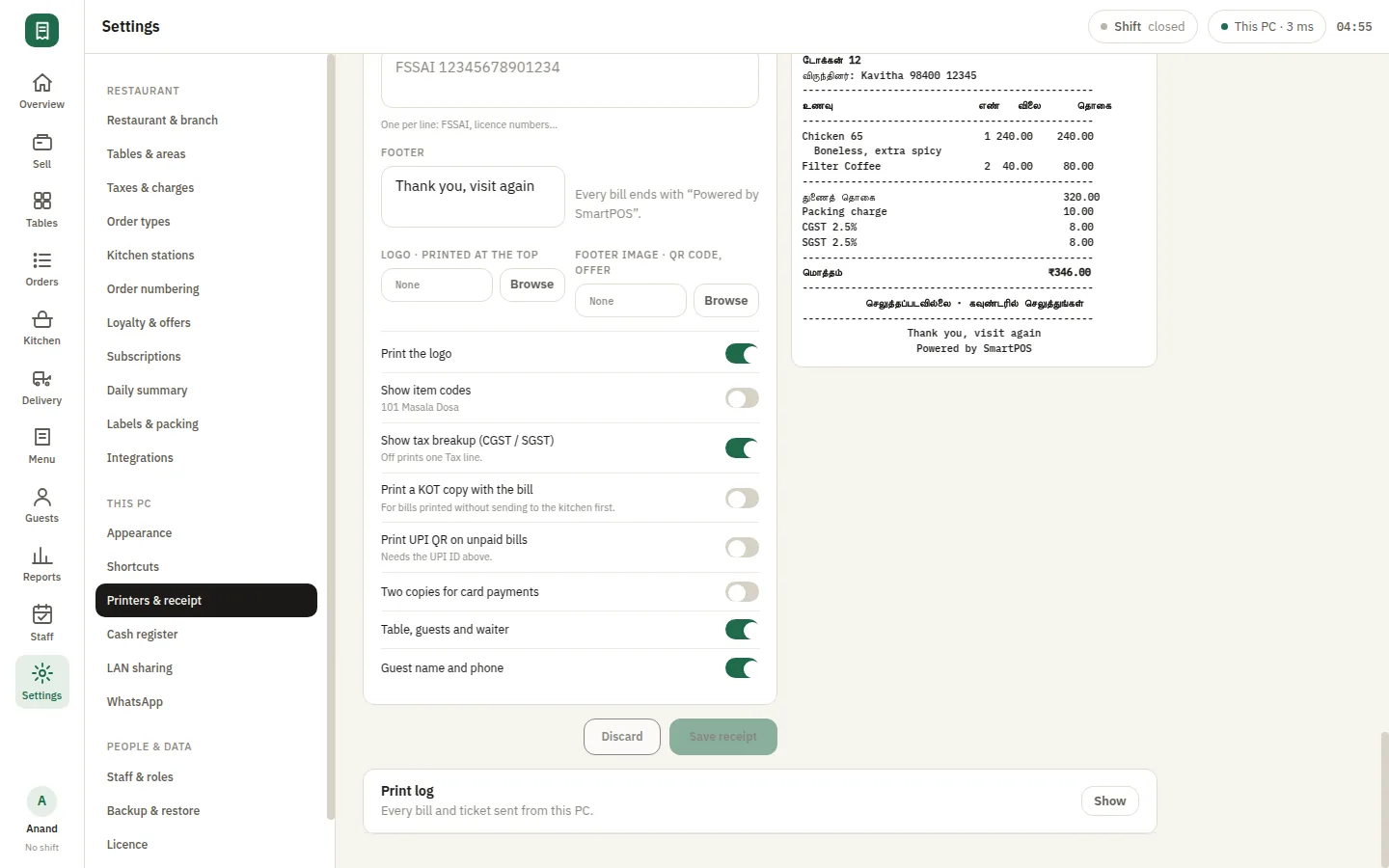
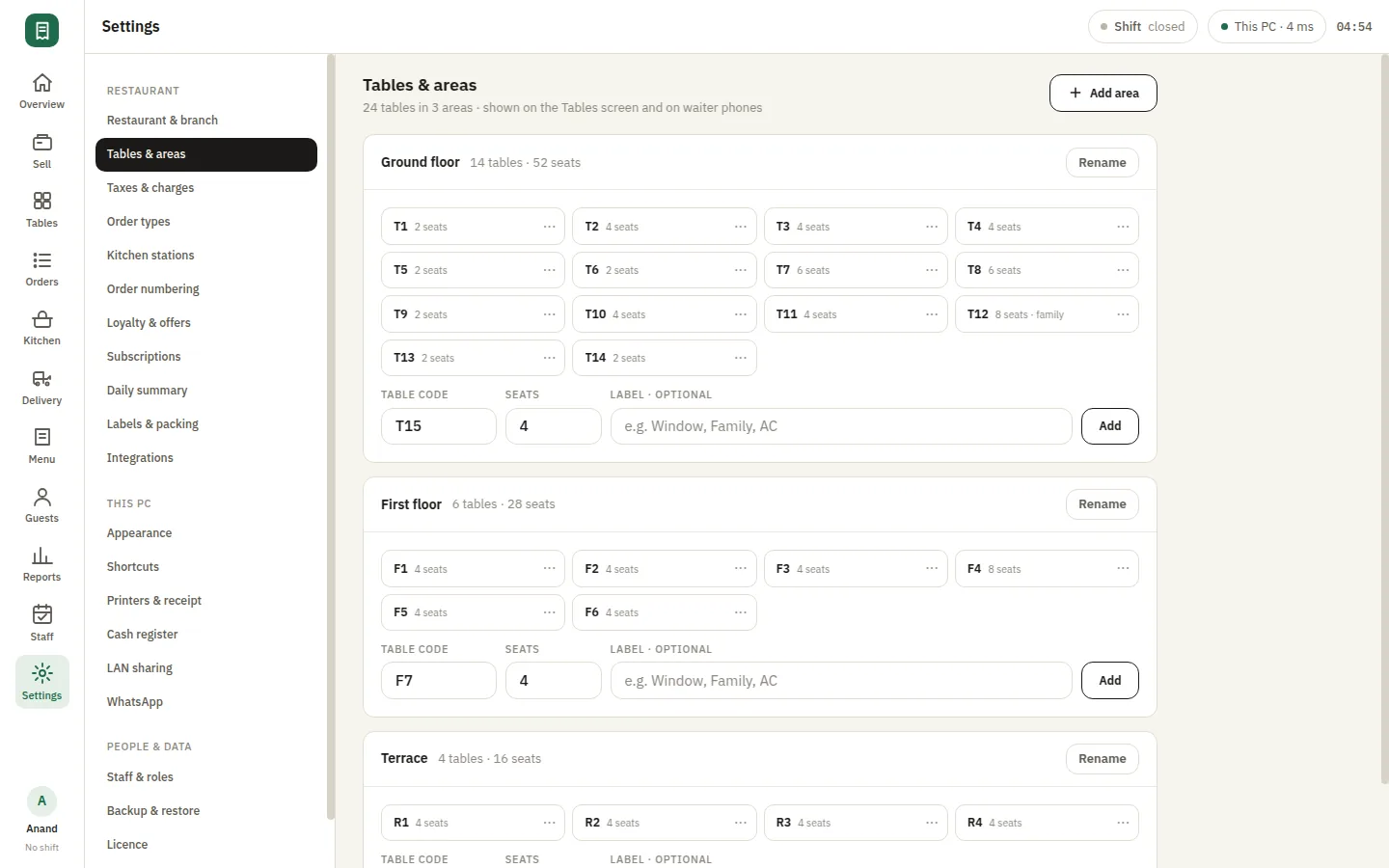
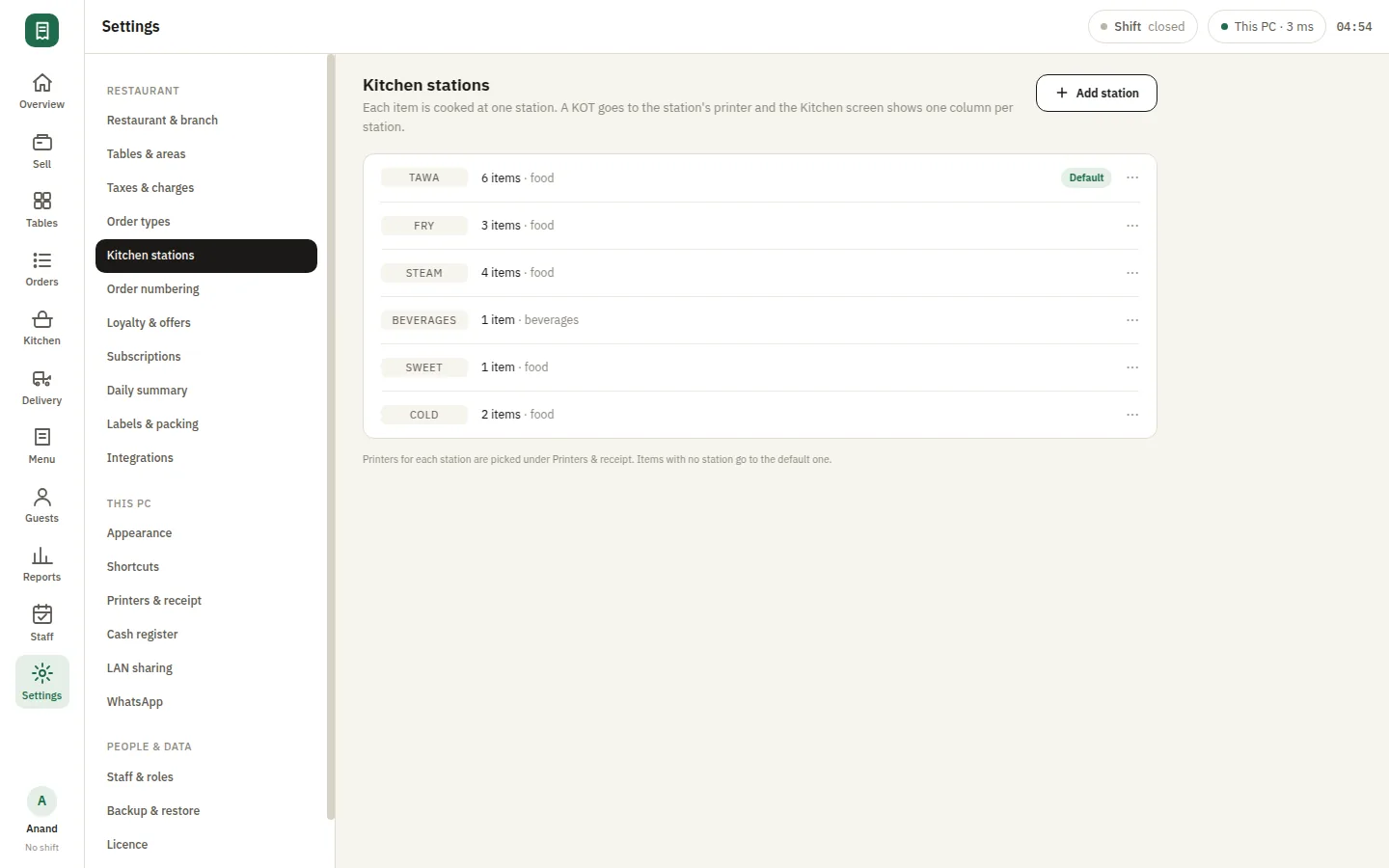
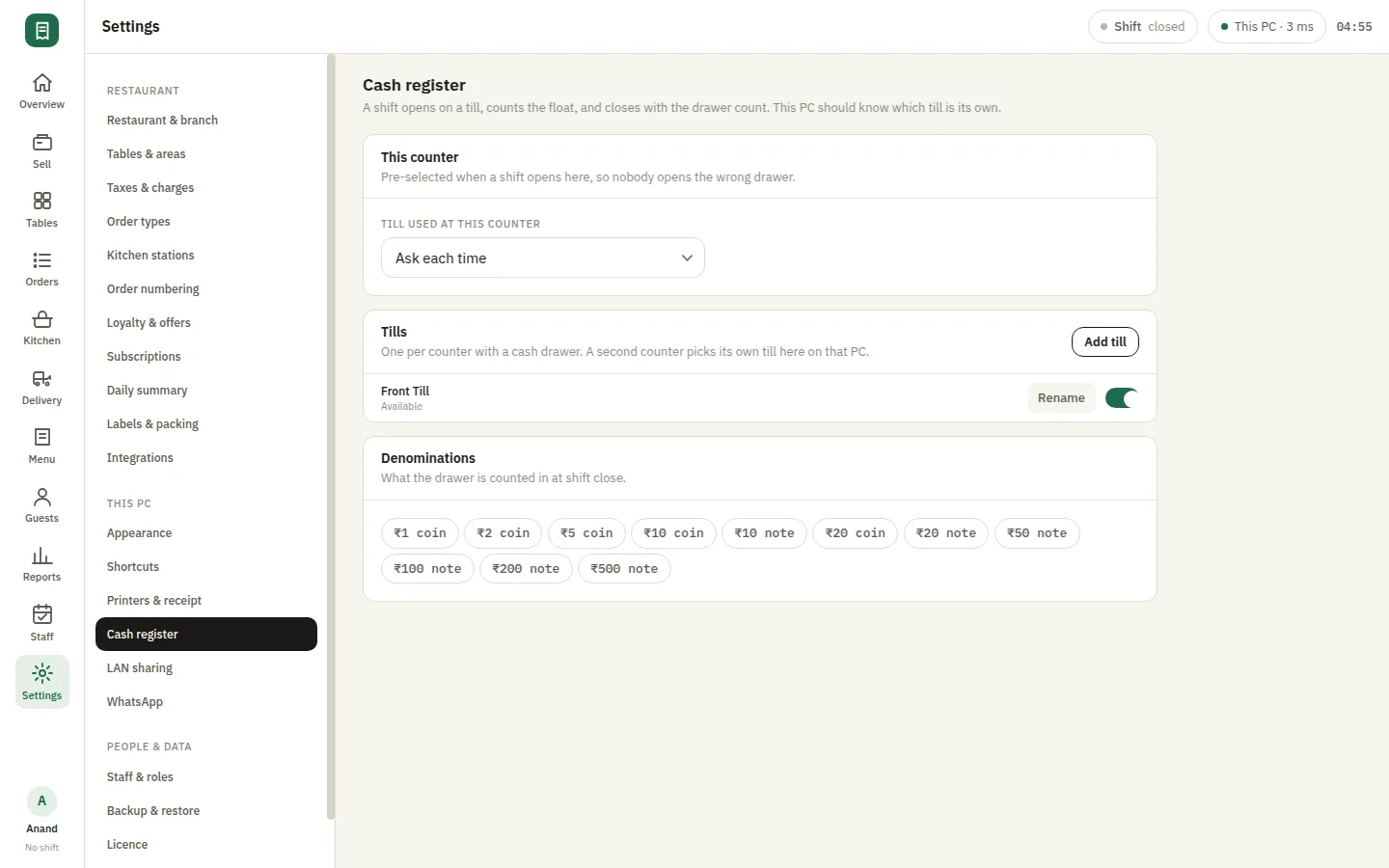
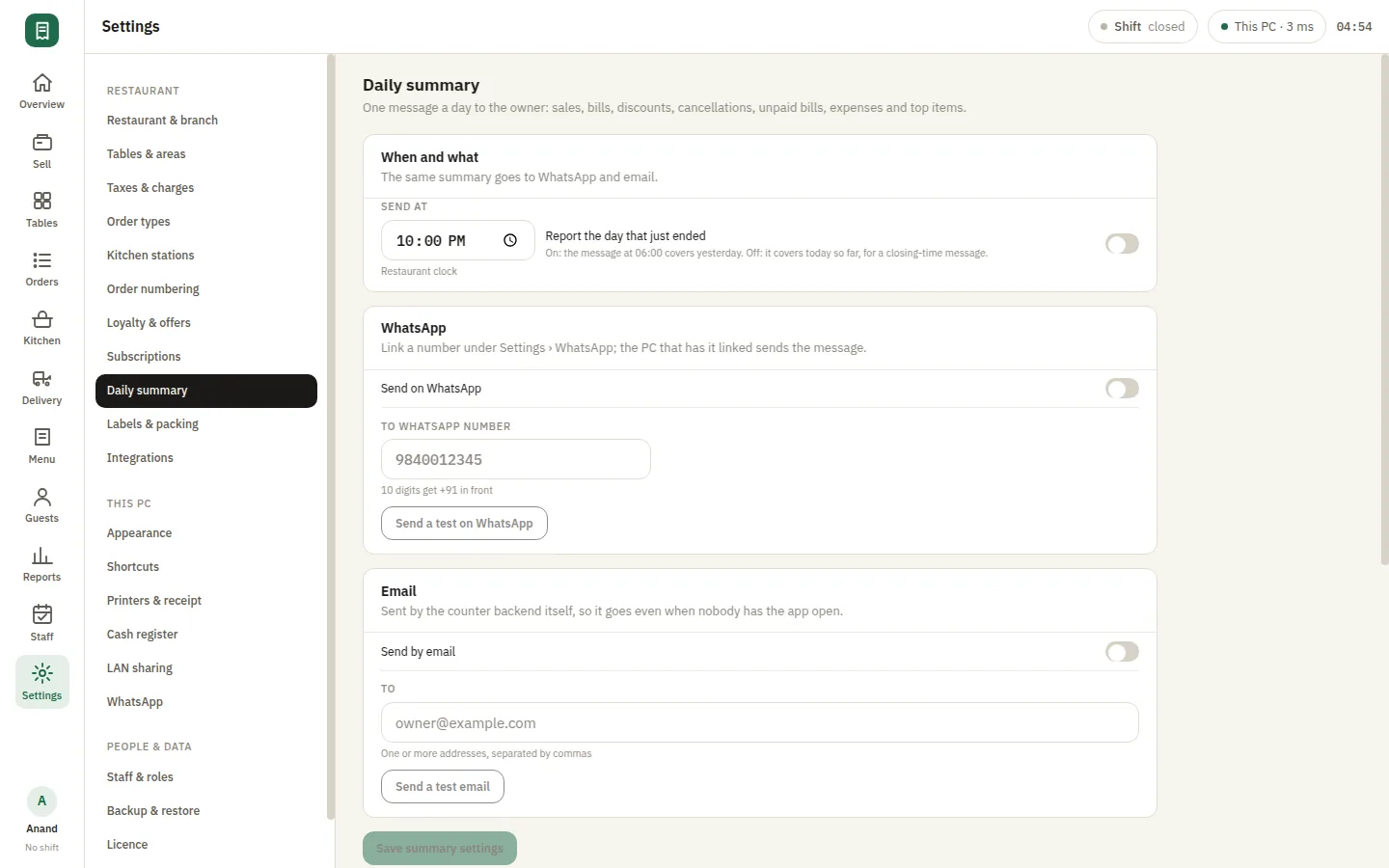
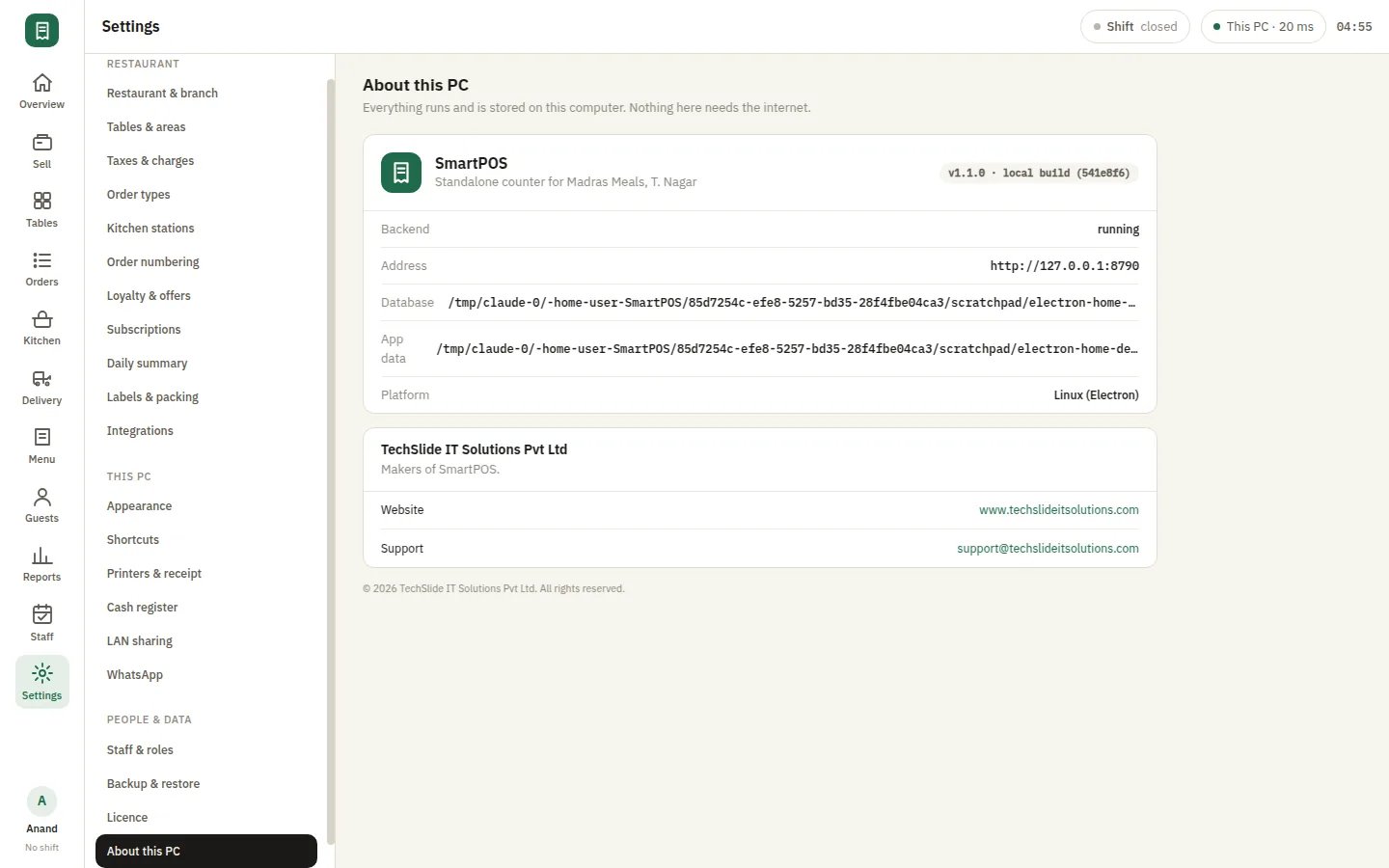
Settings holds the things you decide once and stop thinking about: restaurant and branch details, tax slabs and service charges, order types, bill numbering, receipt layout and the printers behind it. Appearance and keyboard shortcuts are yours to shape around how the counter actually works. It is all stored on the PC, so a setup that suits your restaurant is not something a vendor can change under you.
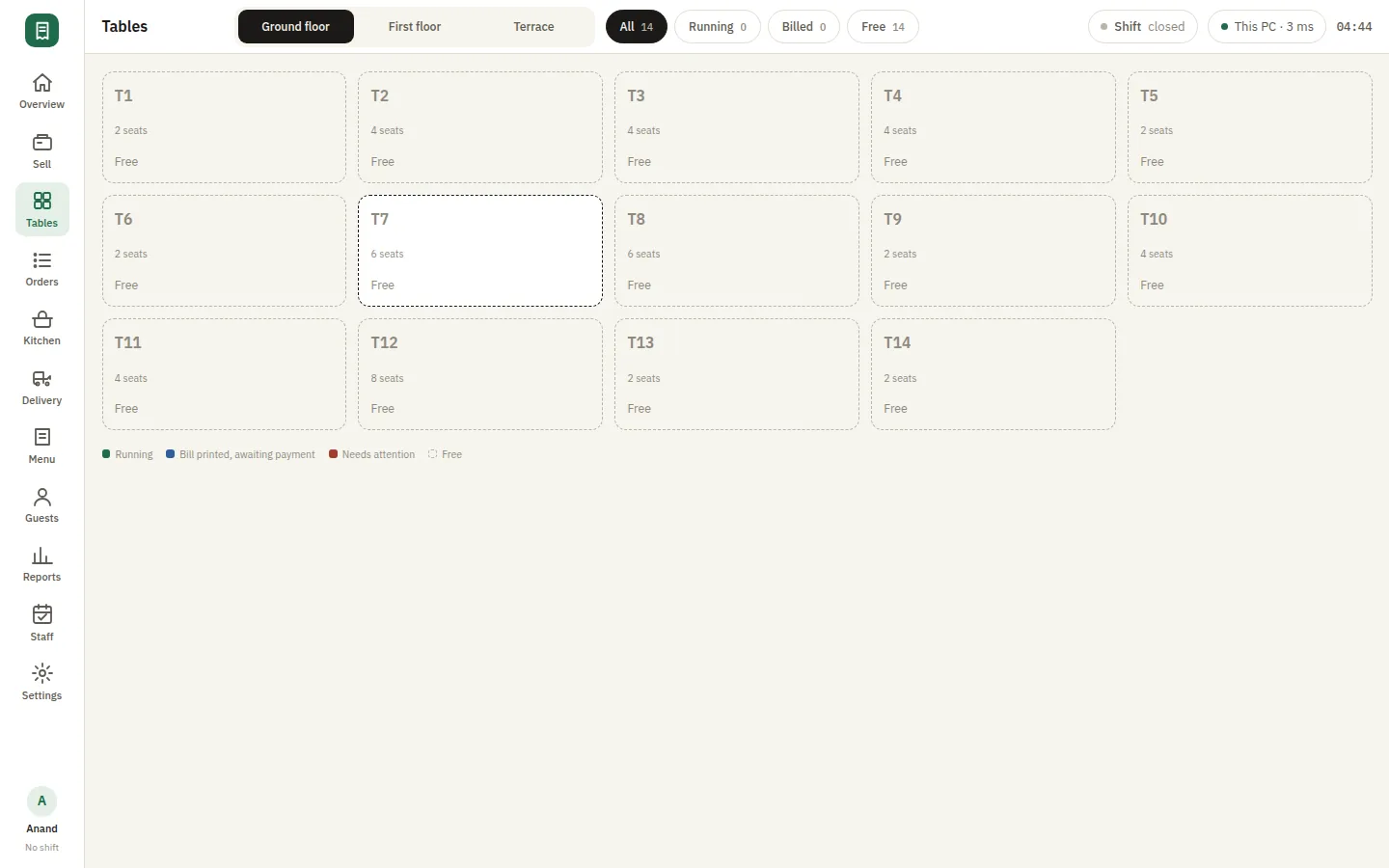
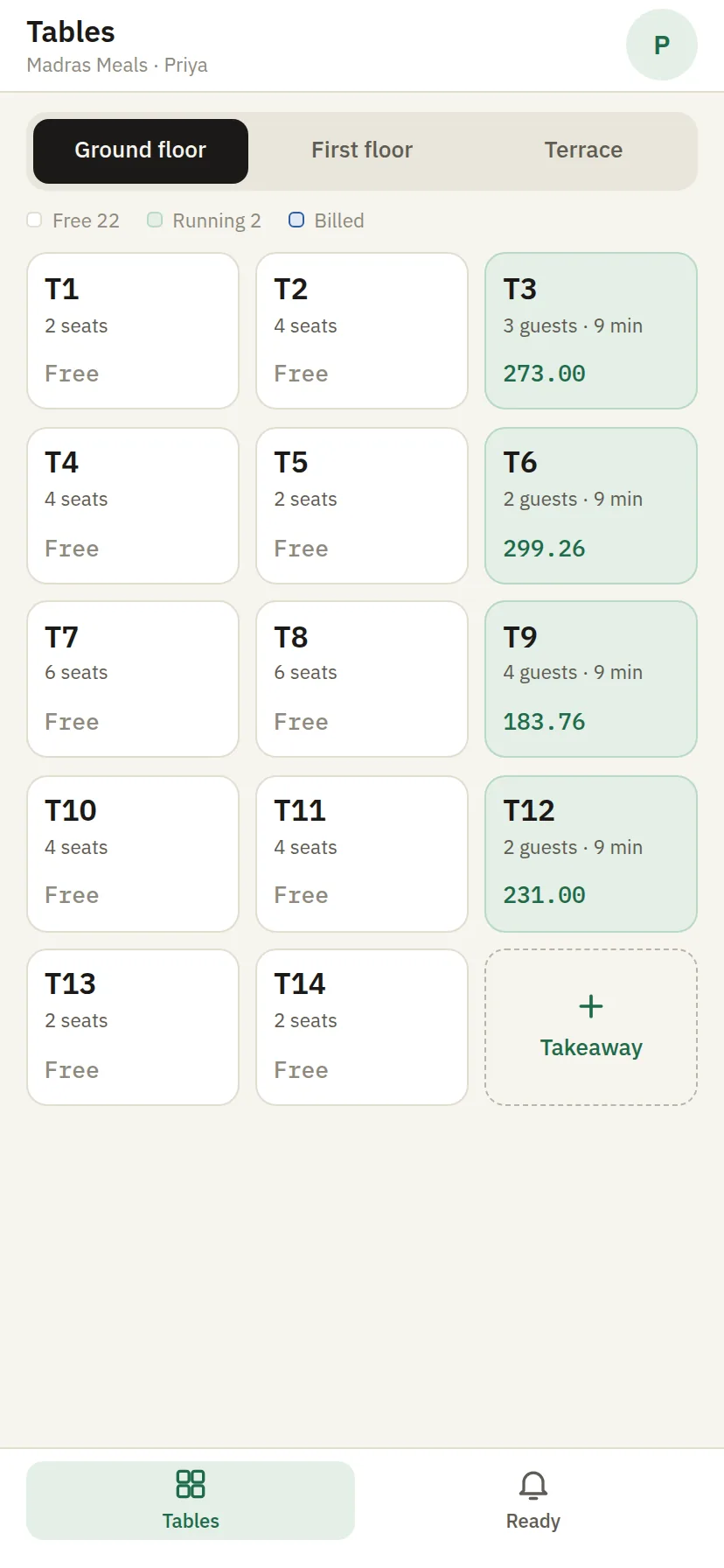
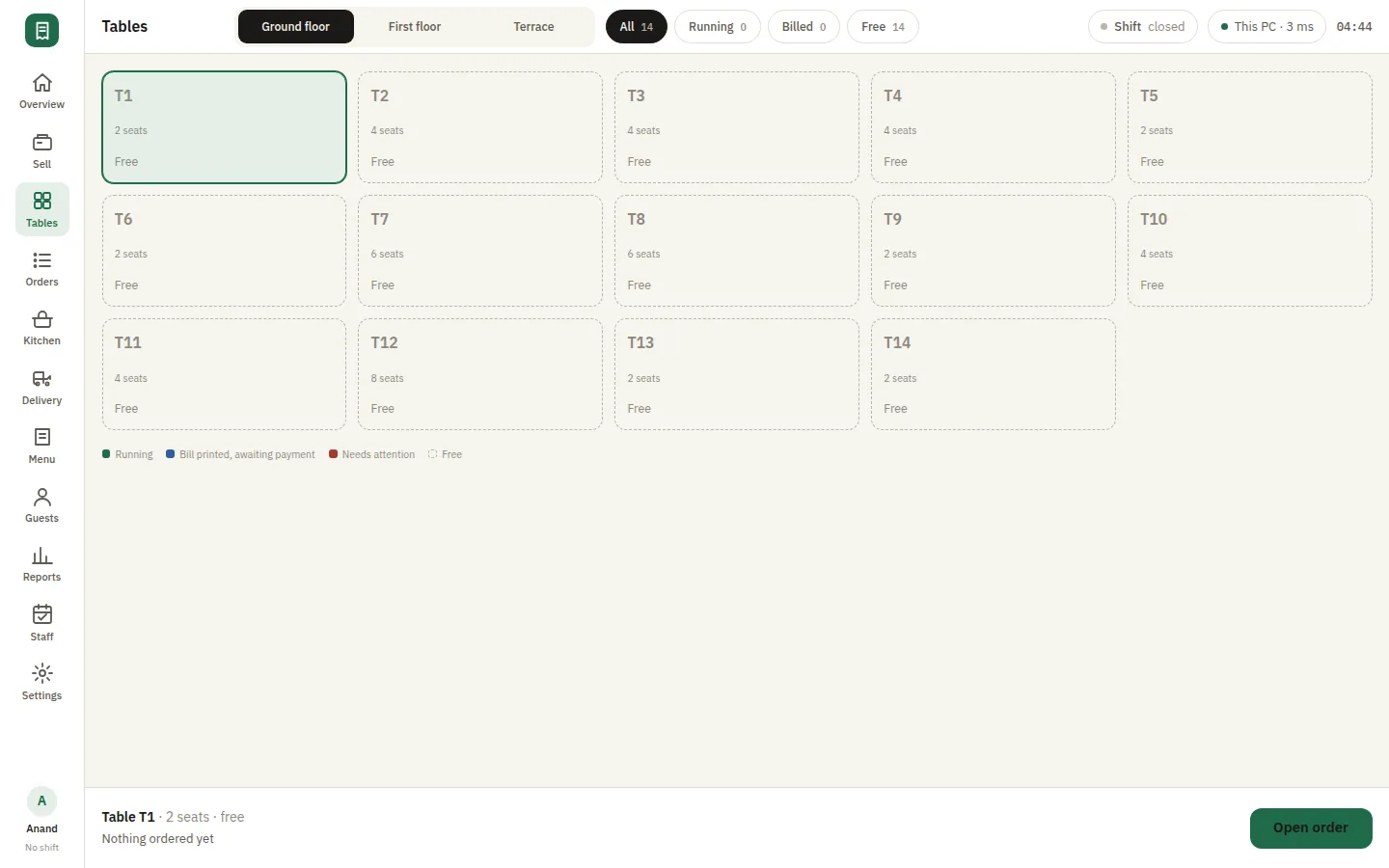
Lay out your floor areas and dine-in tables the way the restaurant is really arranged, then run service off the table map. A running table shows what is already on it, and each new round joins the same bill rather than starting another one. Moving a guest, merging a bill or seeing at a glance which table is waiting takes a tap, which is what keeps a busy dining room from drifting out of order.


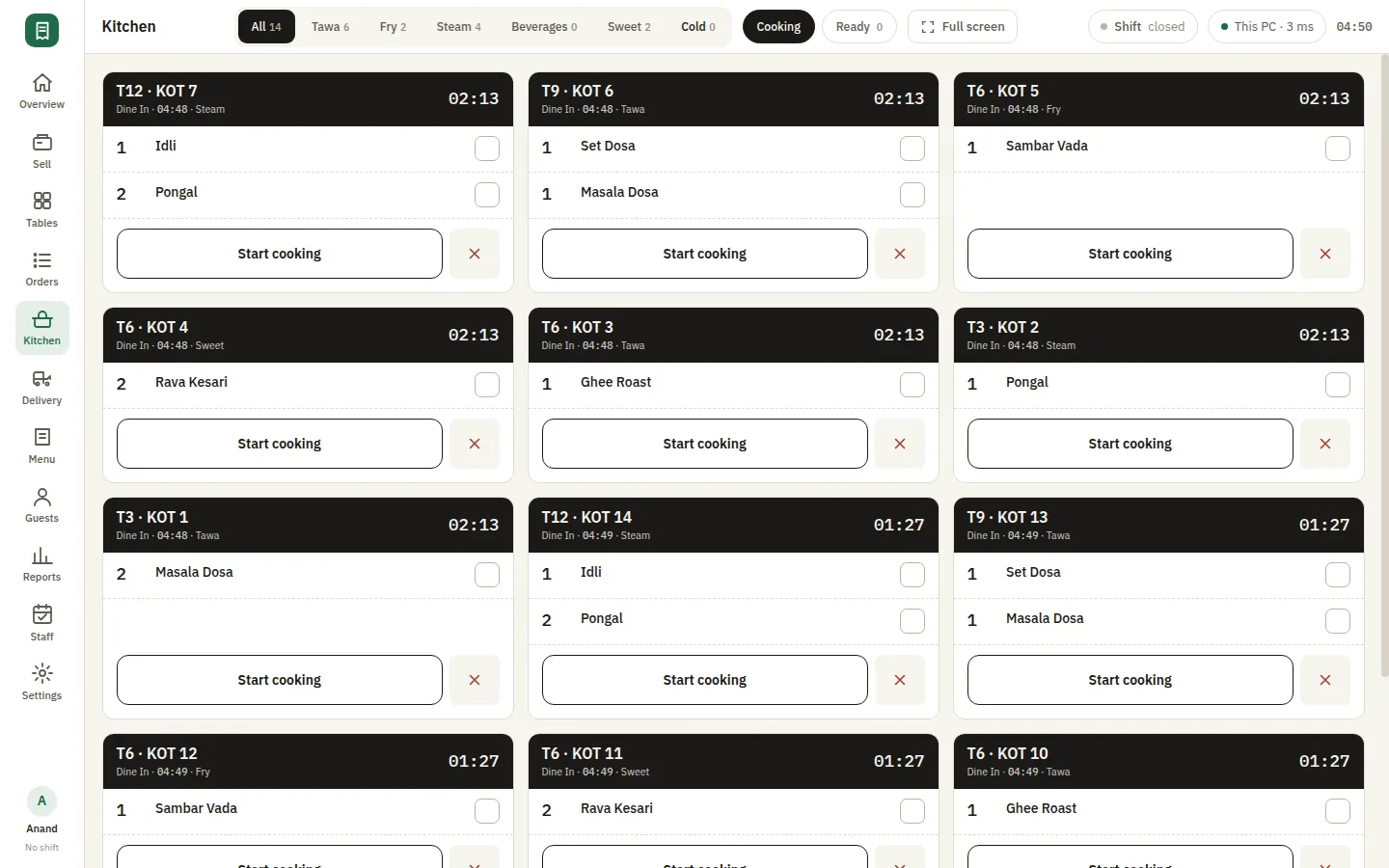
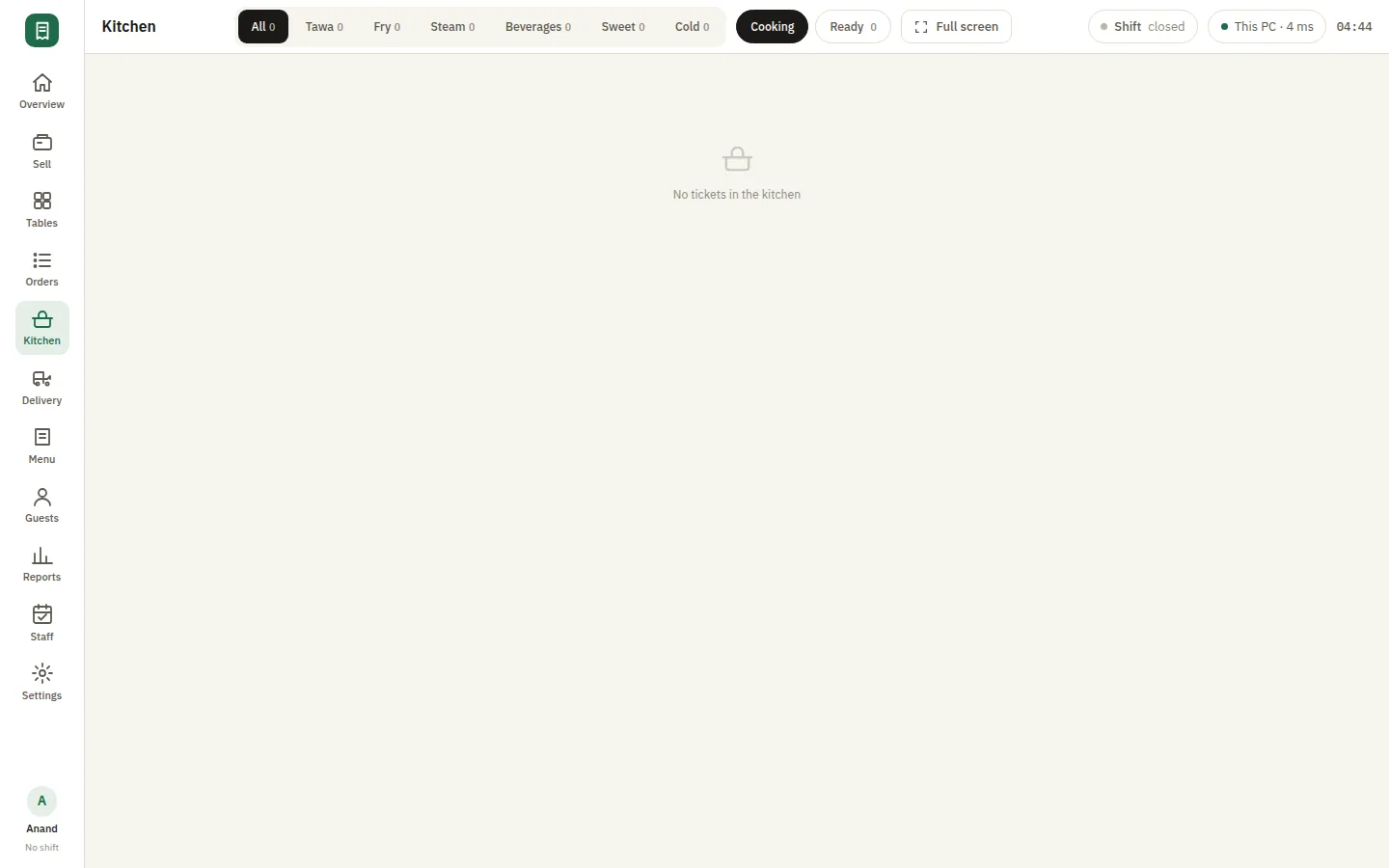
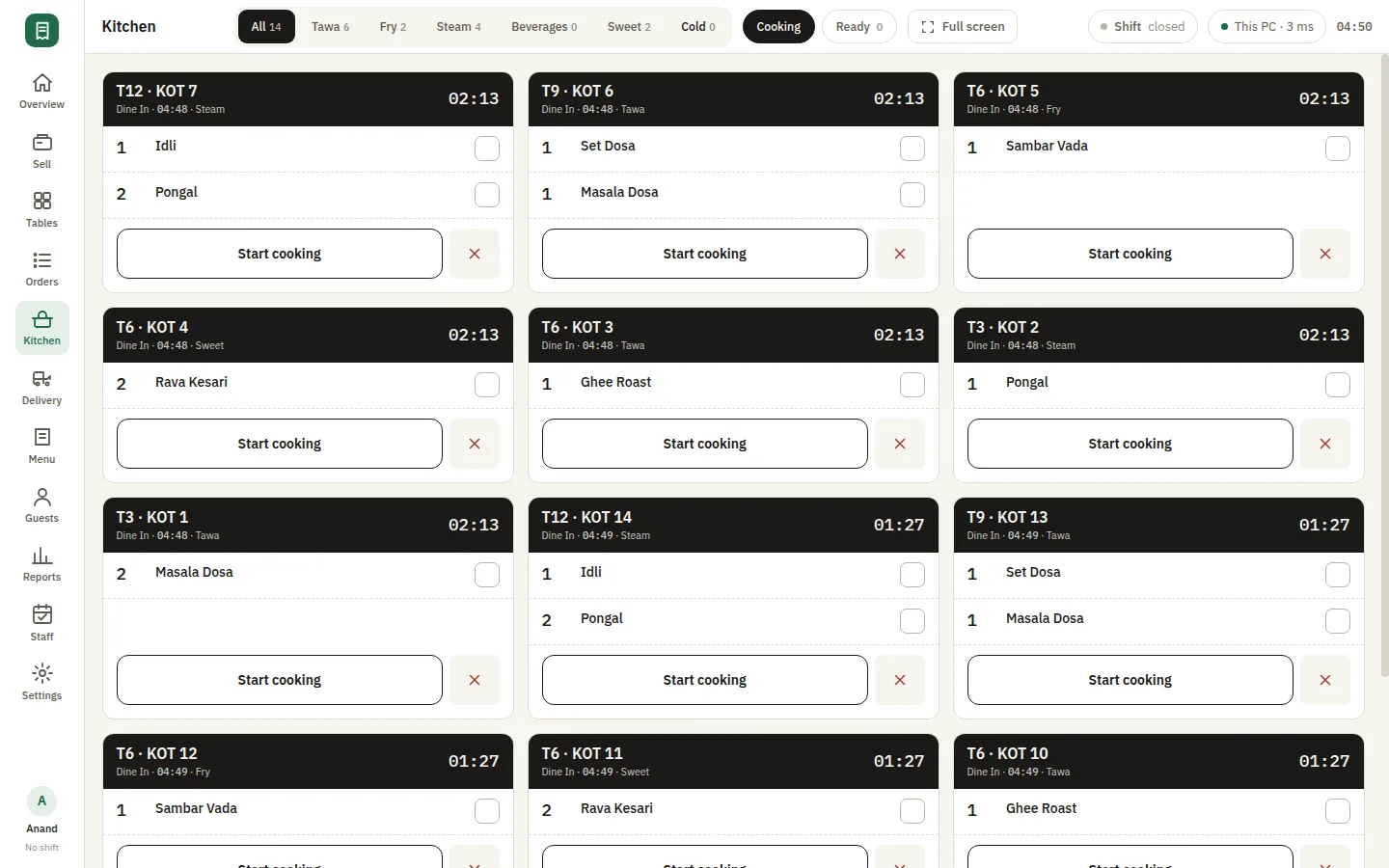
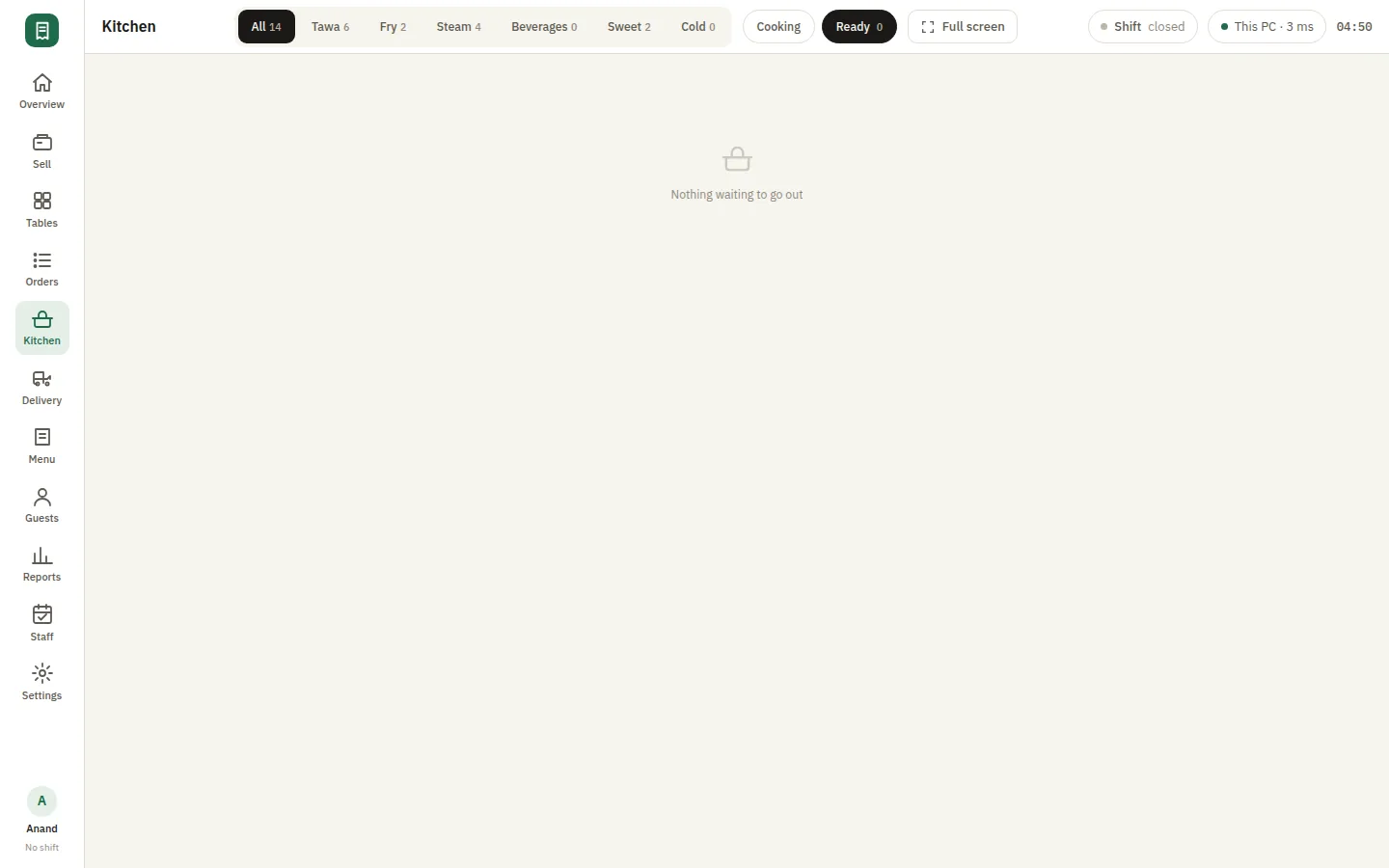
Tickets land on a kitchen display the moment the KOT is sent, grouped by station so the tandoor and the curry section each see their own work. Marking a ticket ready tells the counter without anyone shouting across the pass. The screen runs on any tablet or old monitor on your own Wi-Fi with no internet, so a kitchen display costs you a spare device rather than a subscription.
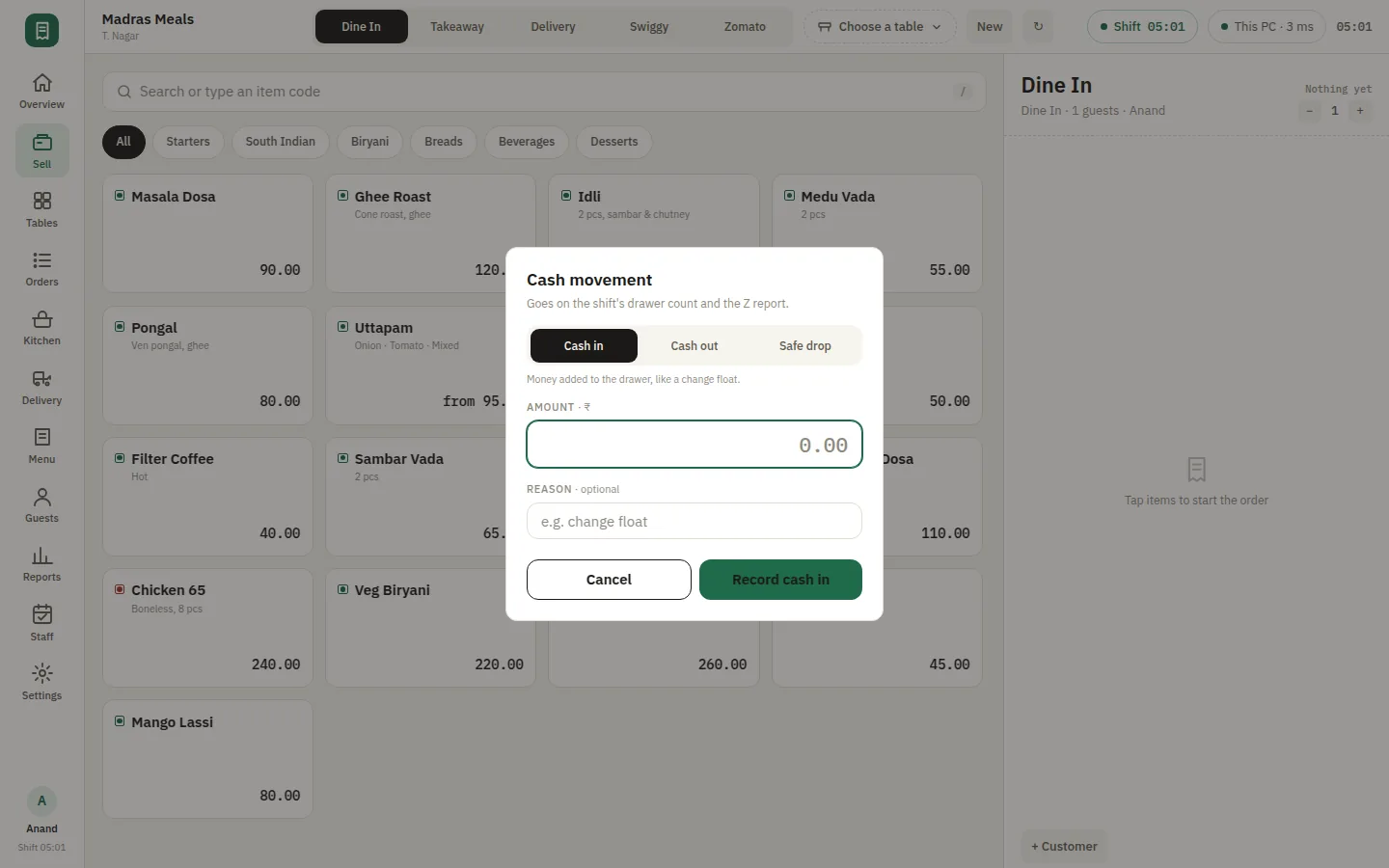
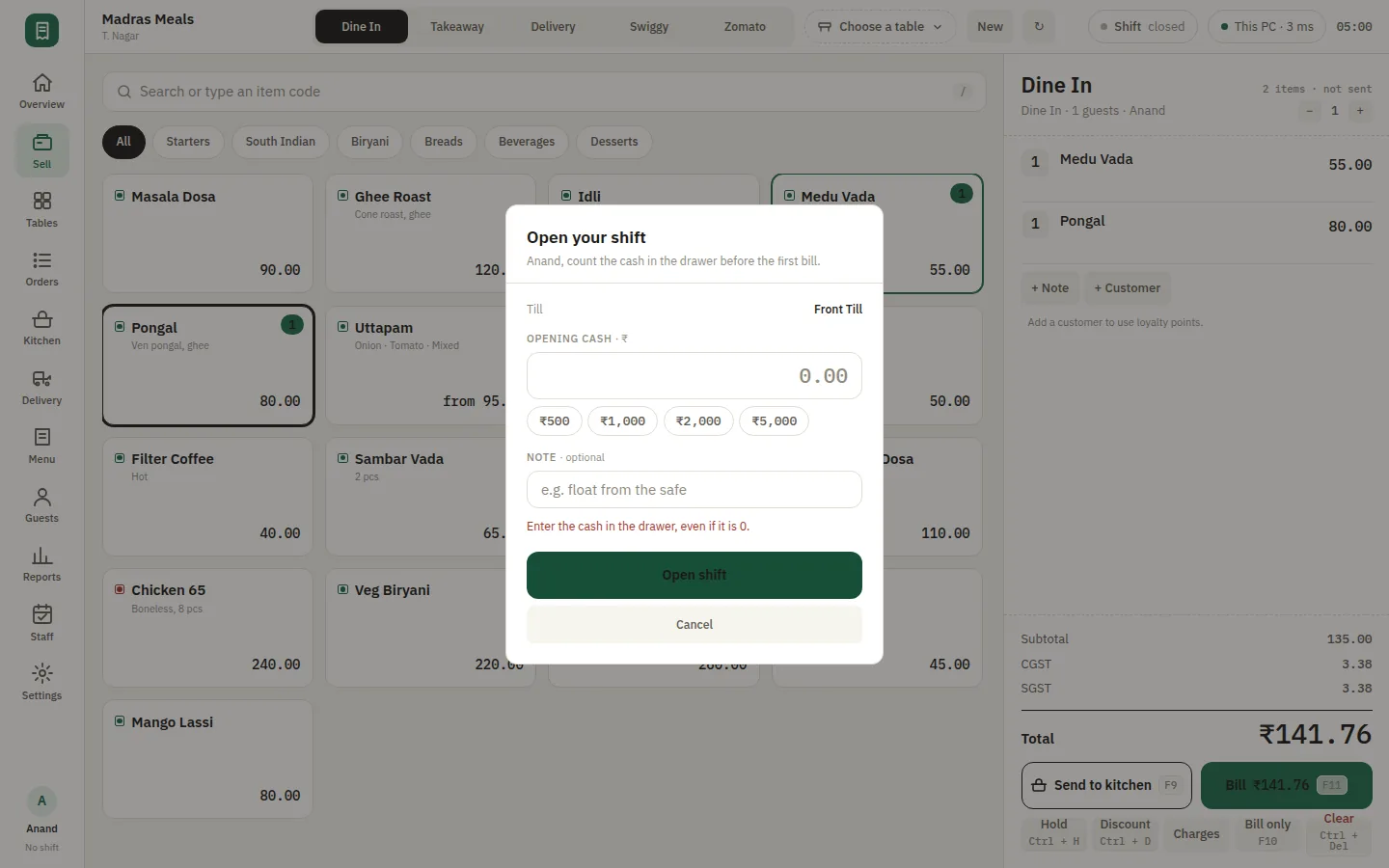
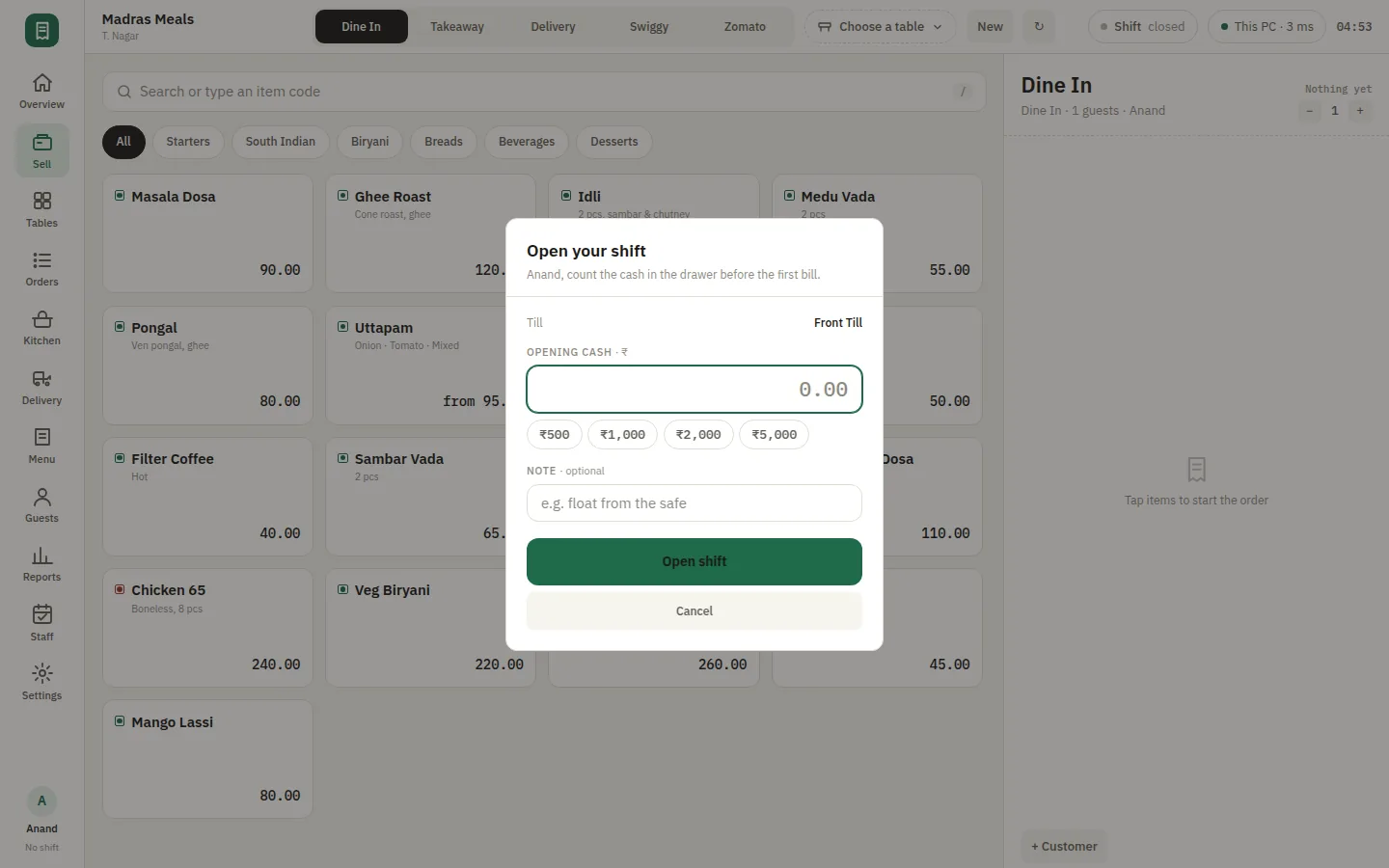
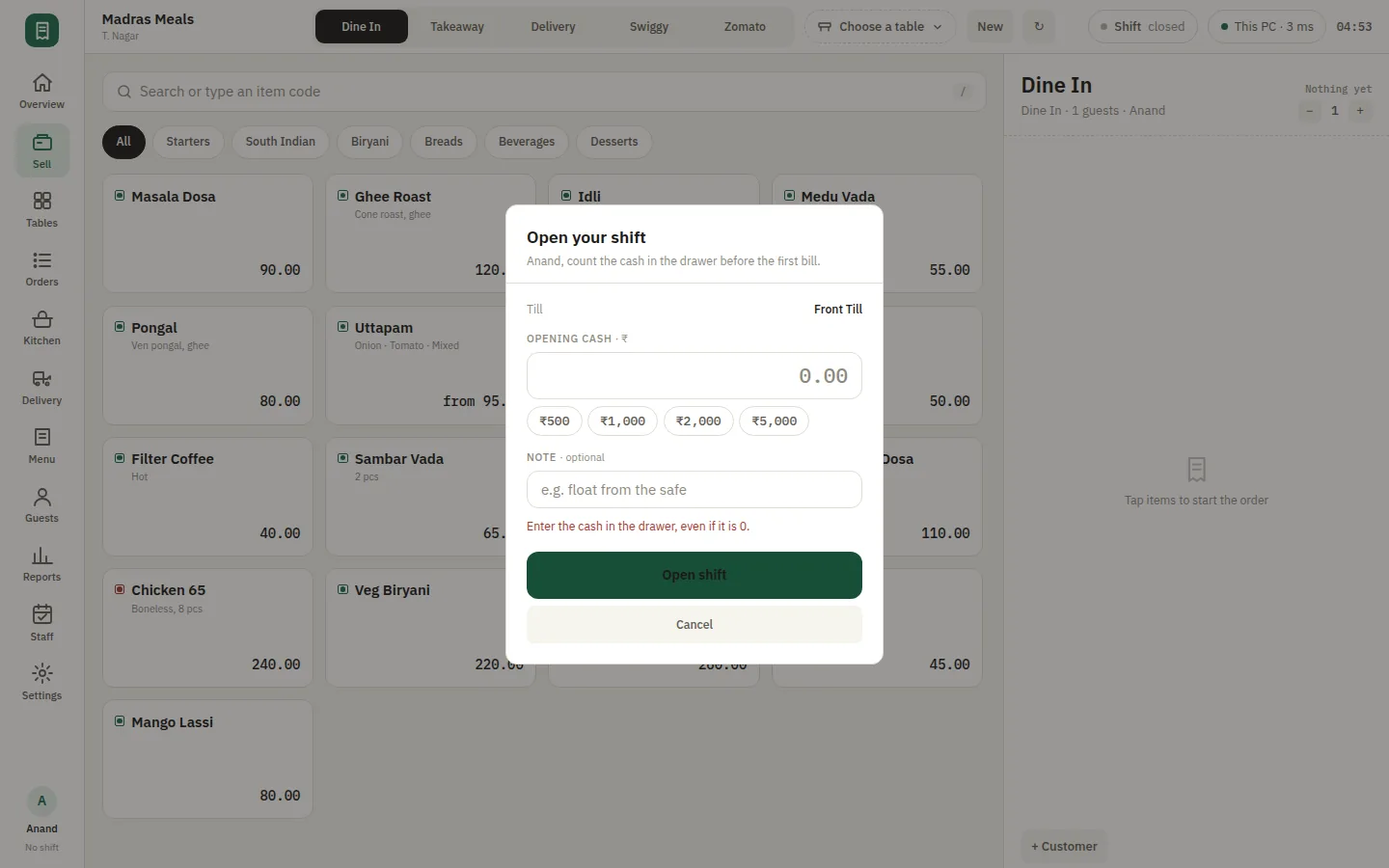
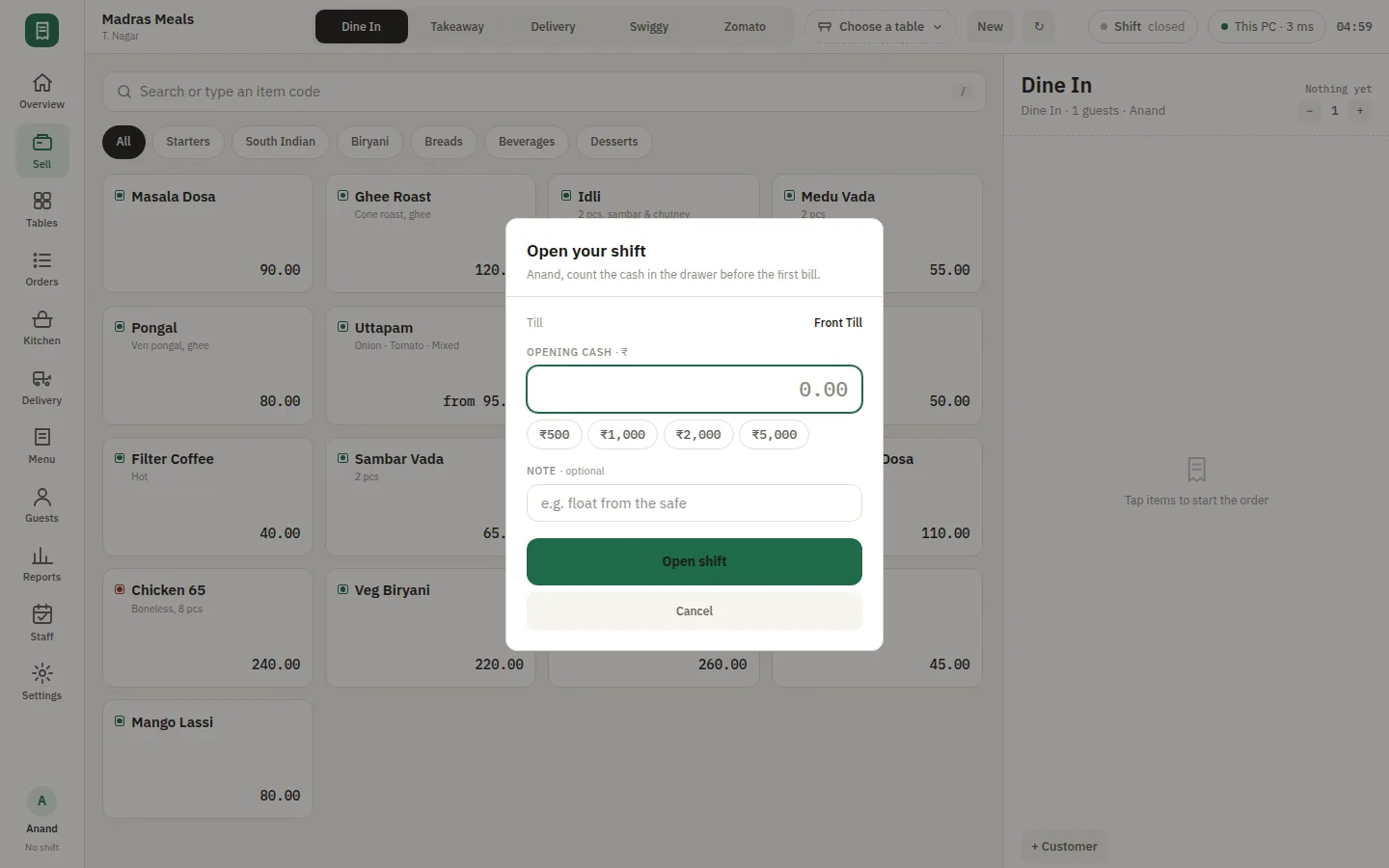
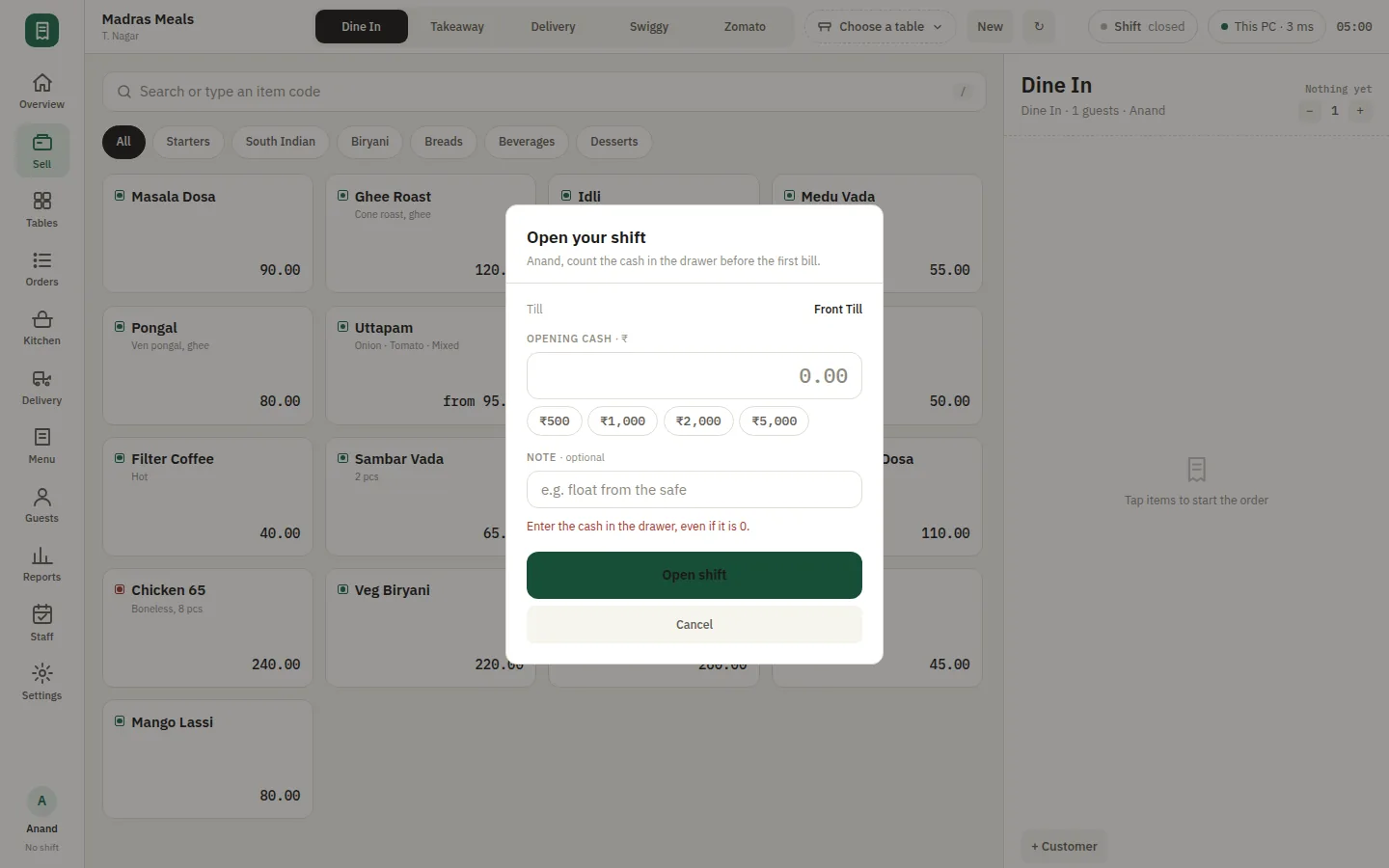
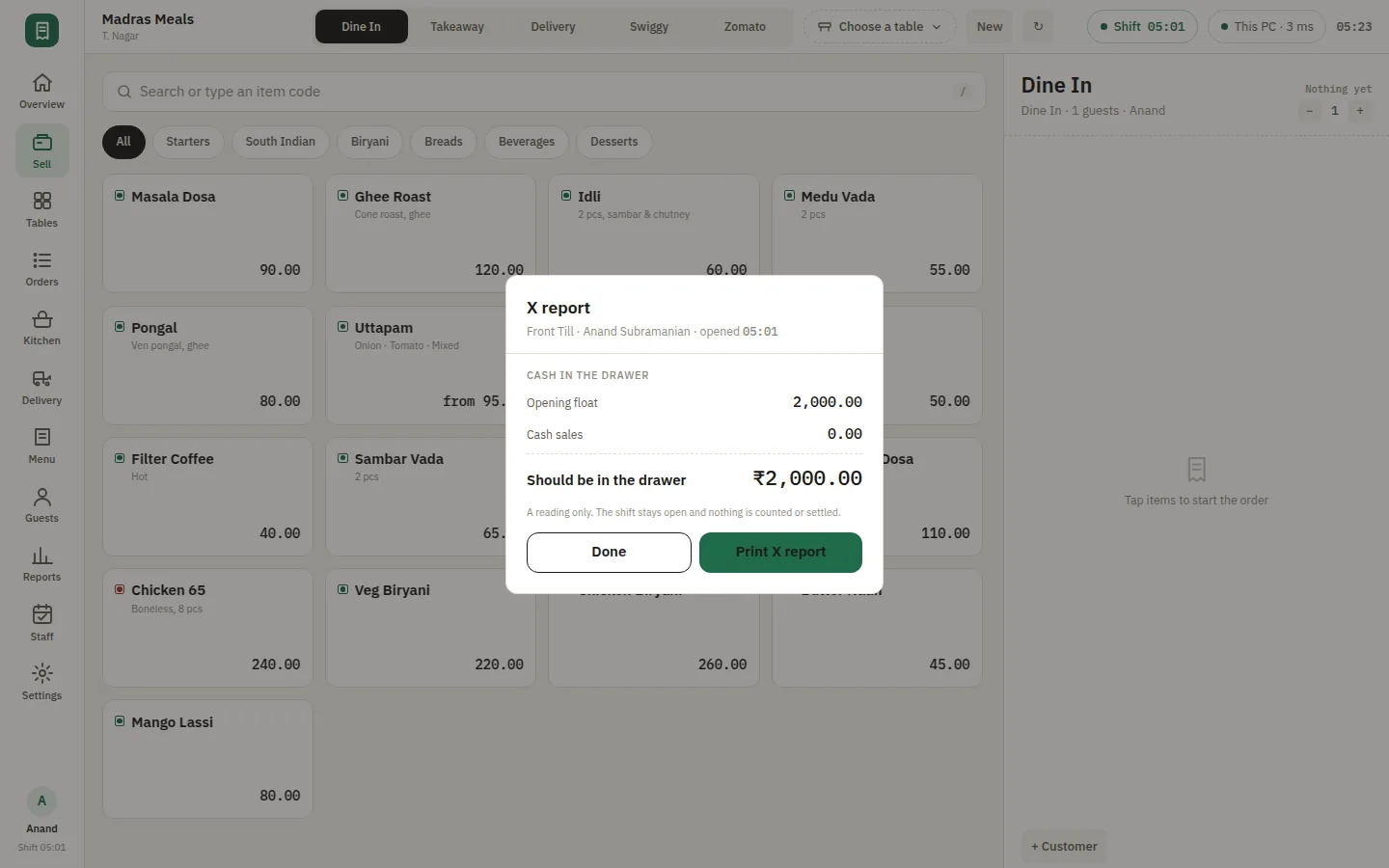
Open the shift with a float, record cash in and cash out against a reason as the day goes, and close with a count that has something to check against. The X report shows where the till stands mid-shift without closing it; the Z report closes the day. Because every movement is logged against the staff member who made it, a short drawer is a question with an answer rather than an argument.


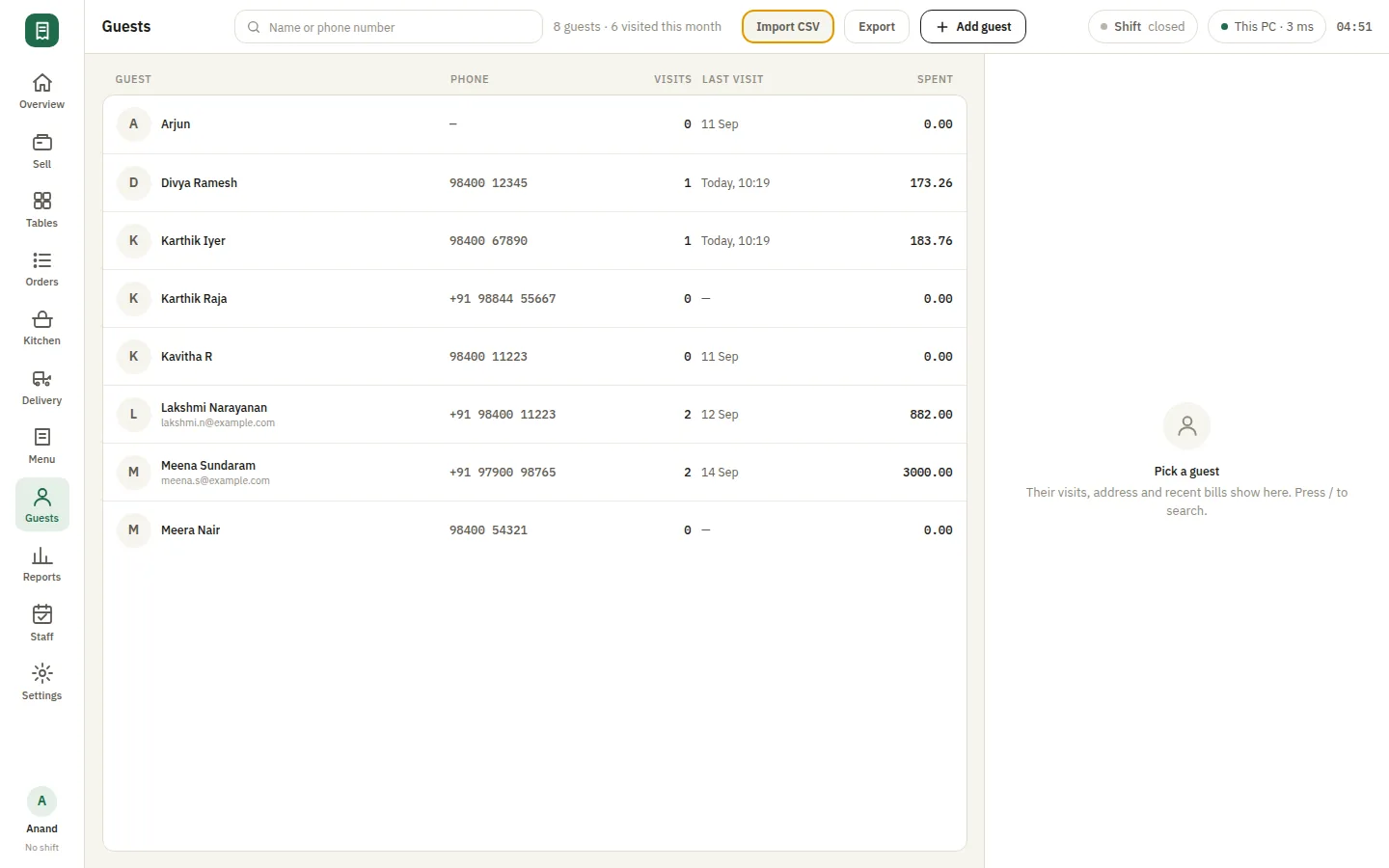
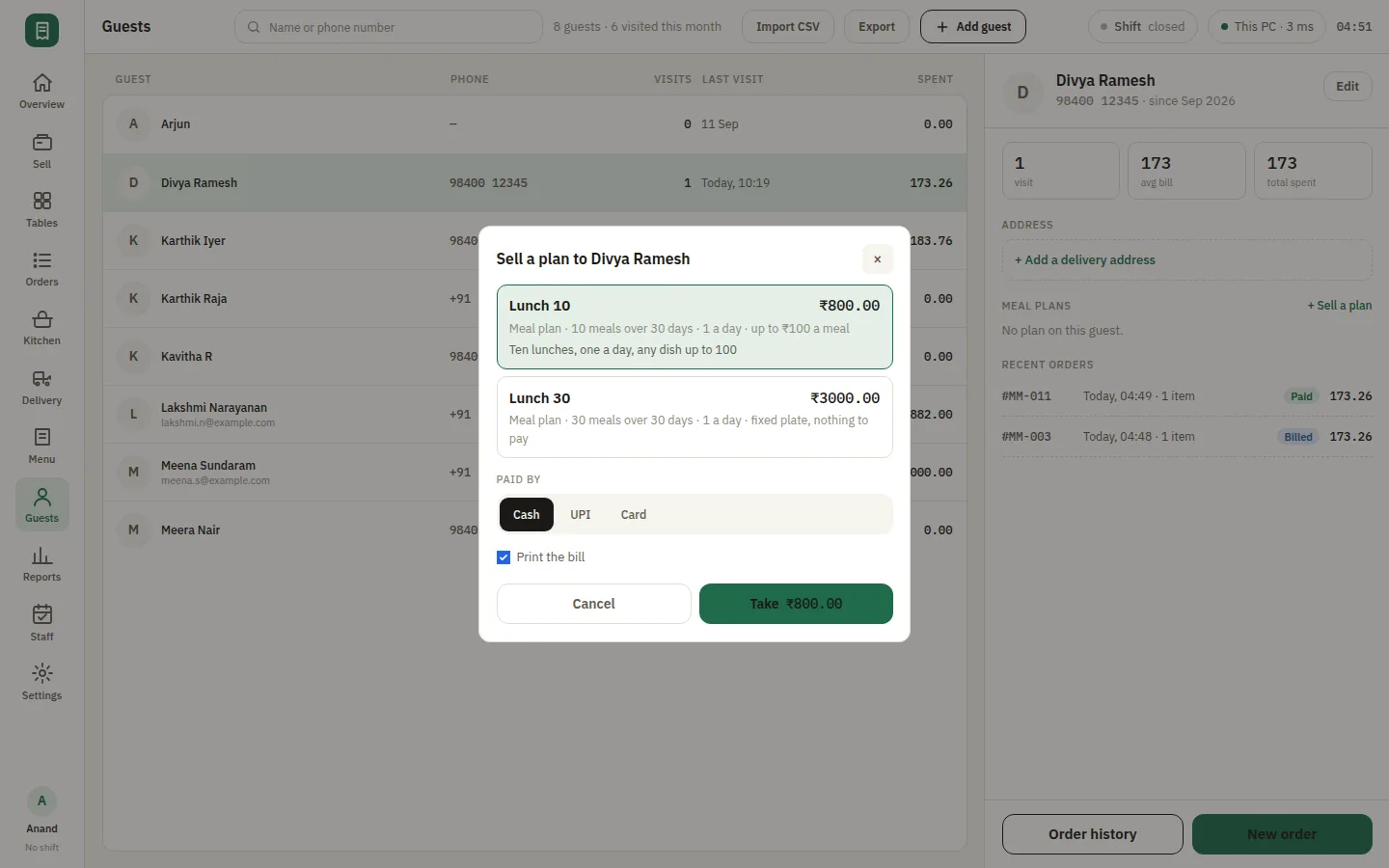
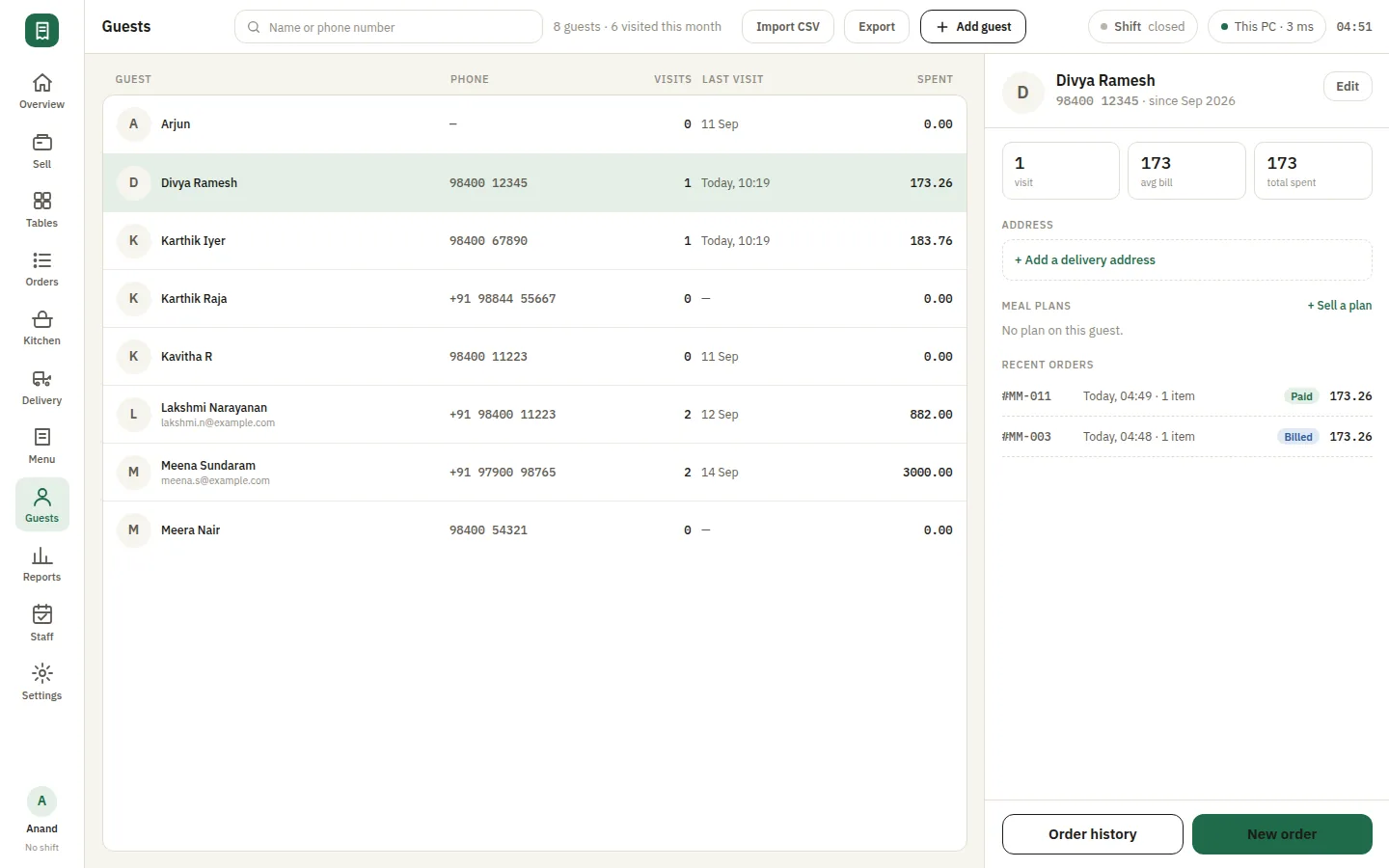
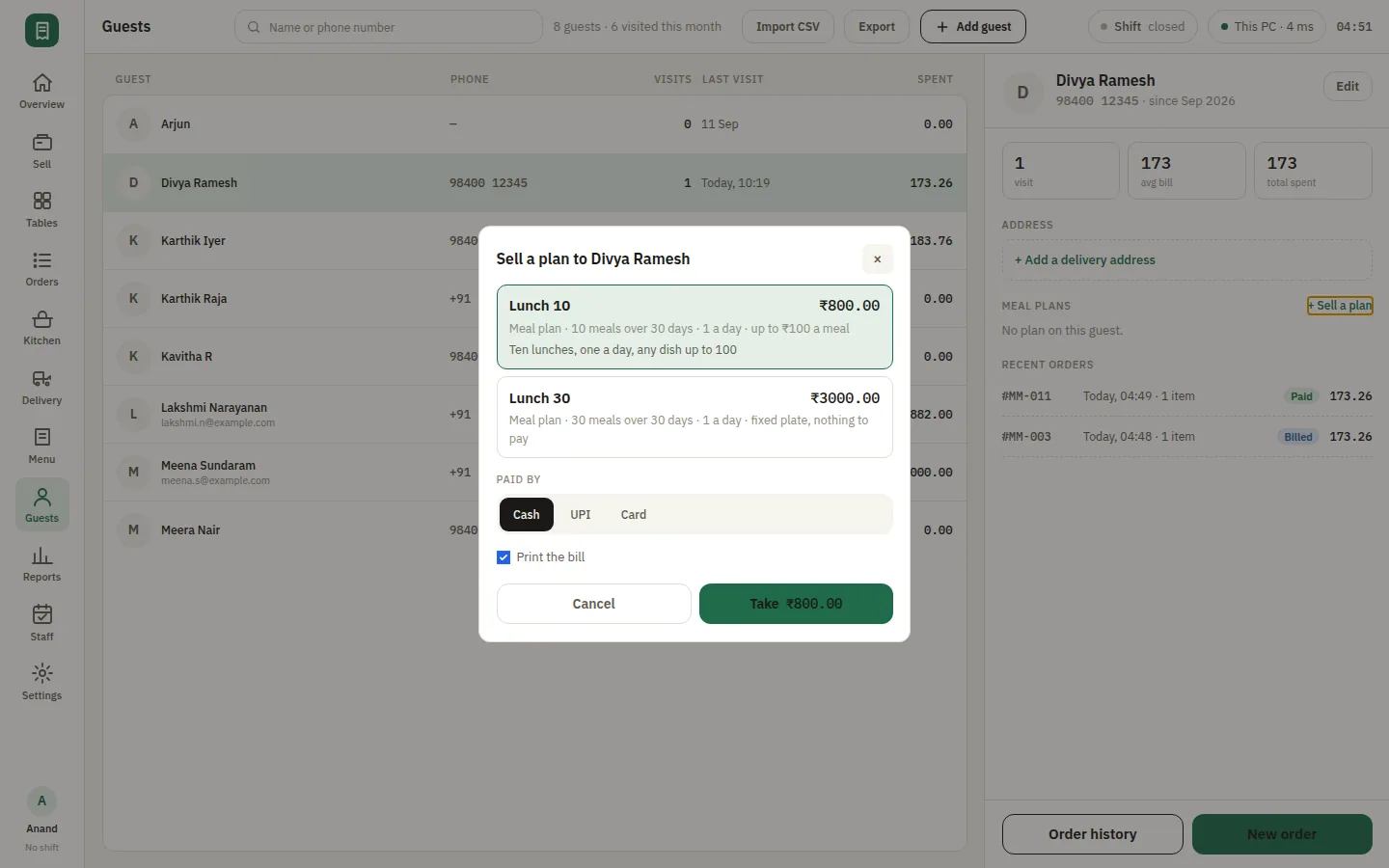
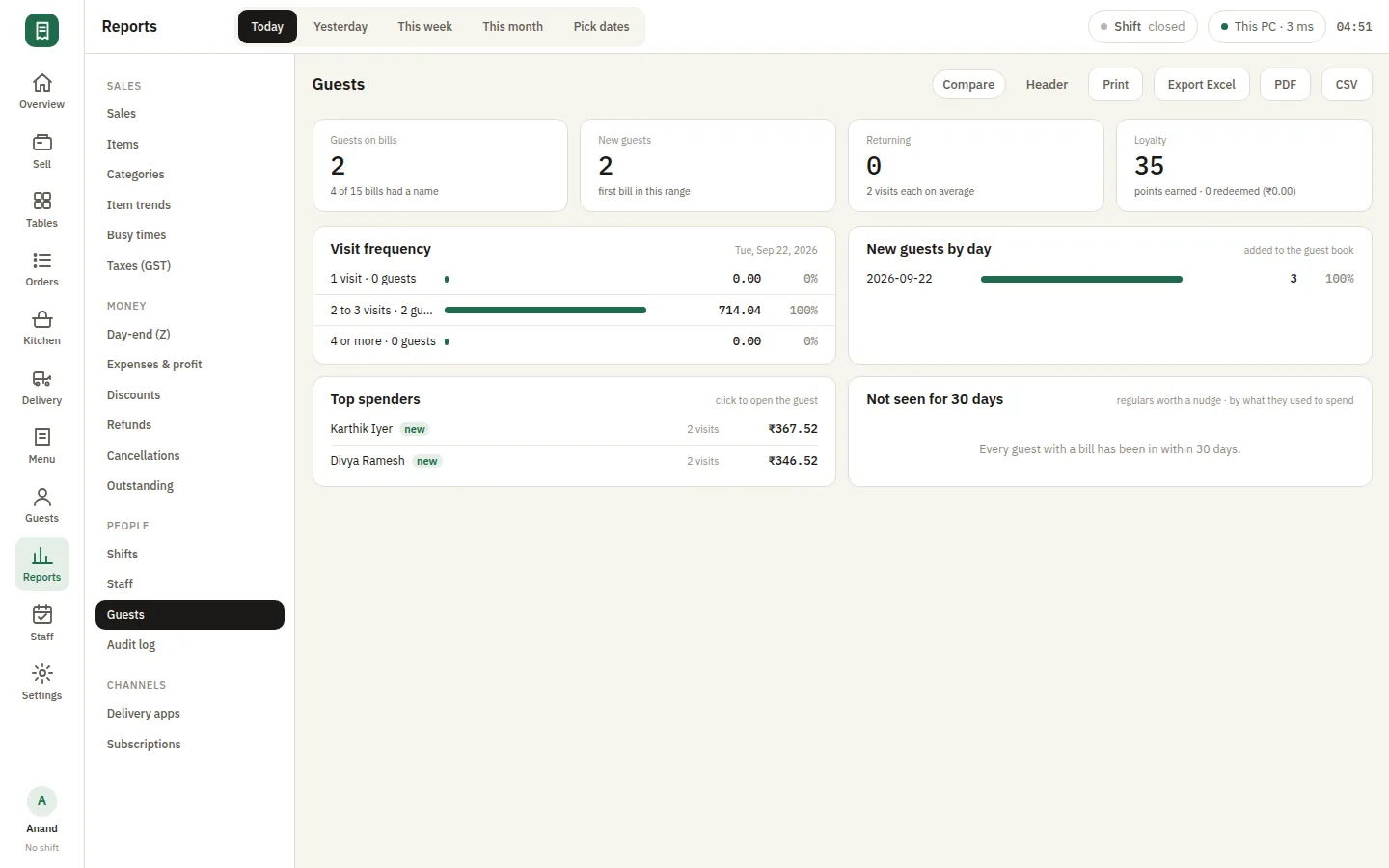
Keep customer records with phone numbers, addresses and the orders they have placed, so a regular does not have to explain themselves each visit. Pull a guest onto a bill to attach the order to their history, issue a credit note, or look back at what somebody usually orders before they ask. The whole customer list lives on your own machine, which matters when it is the most valuable thing your restaurant has.
Run a loyalty scheme without handing your customer list to a third party. Points accrue against a guest's spend, or stamps against visits, and both redeem at the counter as part of an ordinary settlement. Because loyalty is configured on the same PC that holds the guest records, there is no sync to fail and no per-customer fee — the scheme is yours, and so is the data it runs on.


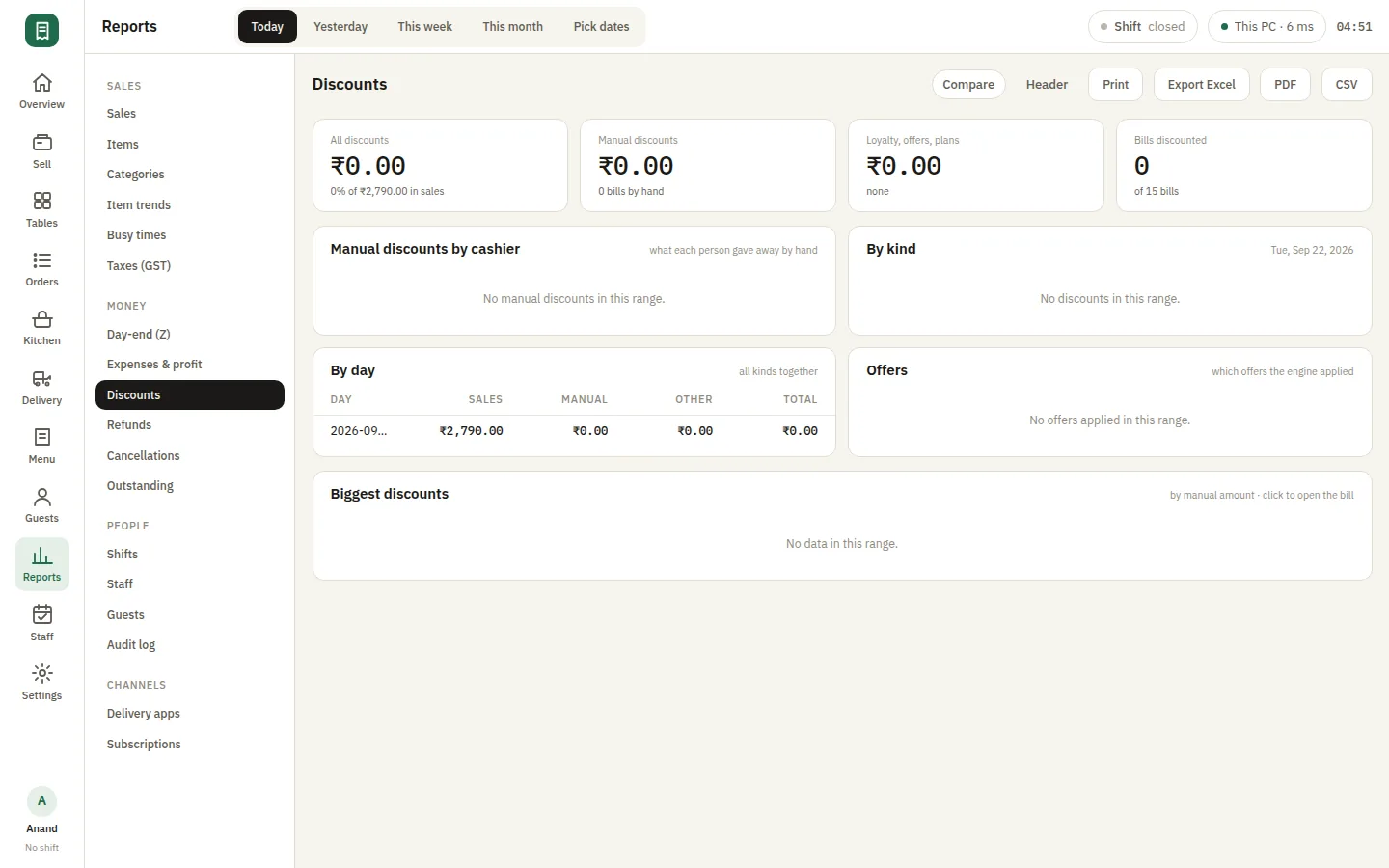
Apply a percentage or a flat discount to a bill, or run a promotional offer over a period, with the reason captured rather than lost in a manual price edit. Every discount lands in the discounts report, so what you gave away this month is a number you can look at instead of a feeling. Offers are set once and applied by any cashier without needing a manager at the terminal.
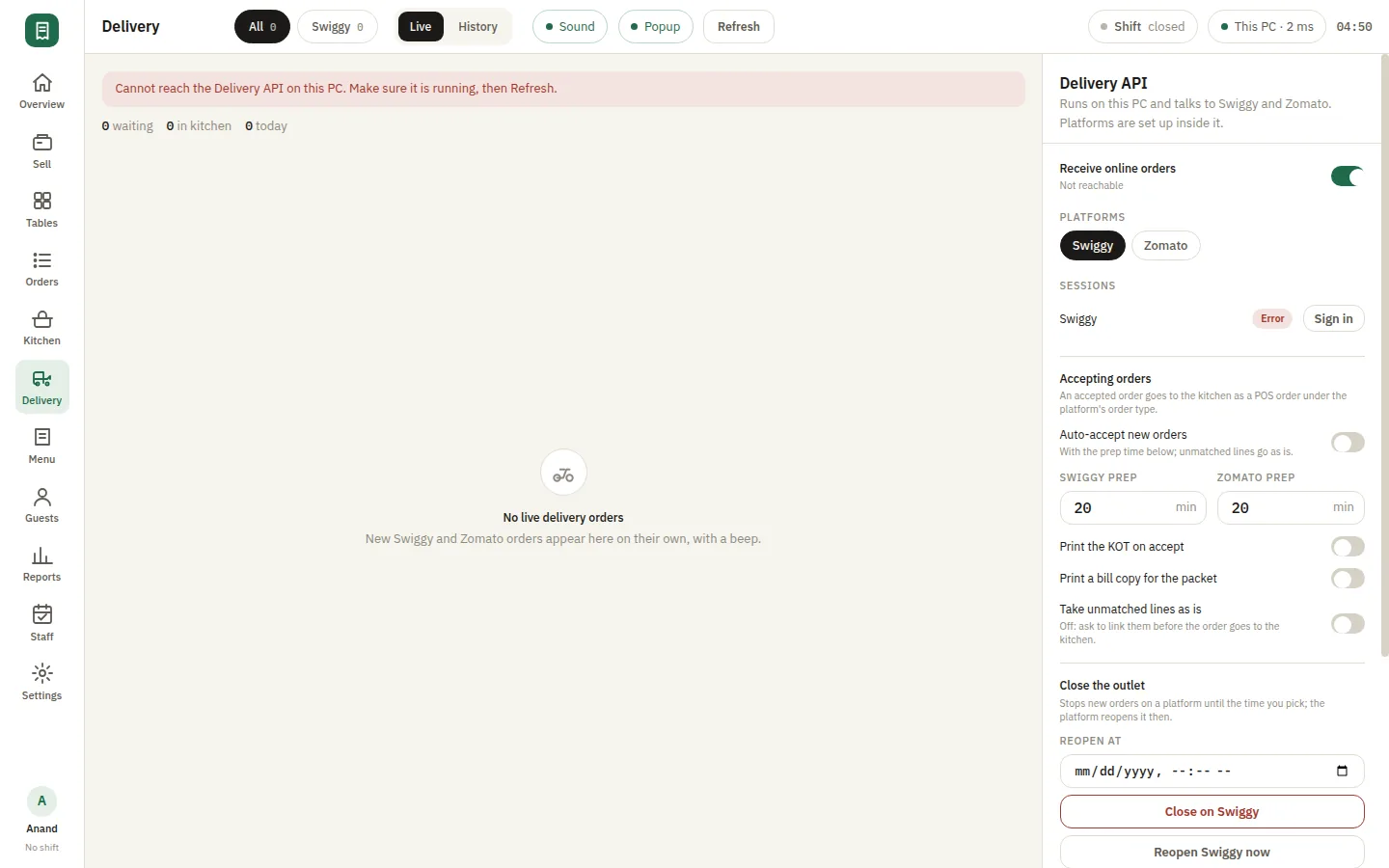
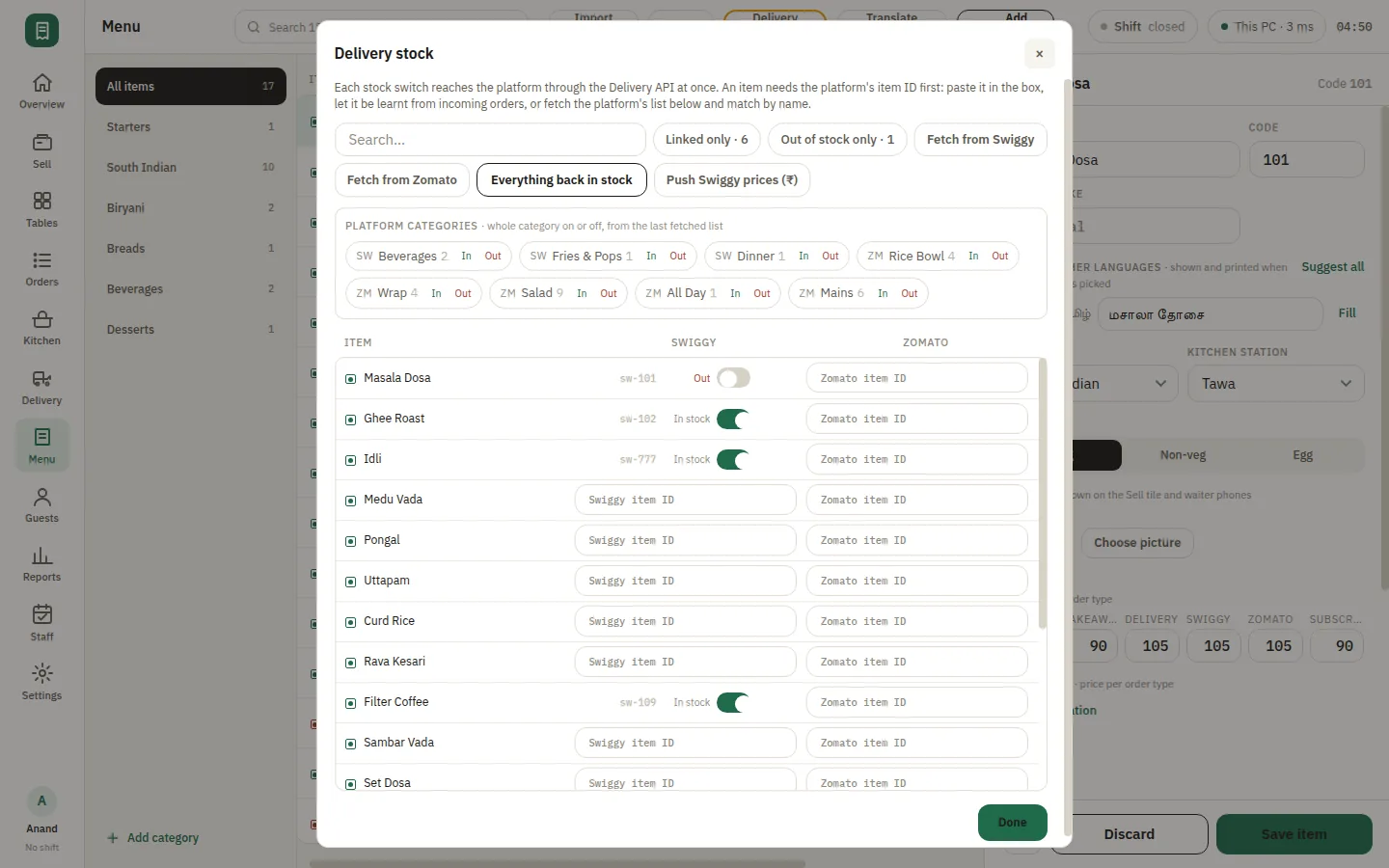
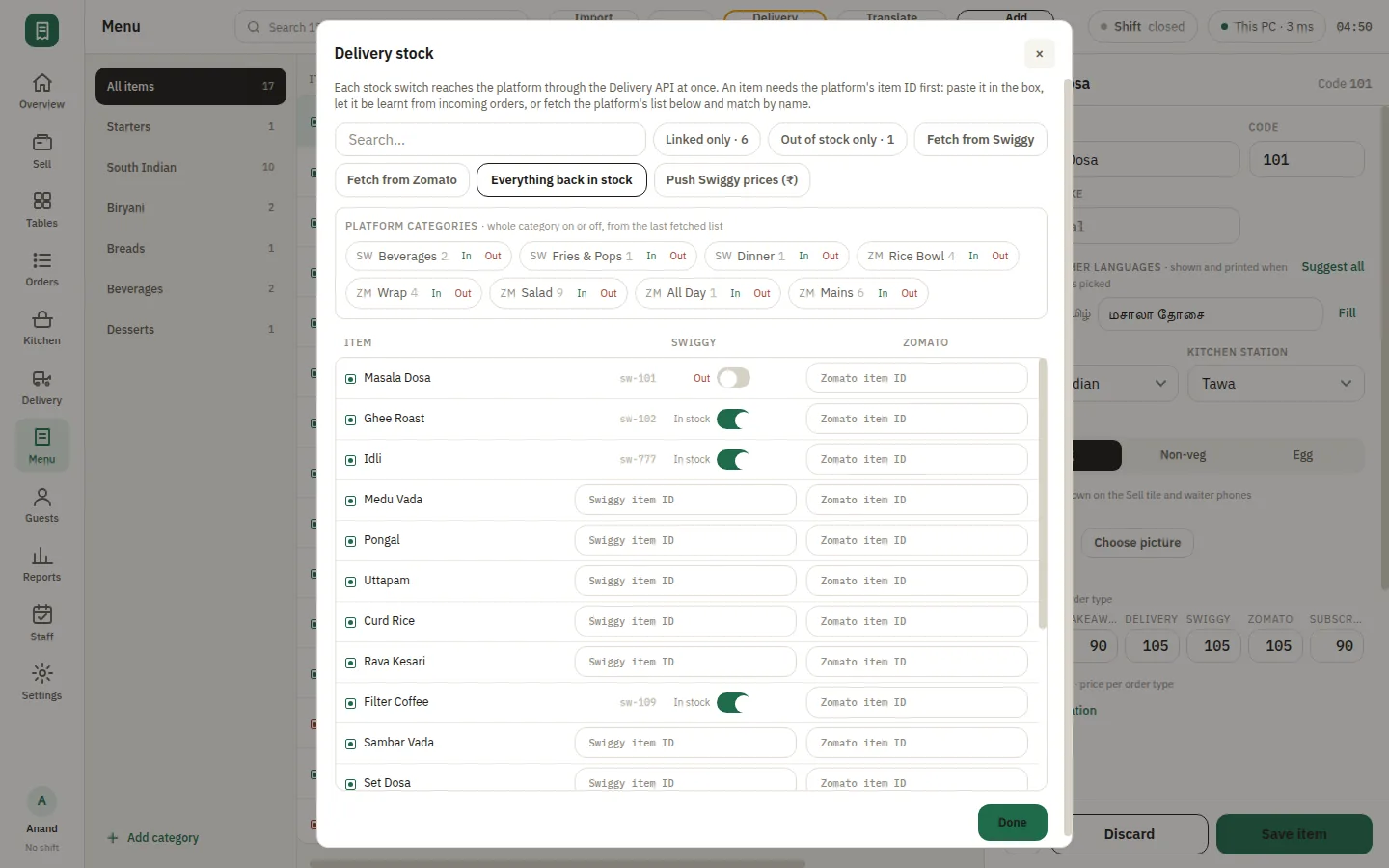
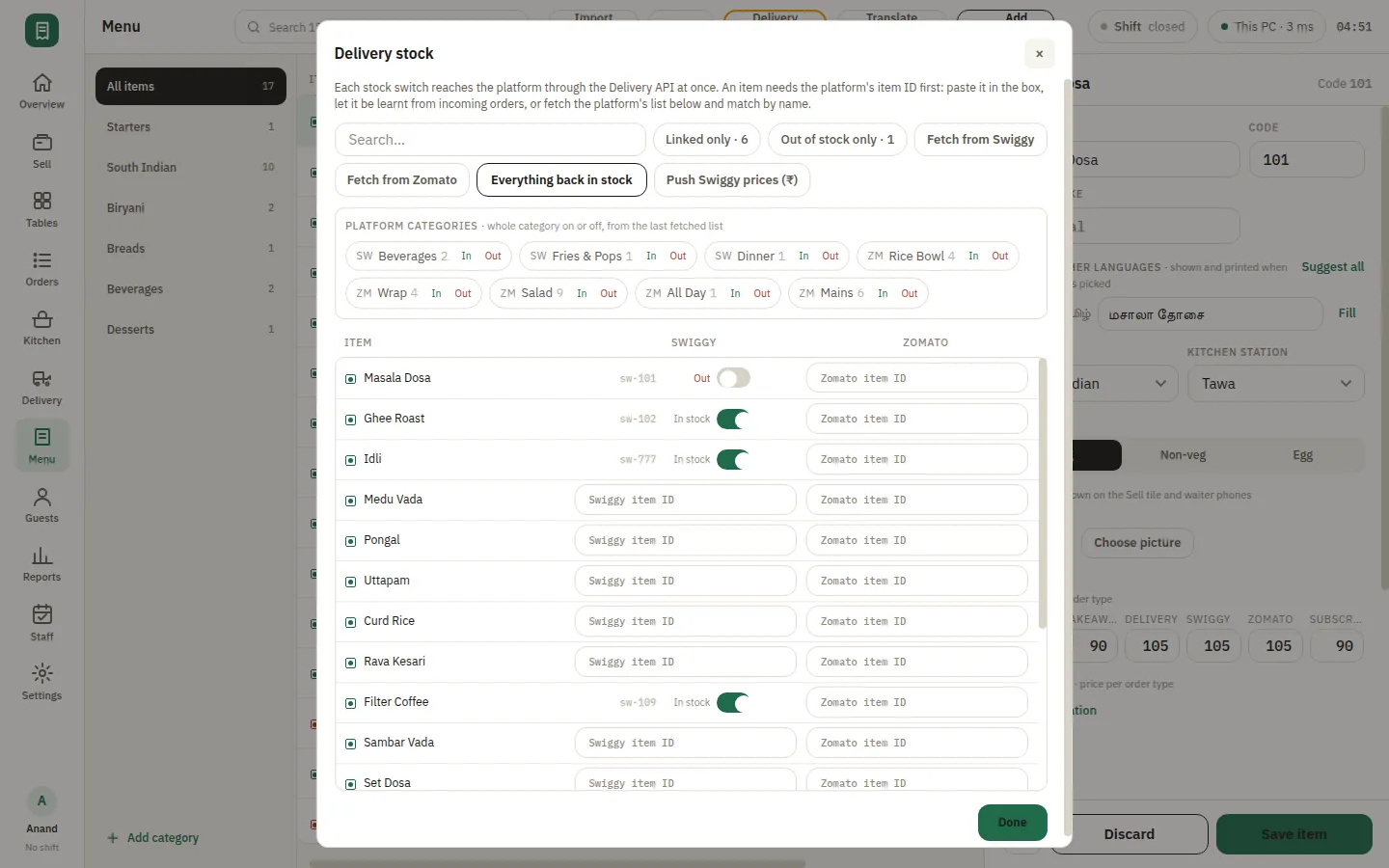
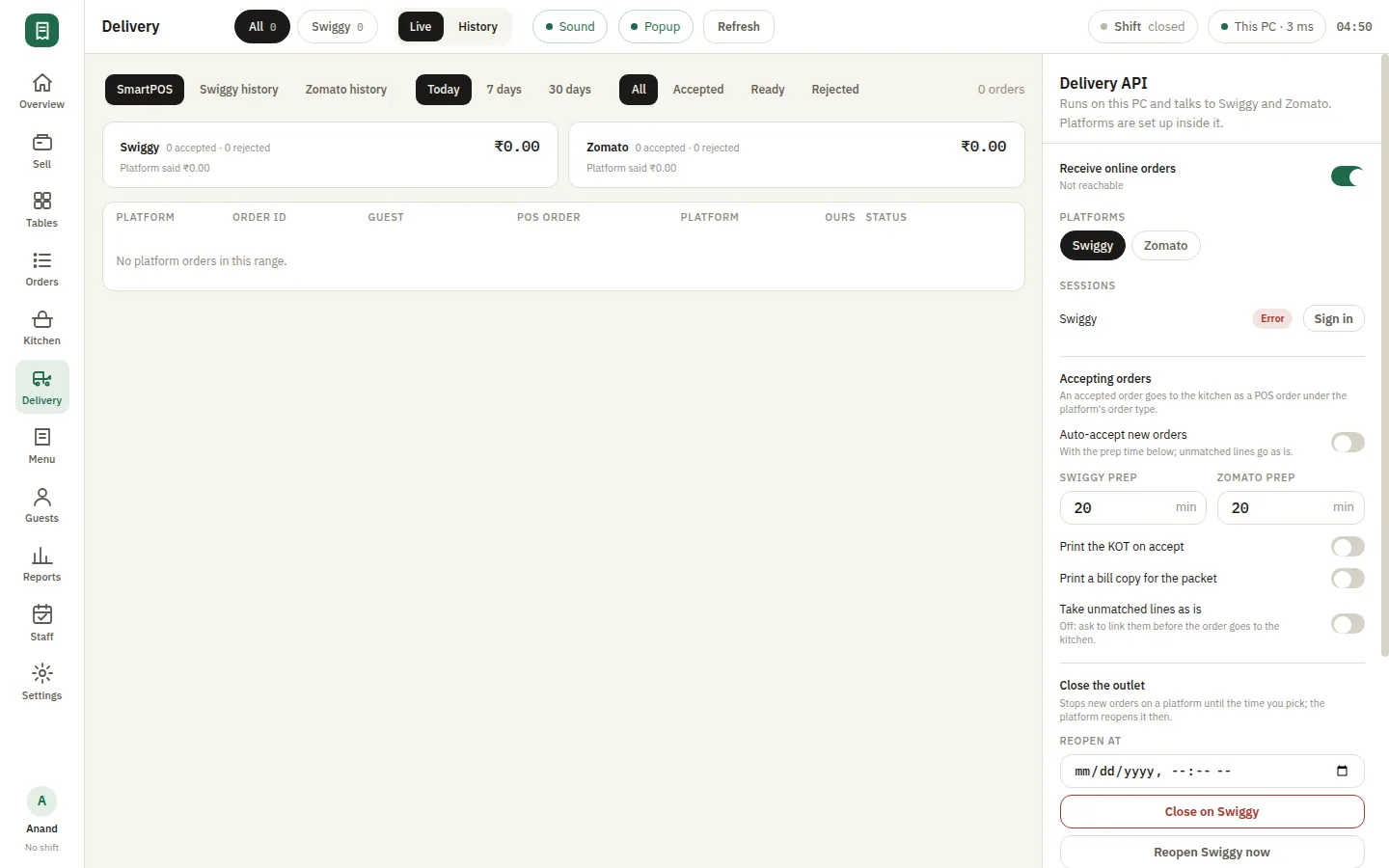
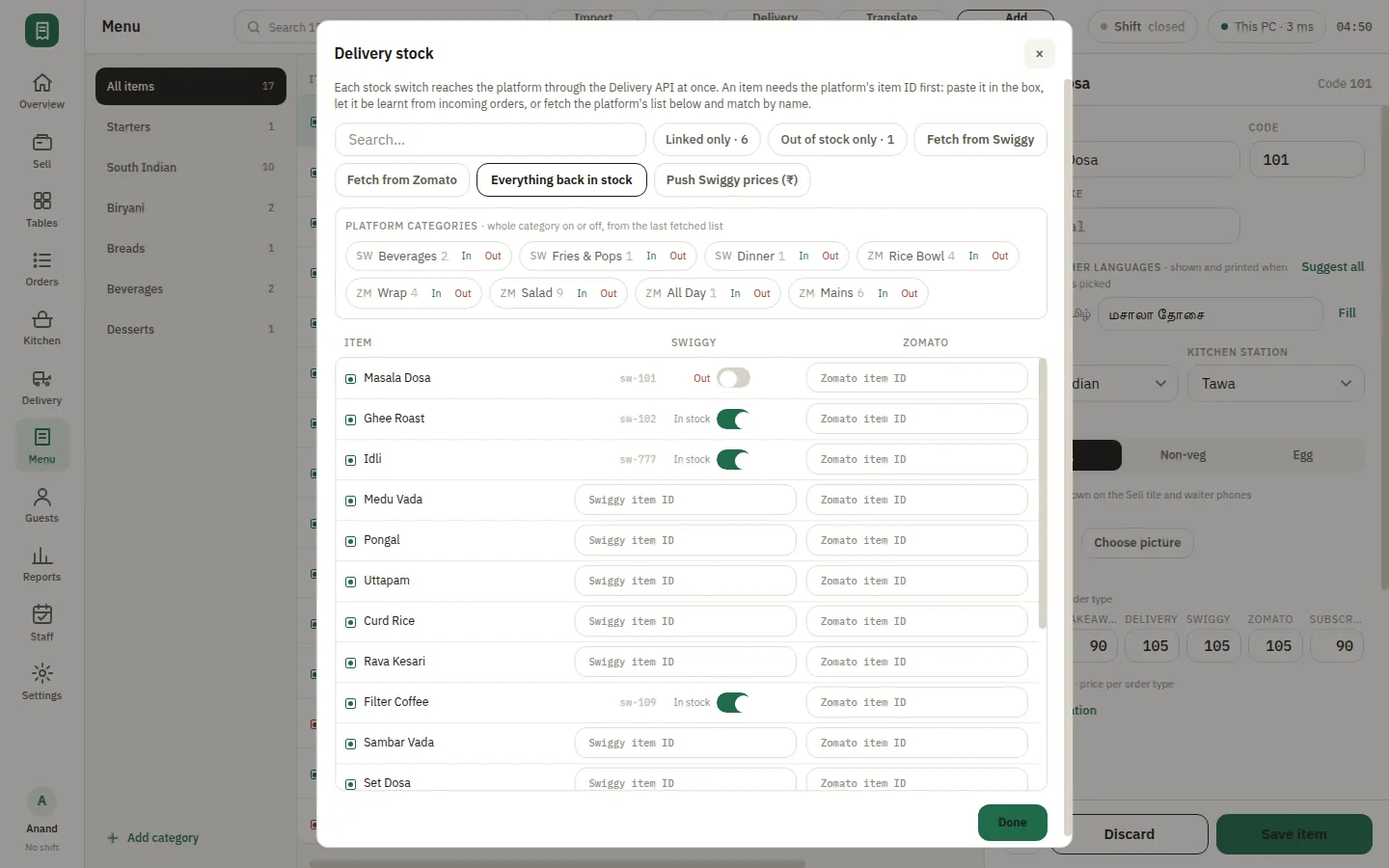
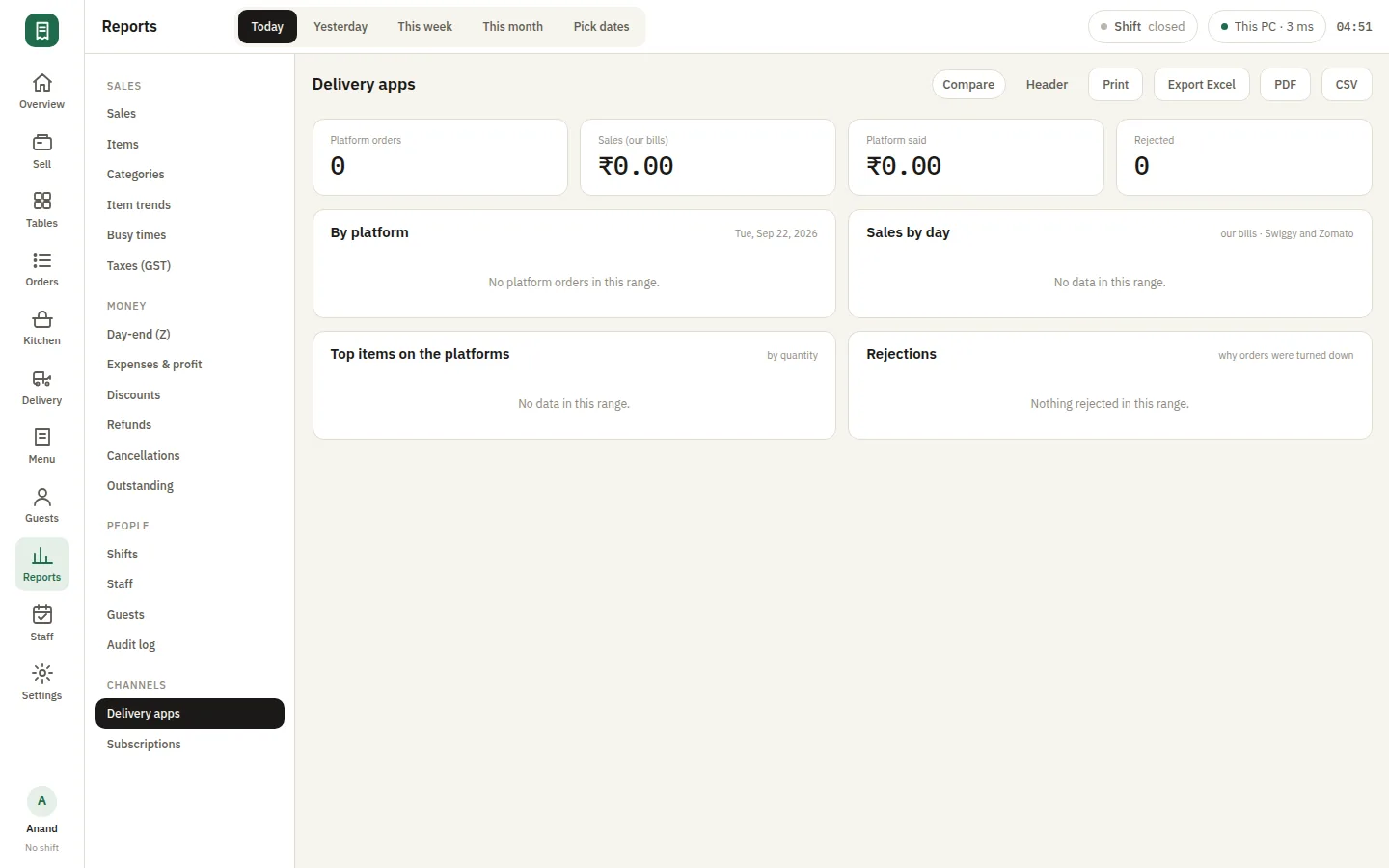
Aggregator orders arrive on the same screen as walk-ins, so the kitchen works one queue instead of watching three tablets. Live and past delivery orders are listed with their platform, and stock or price can be pulled from the apps without touching your counter menu. The delivery reports show what each platform is actually contributing. Online orders need the internet, as they must — billing carries on without it.


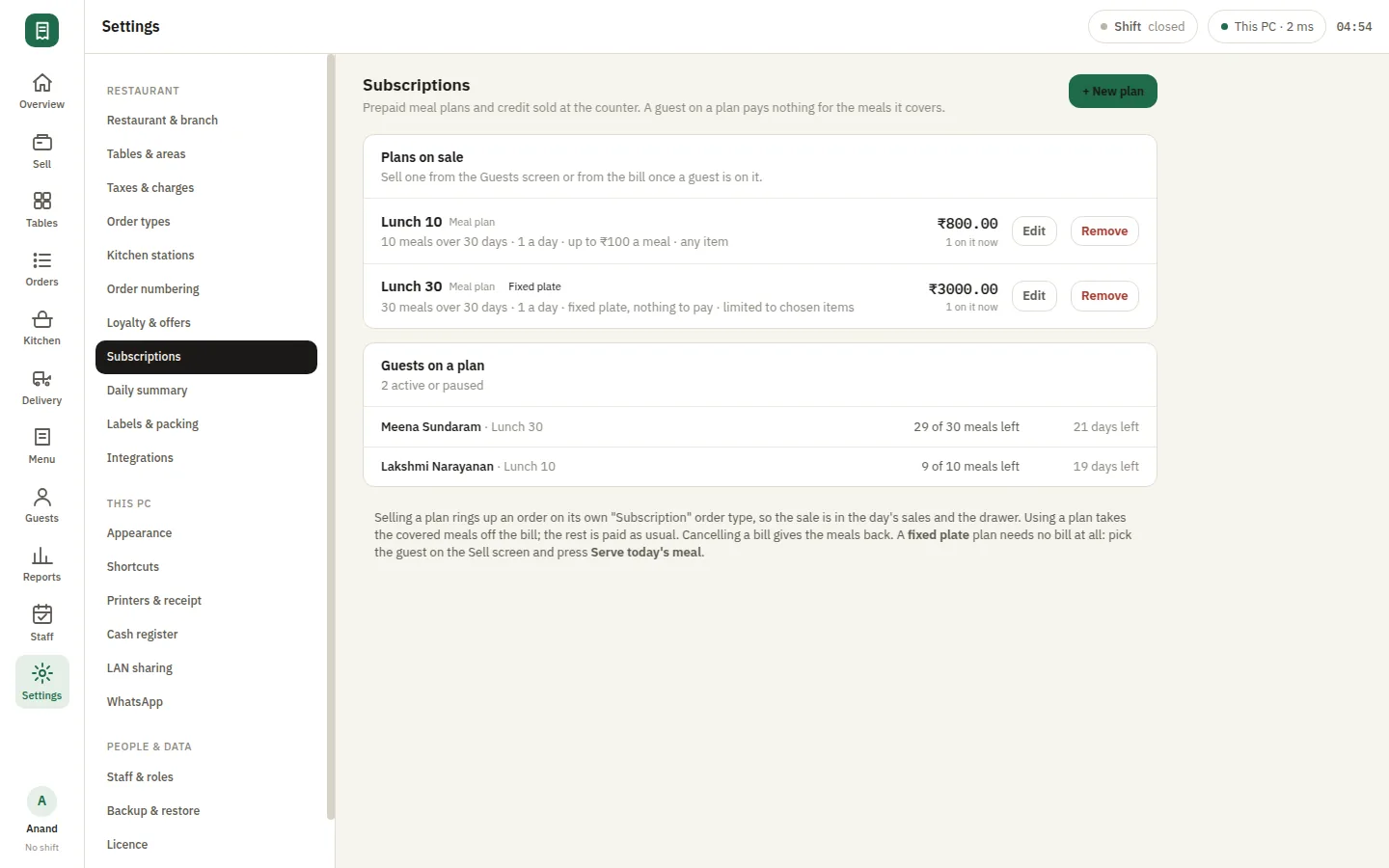
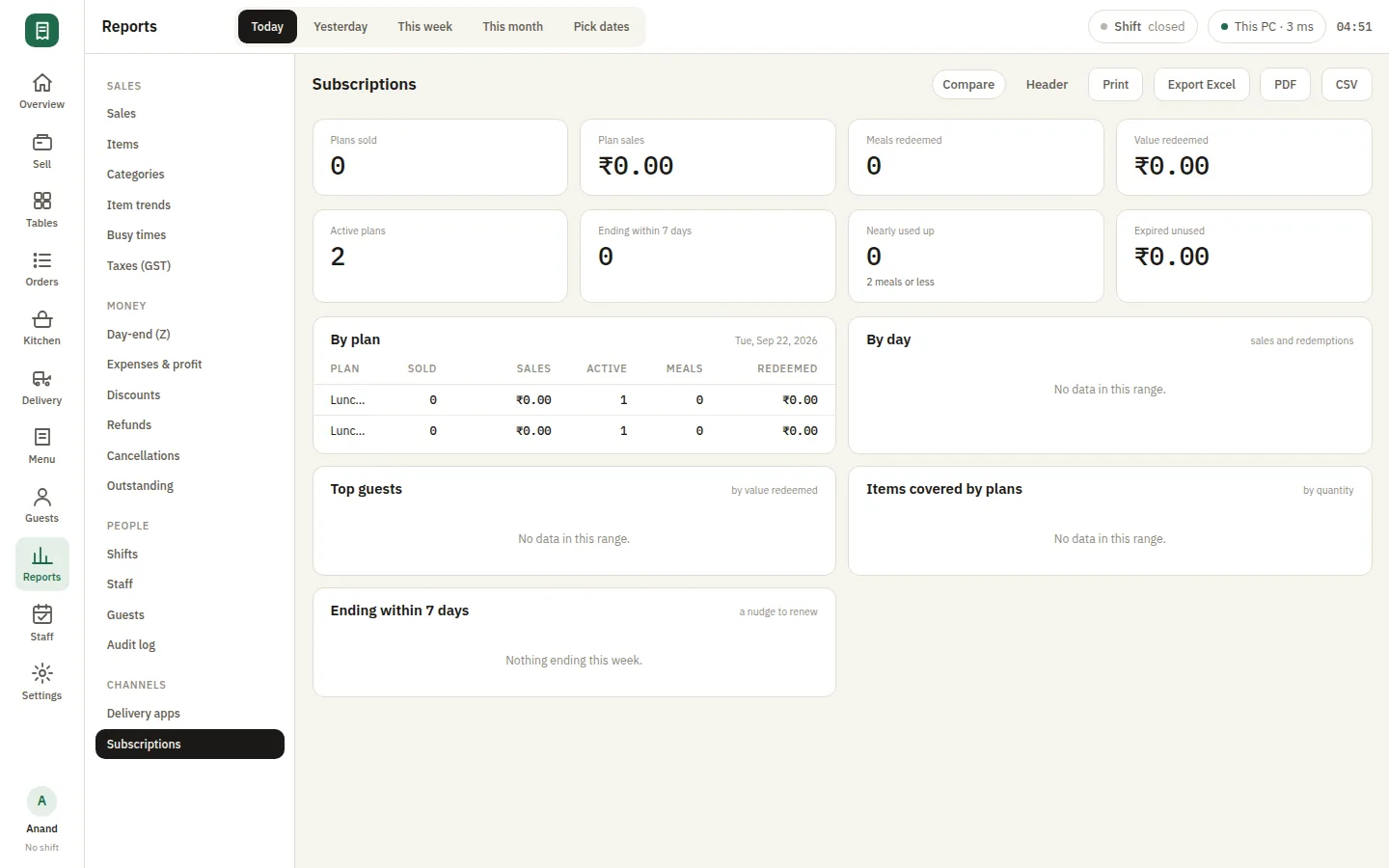
Sell a monthly tiffin or a prepaid meal plan to a guest, then redeem against it at the counter as they eat through it. The balance sits with the guest record, so any cashier can see what is left without a ledger in a drawer. For a mess, a canteen or a cloud kitchen with regulars on a plan, it turns a book of names and payments into something the till handles on its own.
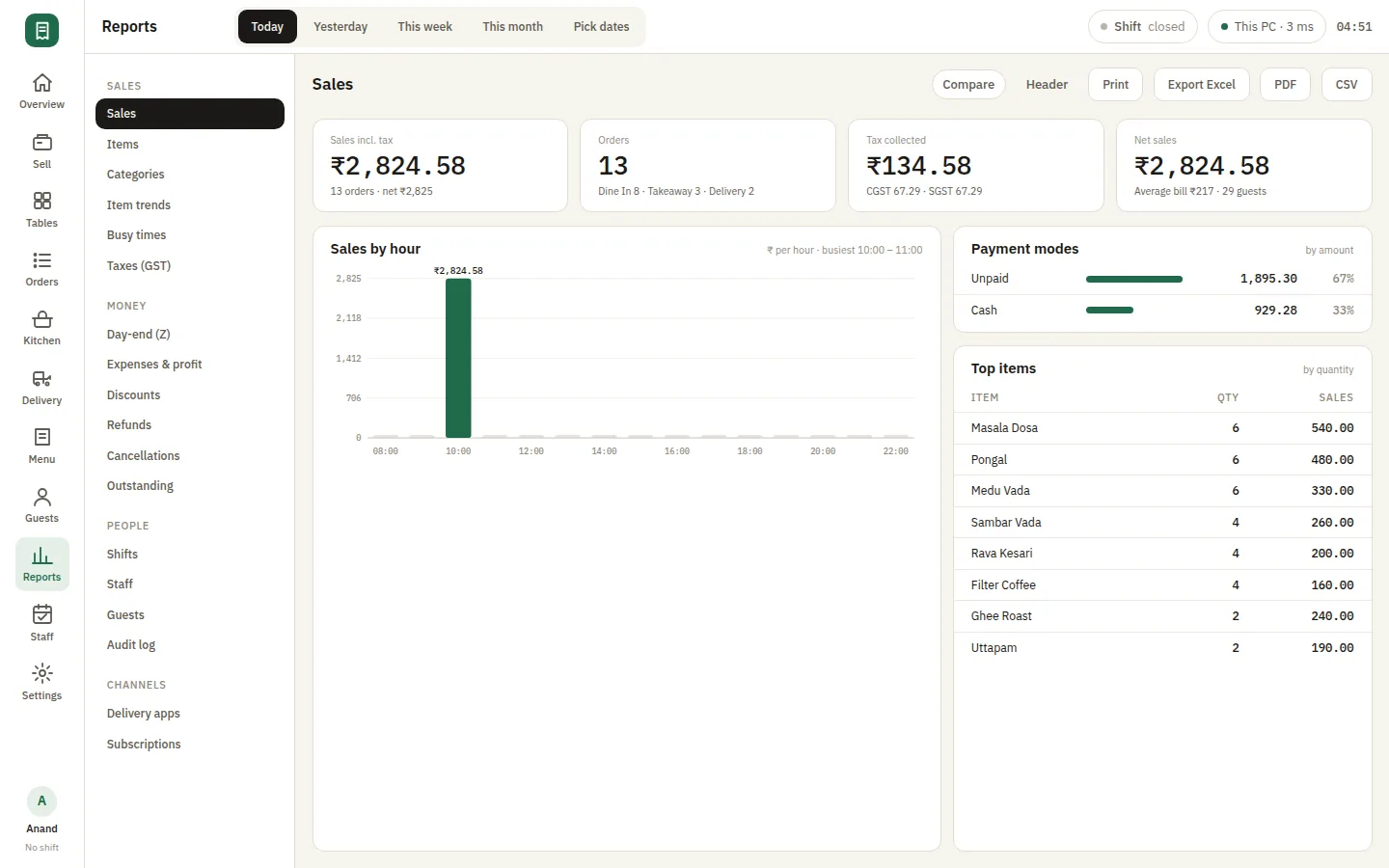
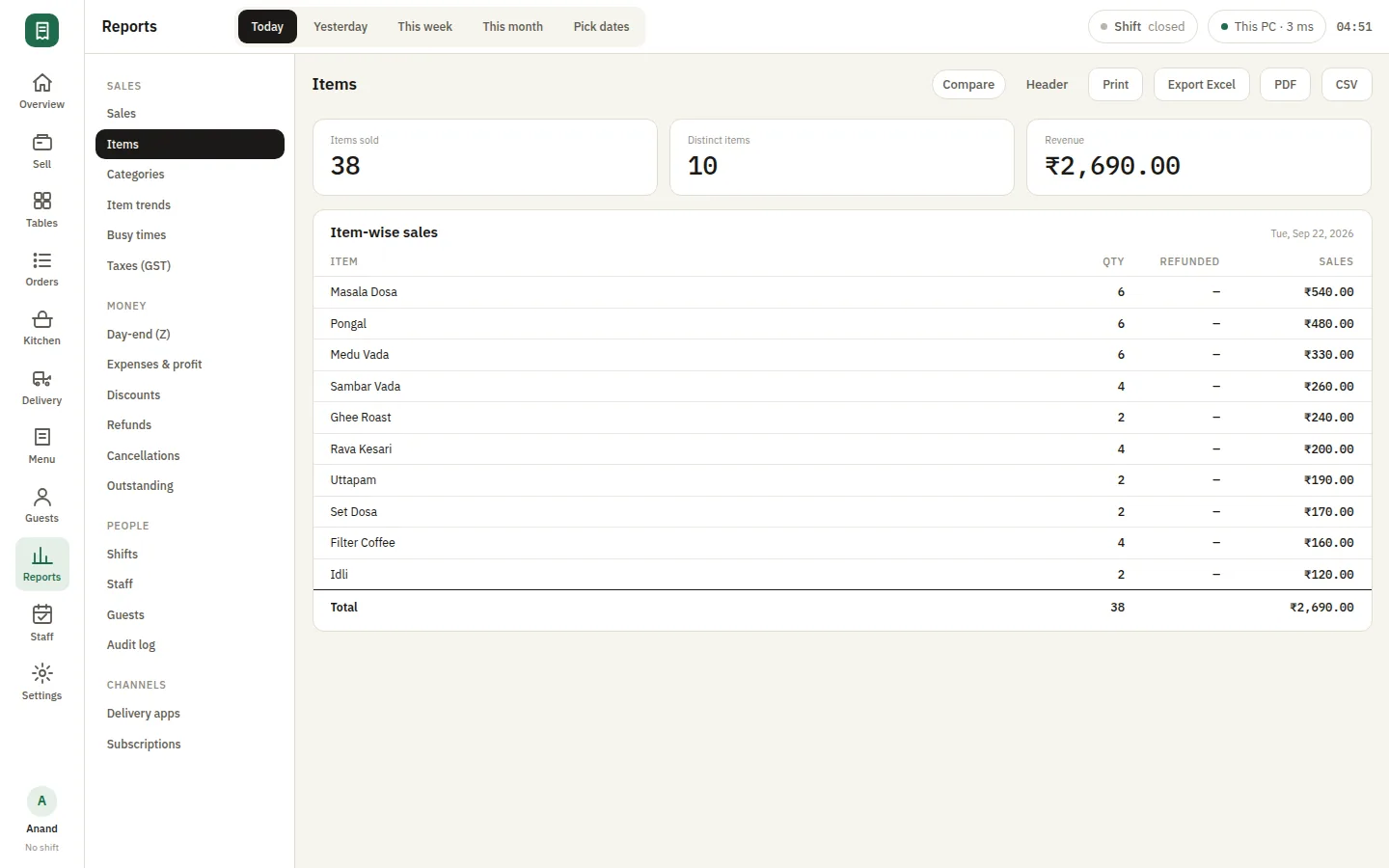
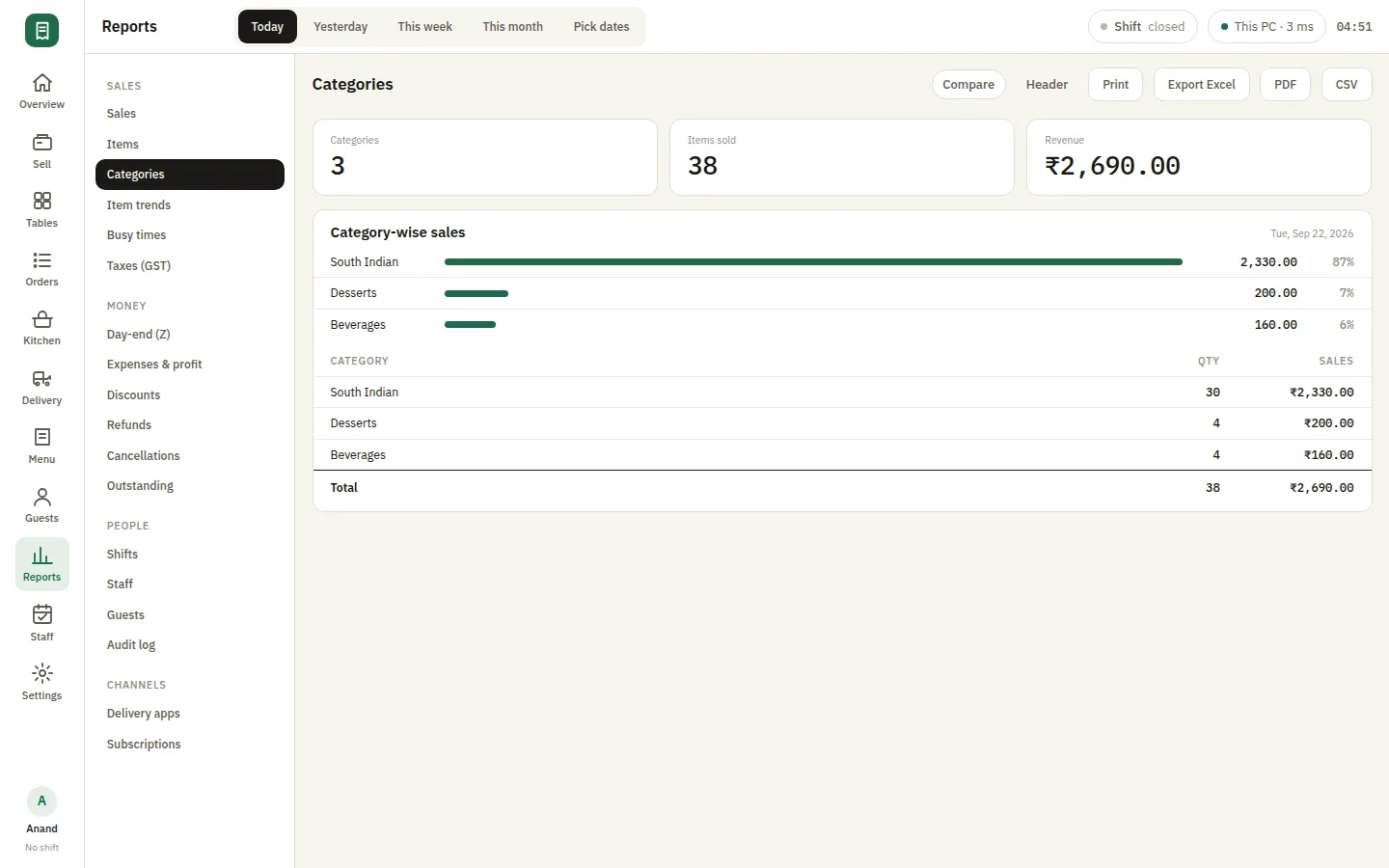
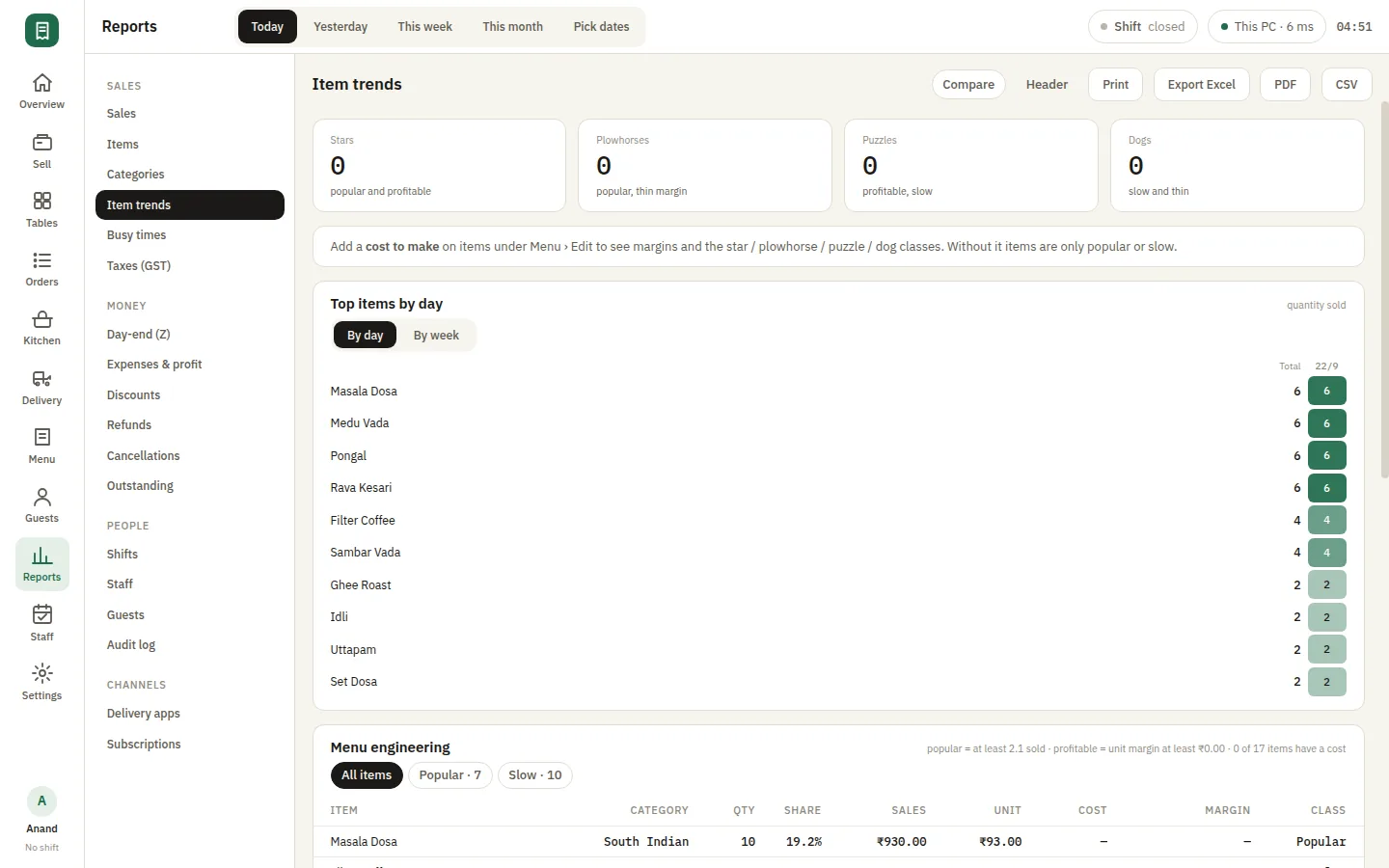
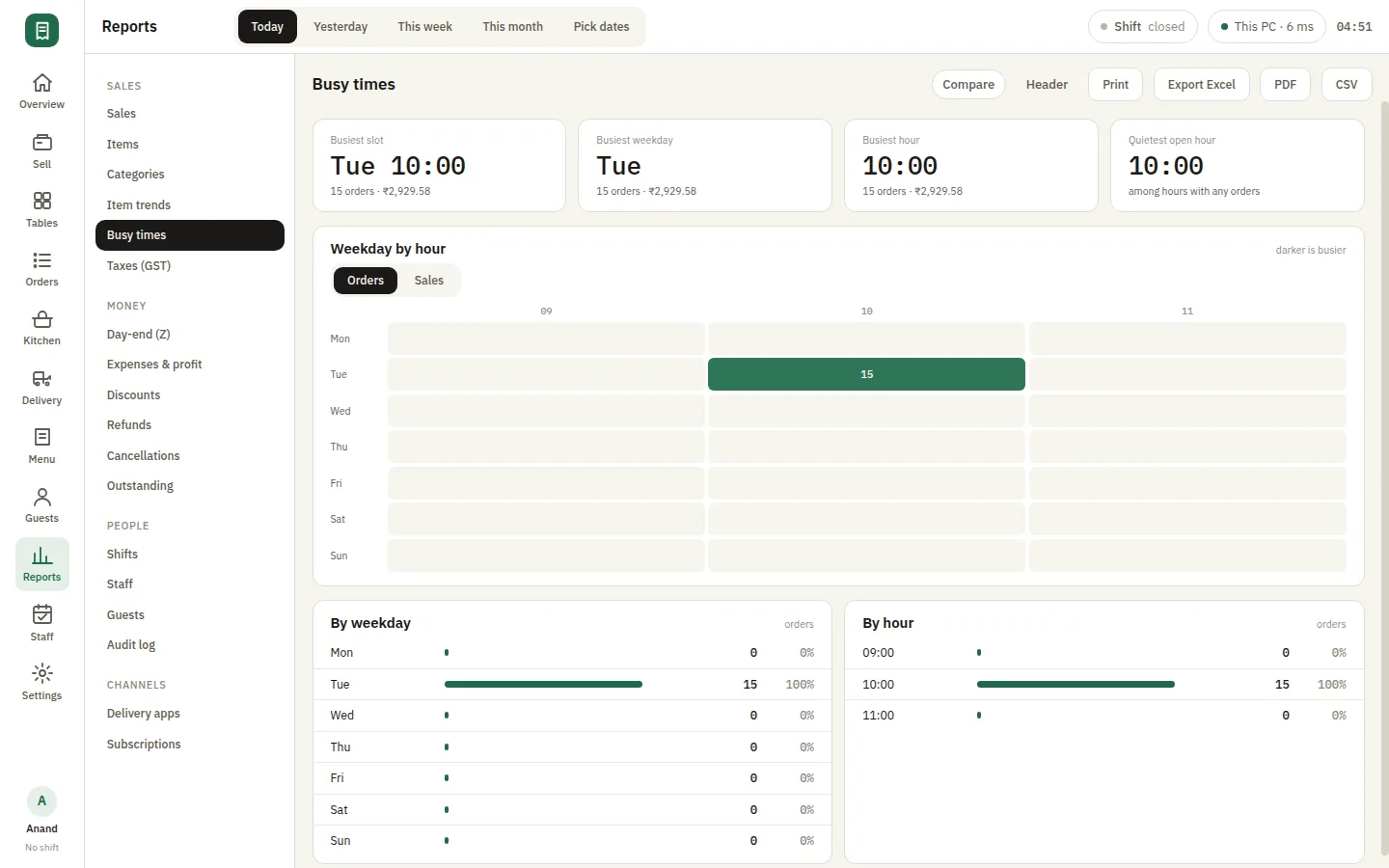
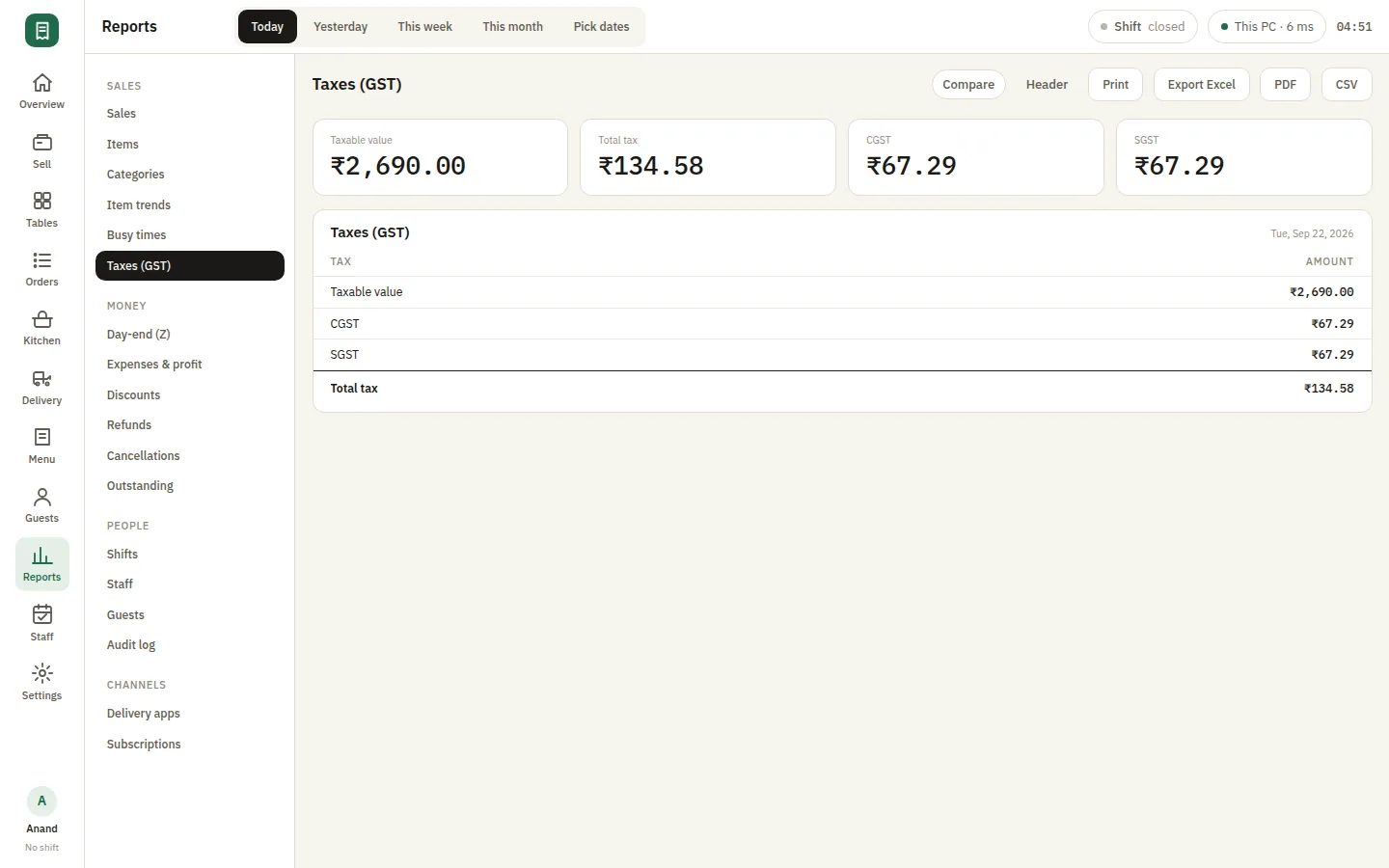
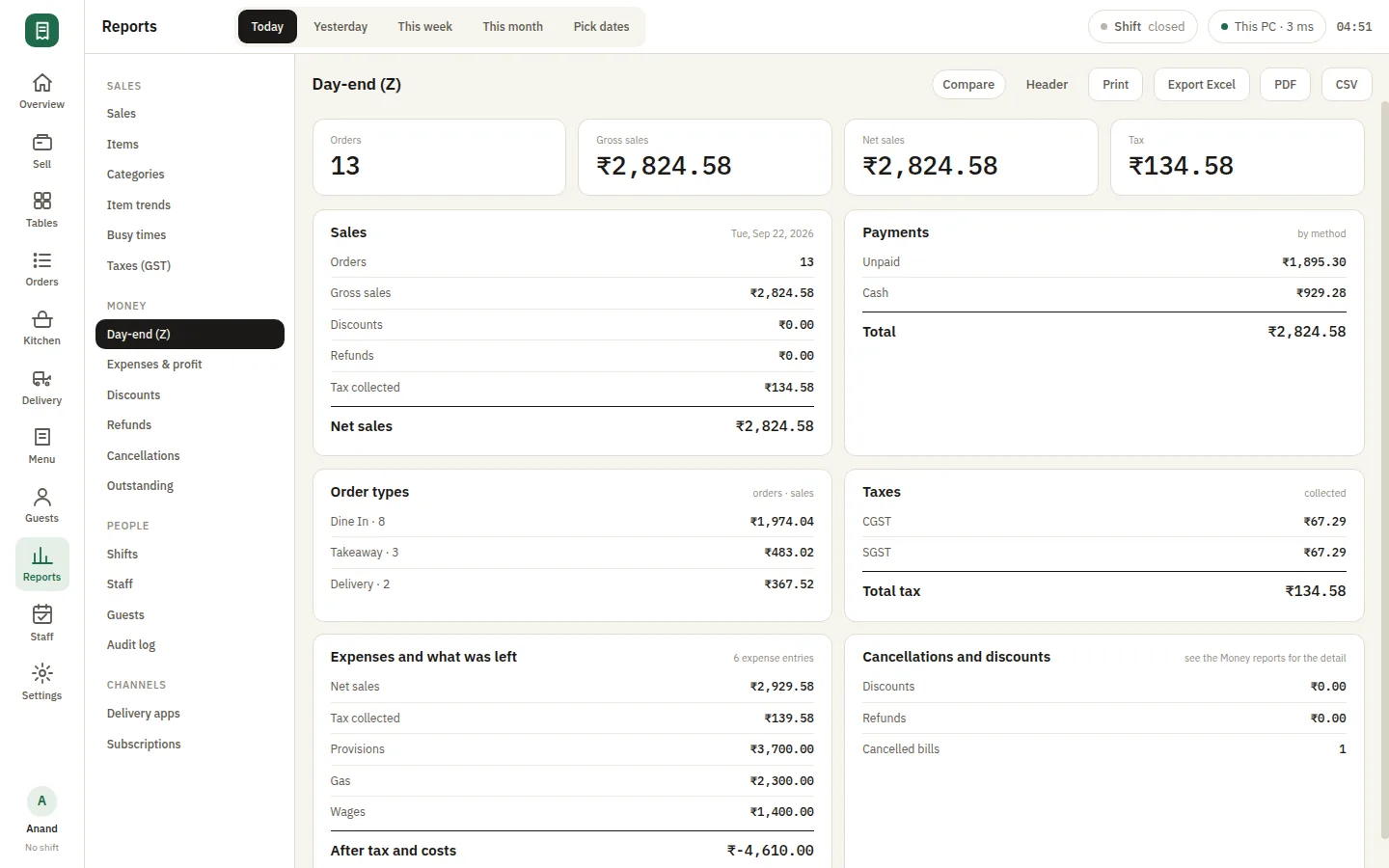
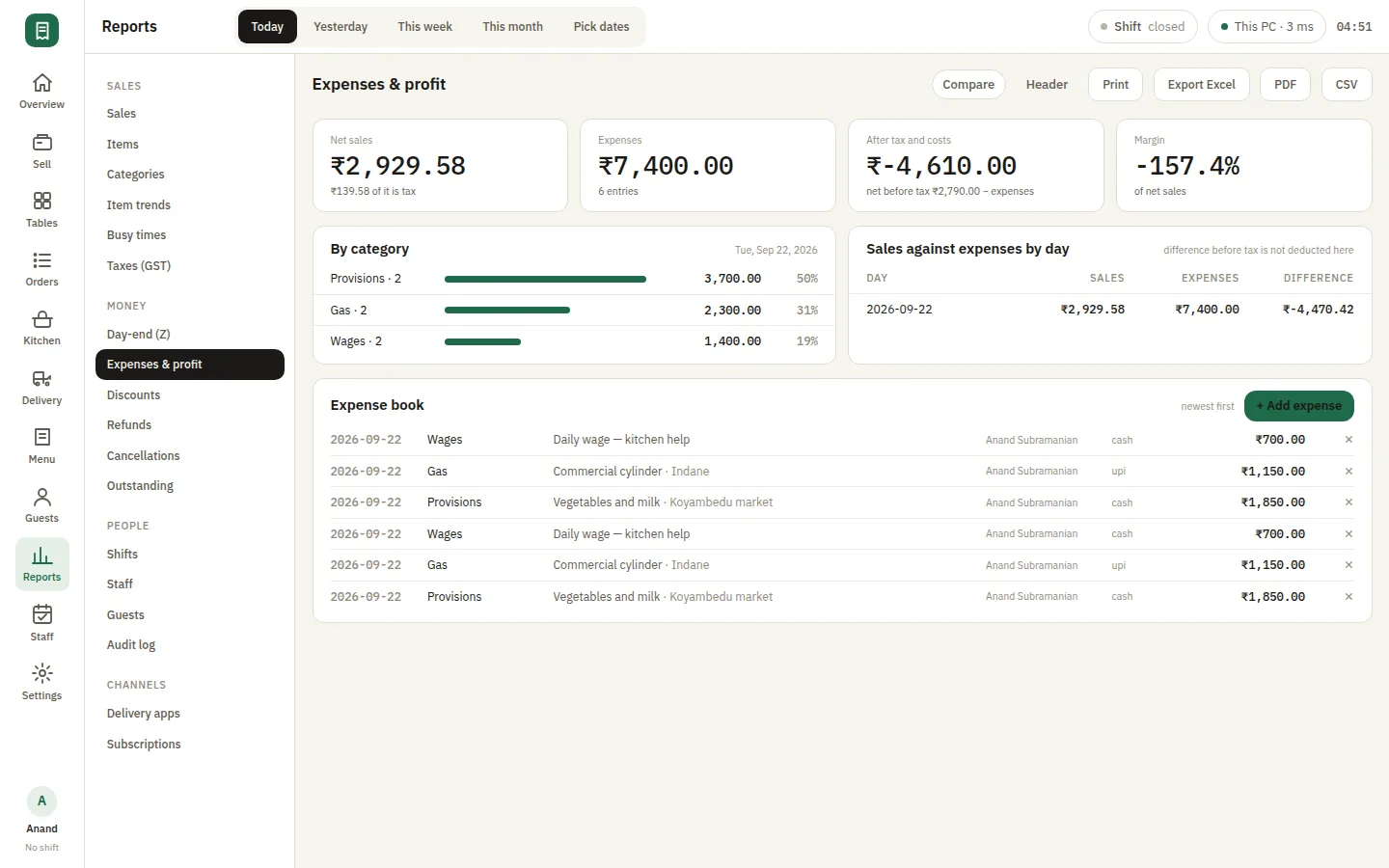
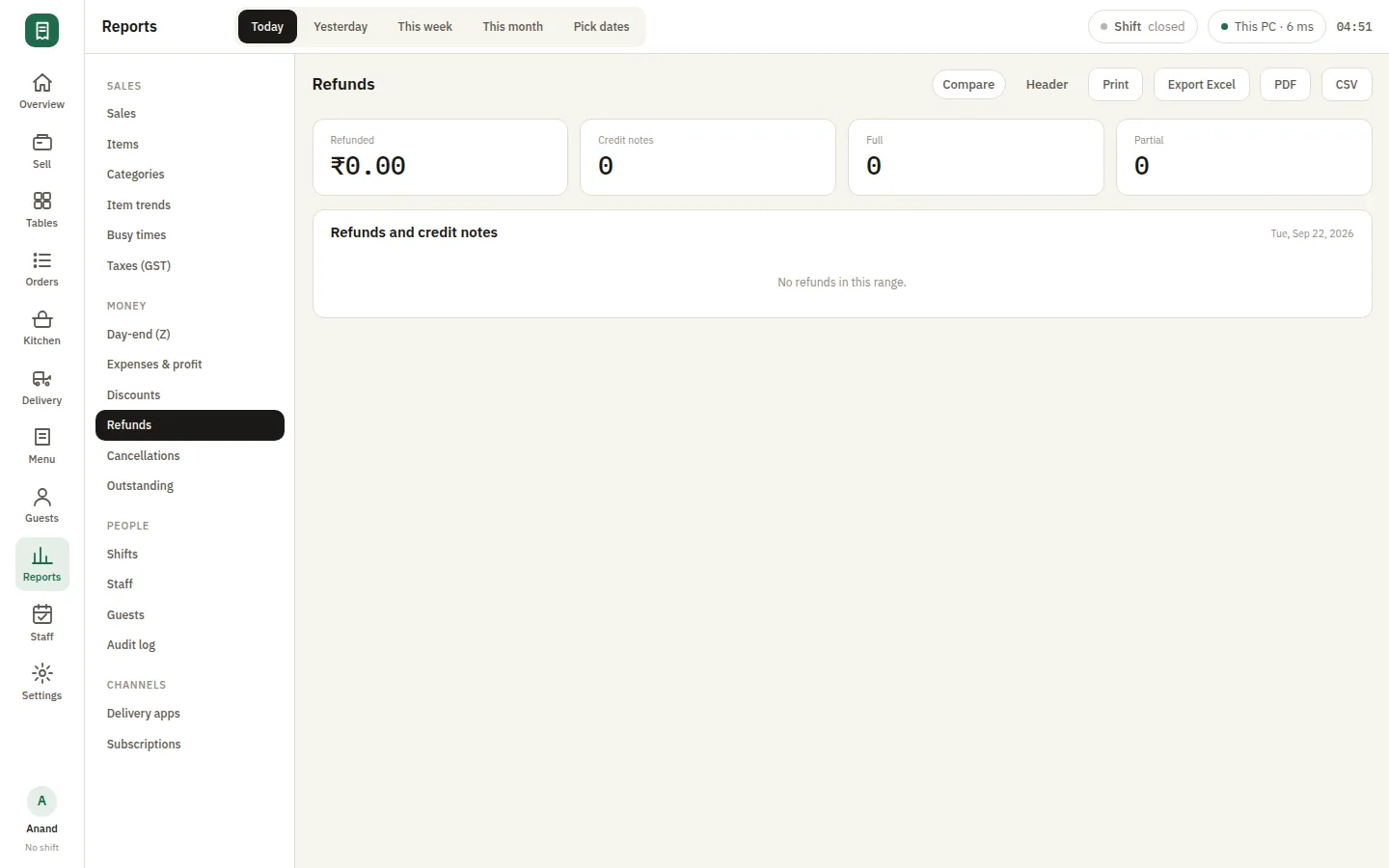
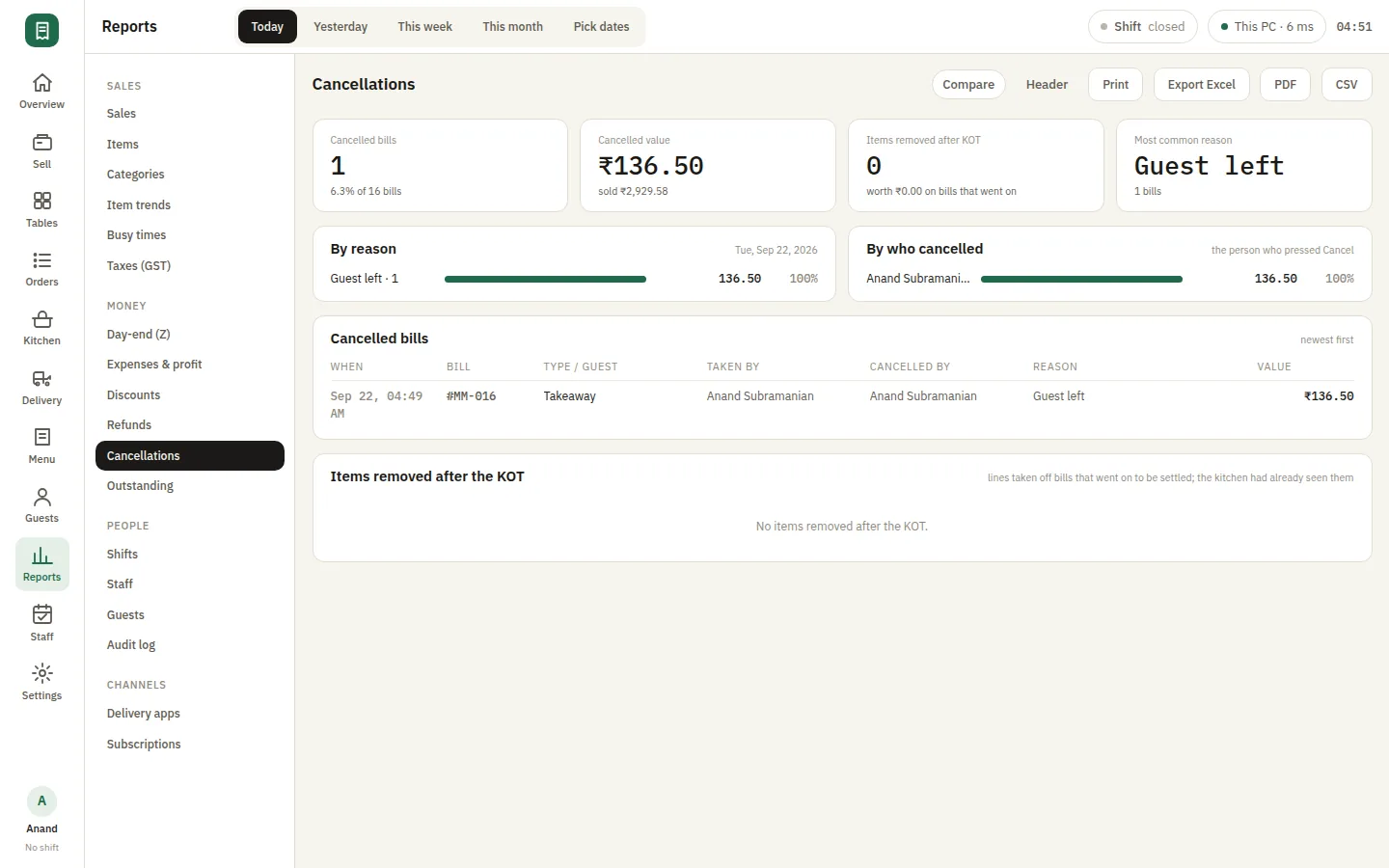
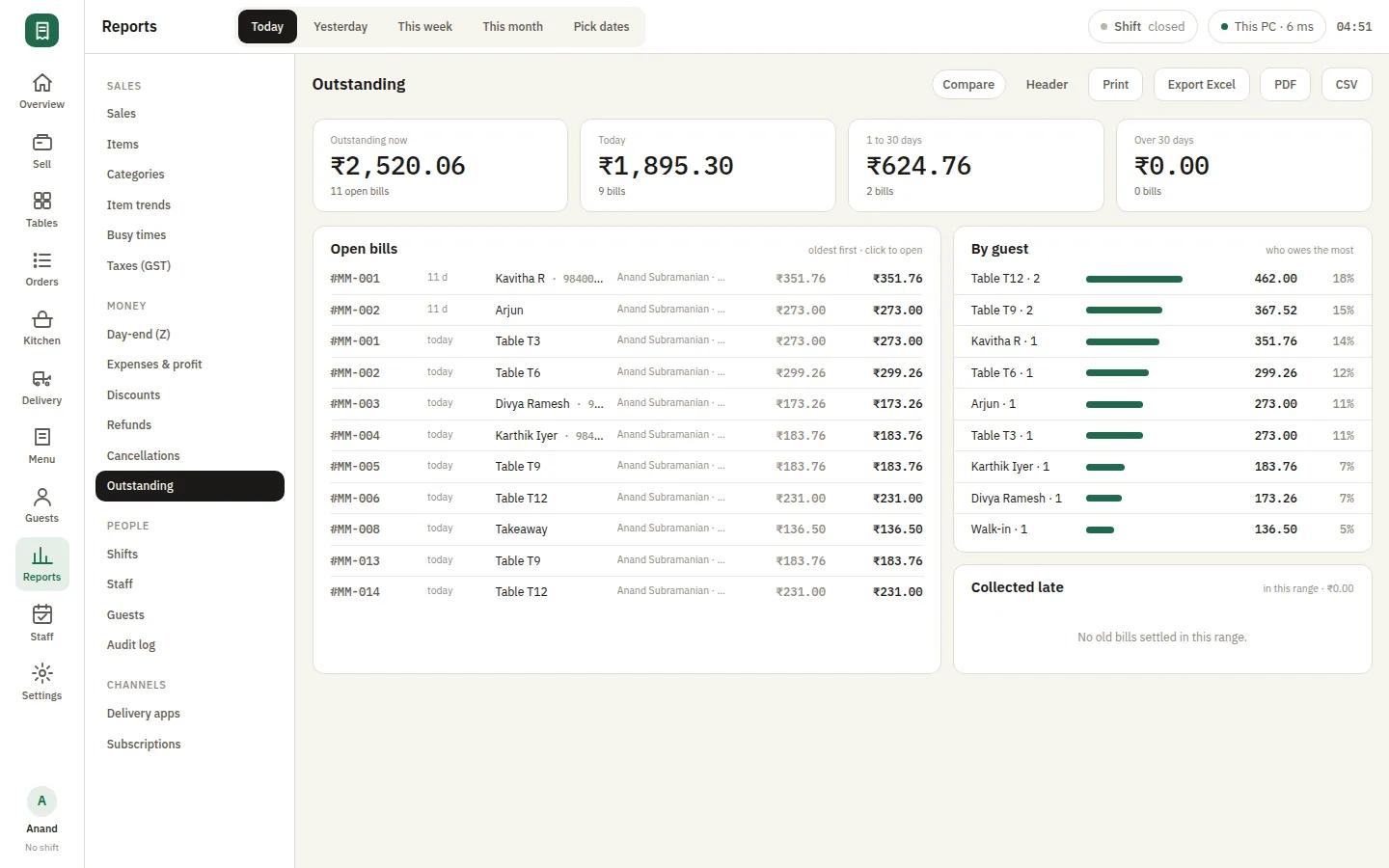
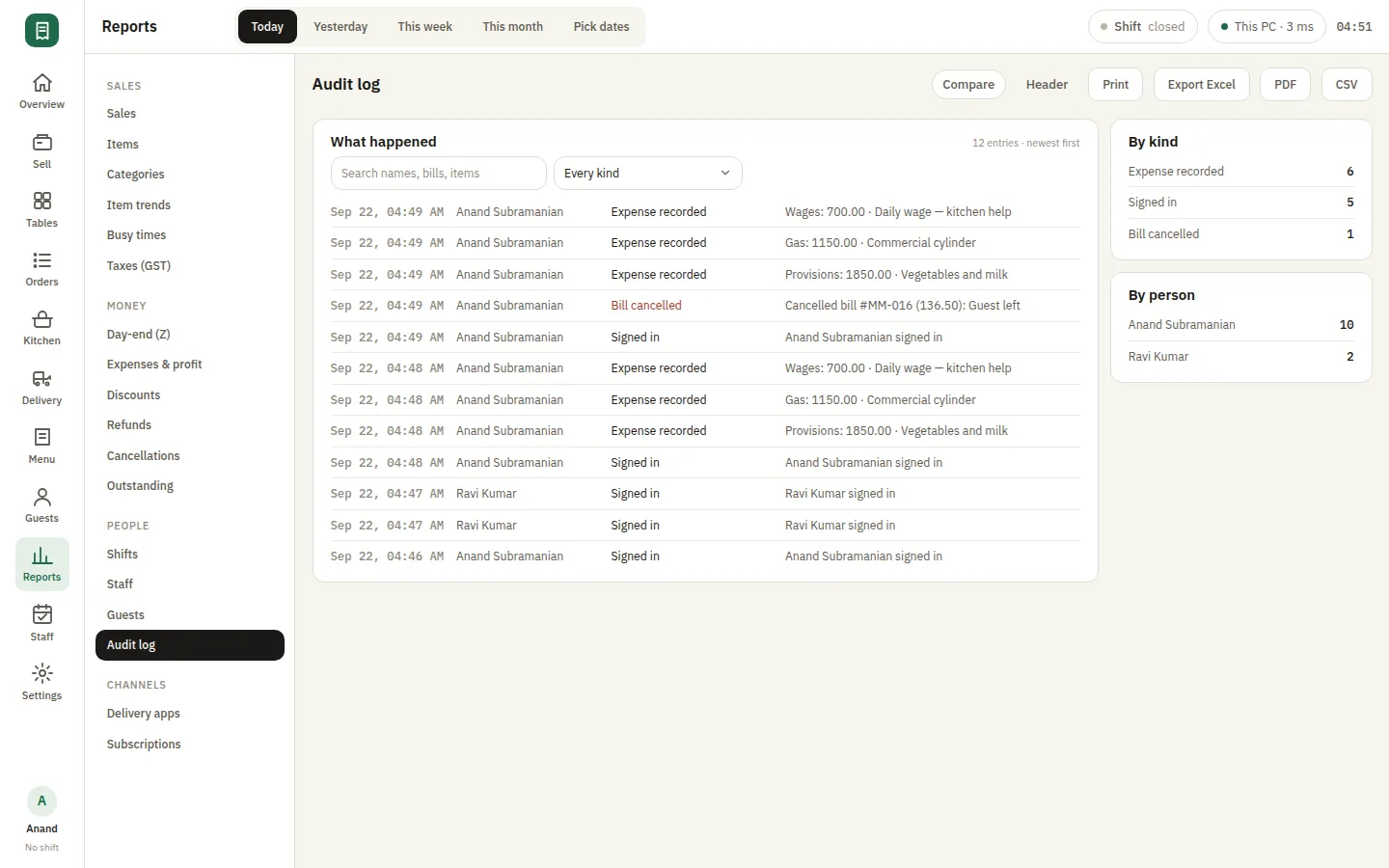
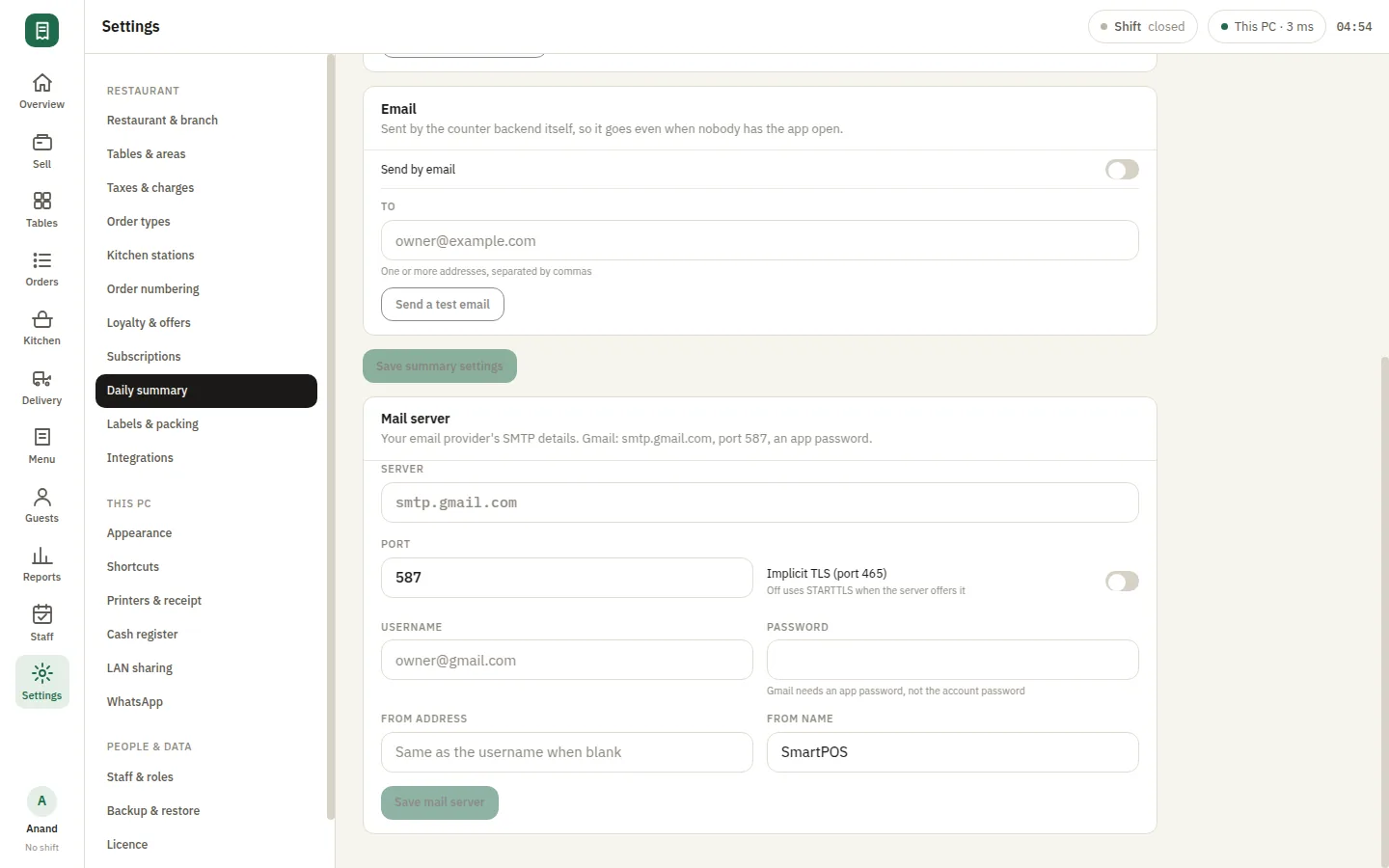
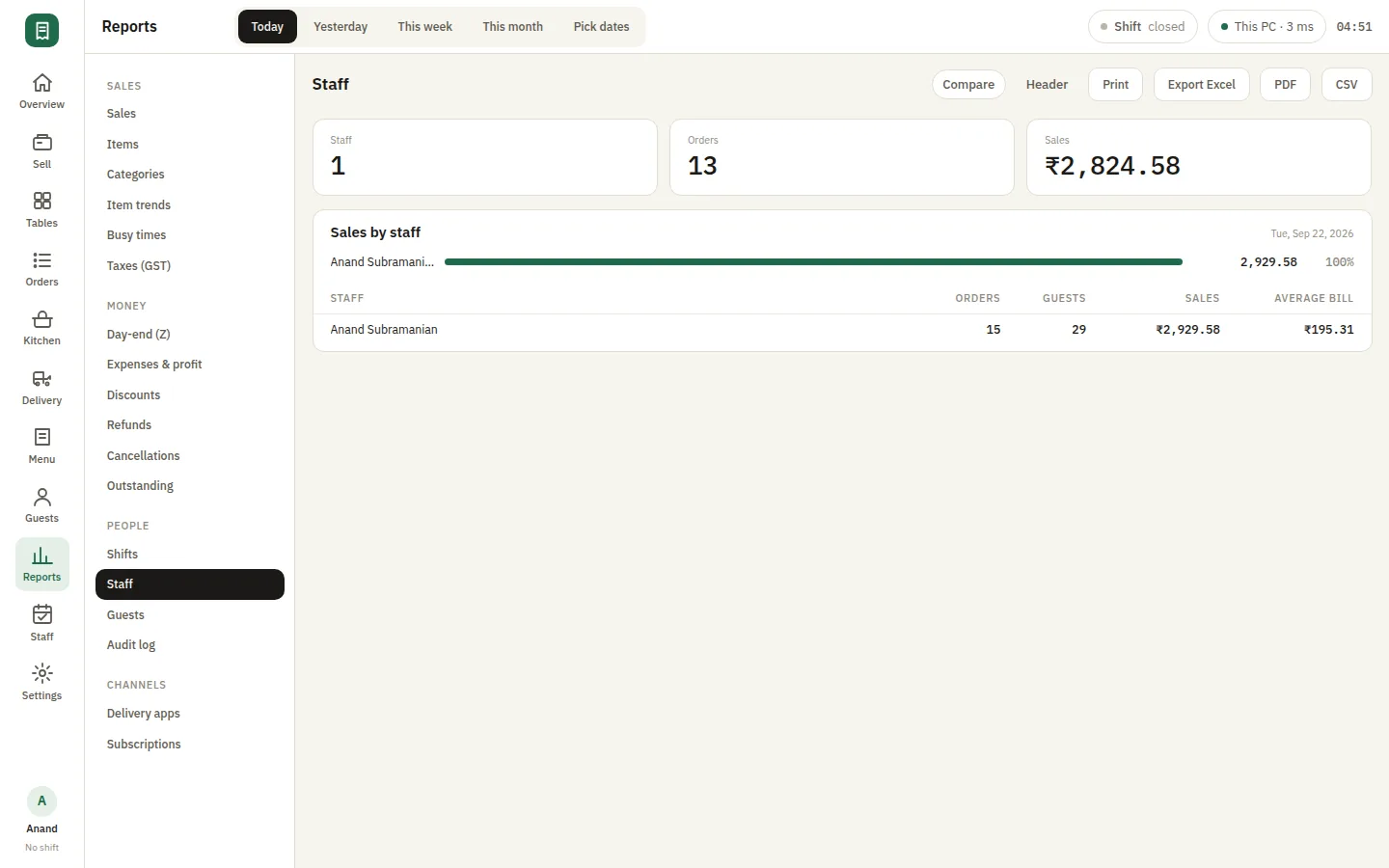
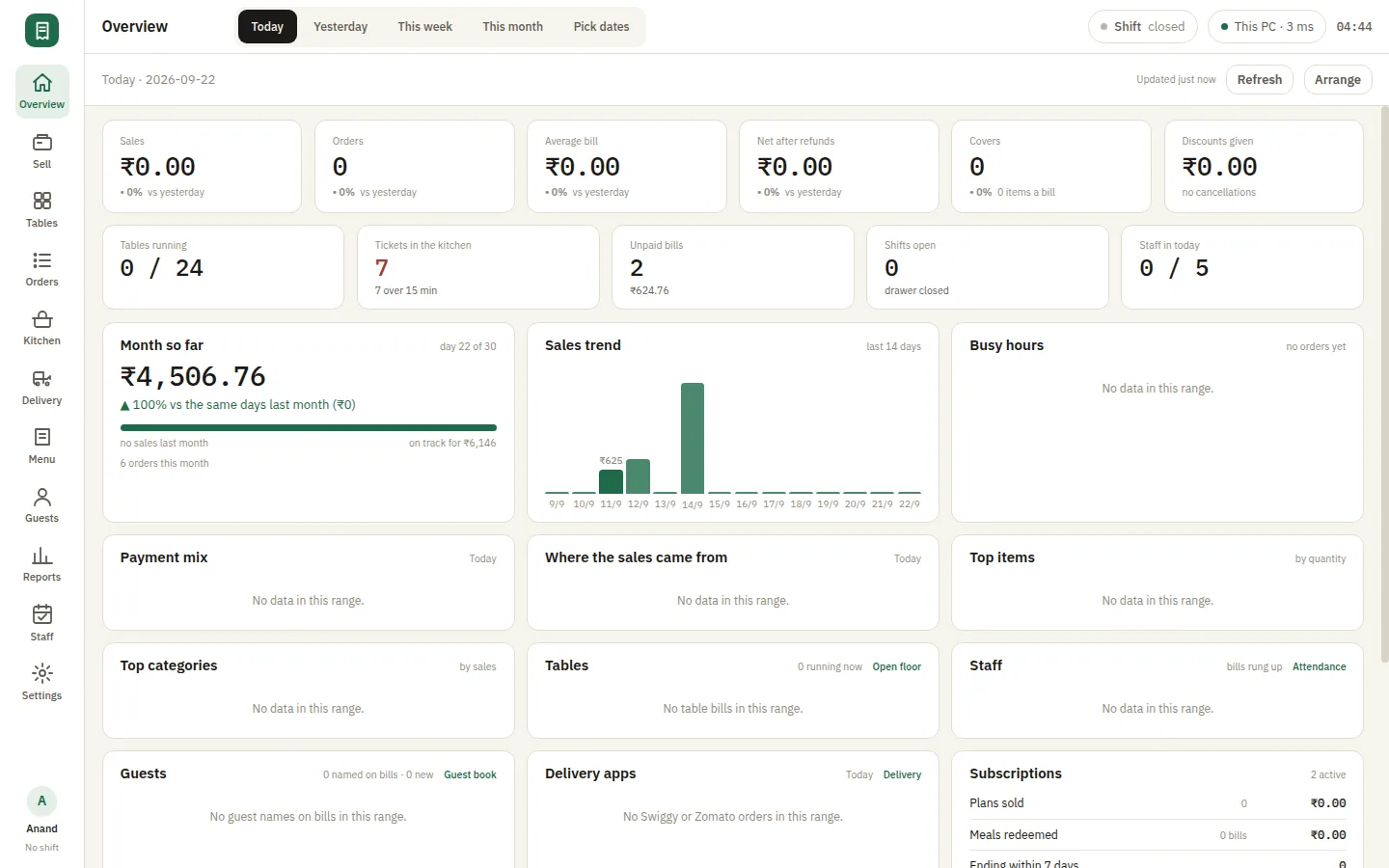
Sales by day, by item, by category and by hour; GST summaries ready for filing; day-end Z reports; discounts, refunds, cancellations and outstanding balances; performance by staff member and by guest. Every report is generated on the counter PC from your own data and exports when you want a copy. An audit log records who changed what, and a daily summary can land in your inbox without your books leaving the restaurant.


Turn on LAN sharing and your waiters open the ordering screen on their own phone over the restaurant's Wi-Fi — no app store, no handheld terminals to buy, no internet. They see the floor, open a table, add items and send the KOT straight to the kitchen from where the guest is sitting. Orders reach the counter the moment they are placed, which removes the walk back to the till and the order pad it replaced.
On a multi-counter licence a second Windows PC joins the same restaurant over your network, sharing one menu, one guest list and one run of bill numbers. Both counters bill at once, and a queue at the door becomes two queues moving. There is no server to rent and no cloud in the middle — the counter PC is the hub, and the second terminal talks to it across the LAN you already have.


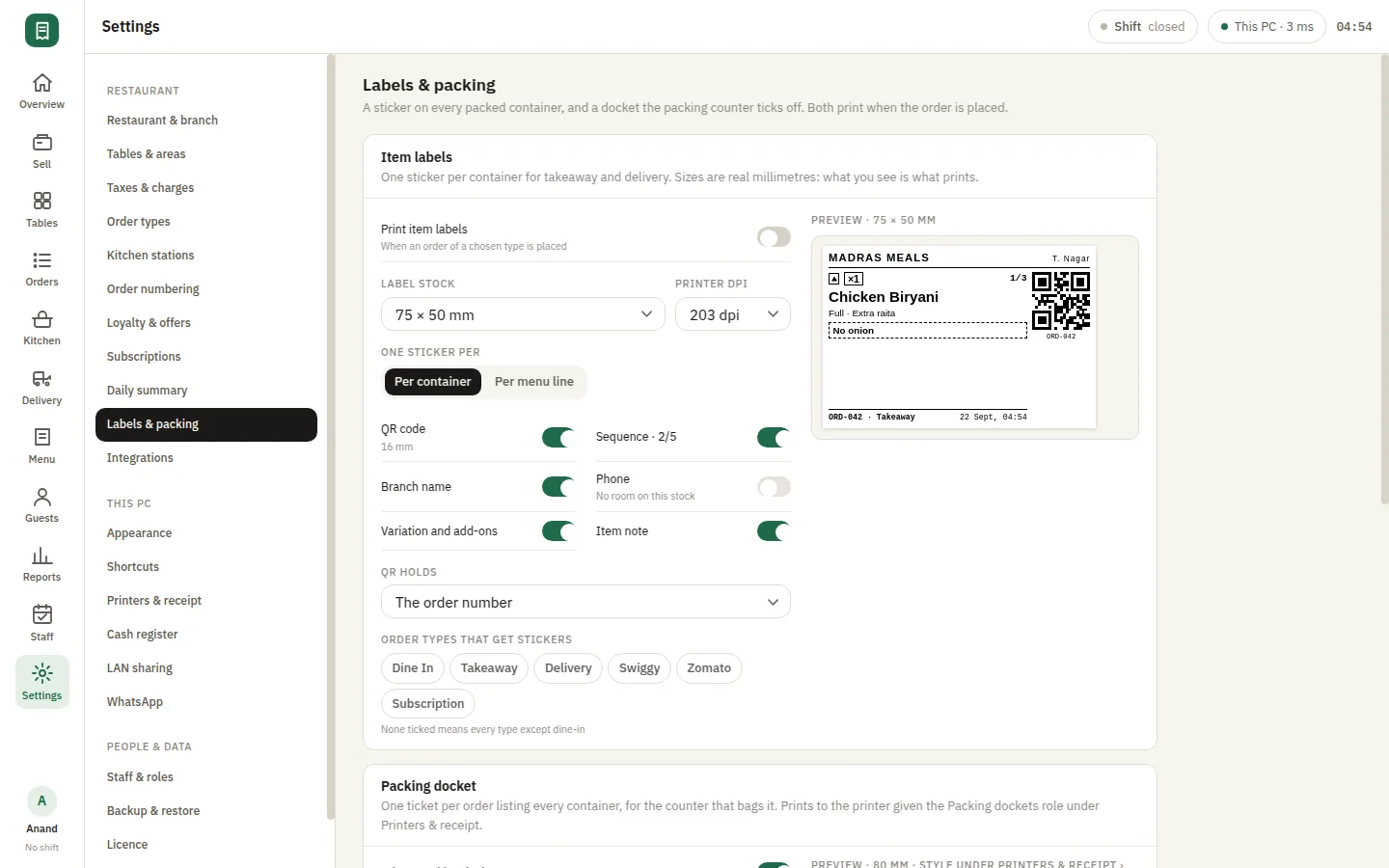
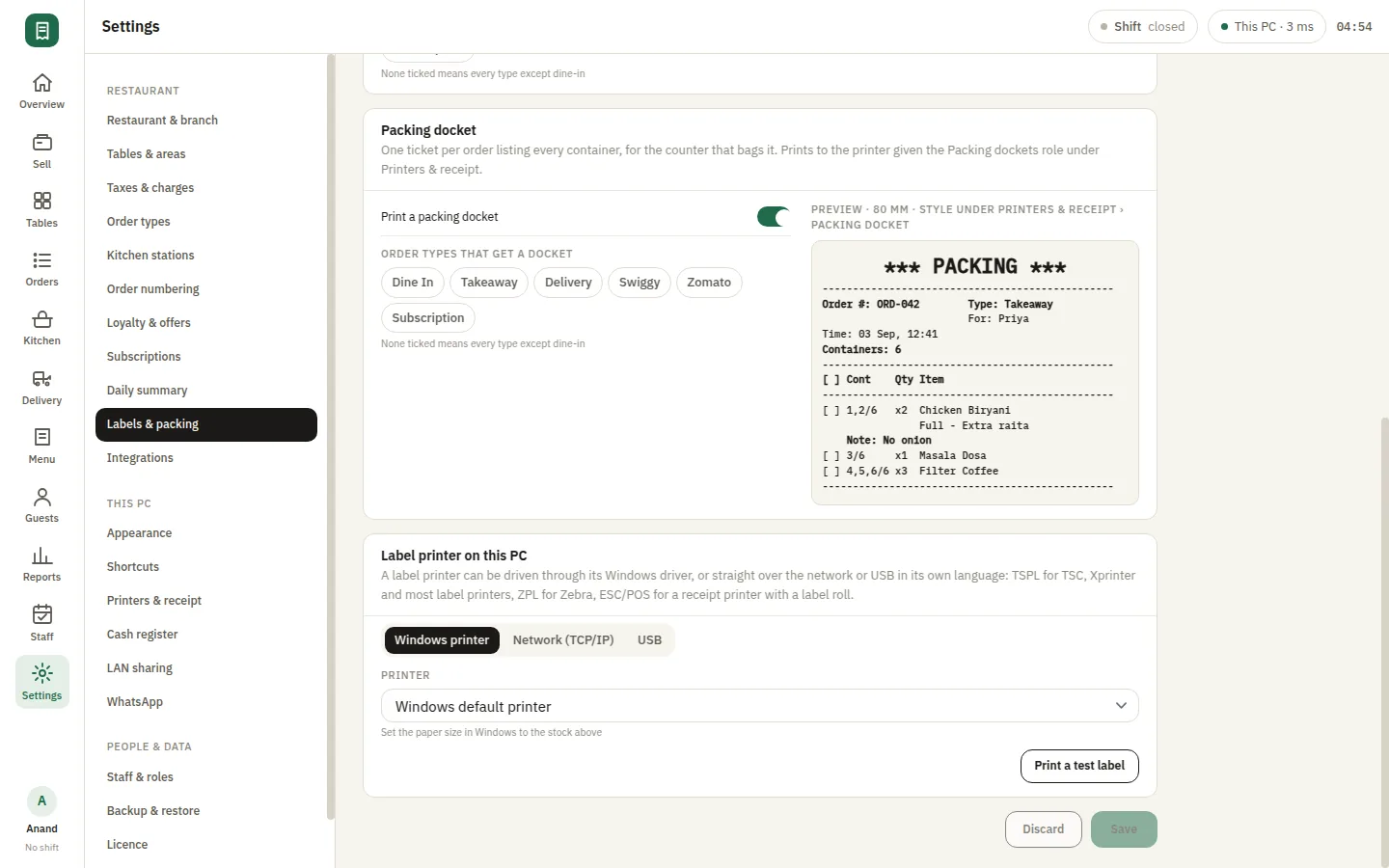
Print stickers and labels for packed items straight from the order, so a delivery bag or a counter pickup carries what it is and who it belongs to. For a cloud kitchen or a bakery running several orders at once, a printed label is the difference between a smooth handover and a wrong bag going out of the door — and it prints from the same counter PC as the bill.
The packing station prints a docket per order for whoever is assembling it, listing what should be in the bag before it is sealed. It keeps the packing bench working from paper that matches the bill rather than from the kitchen's copy, which is where items usually go missing on a busy delivery night.


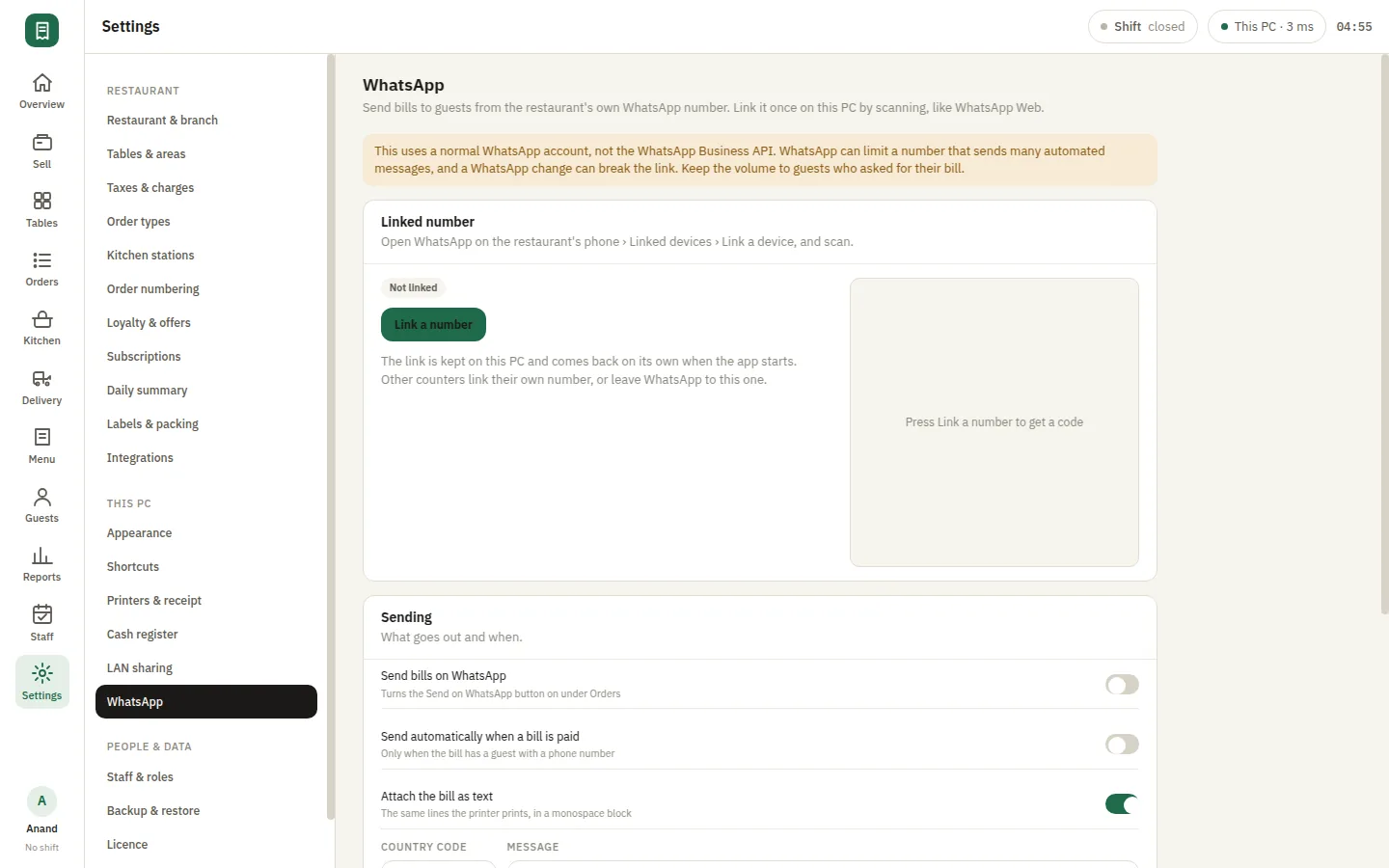
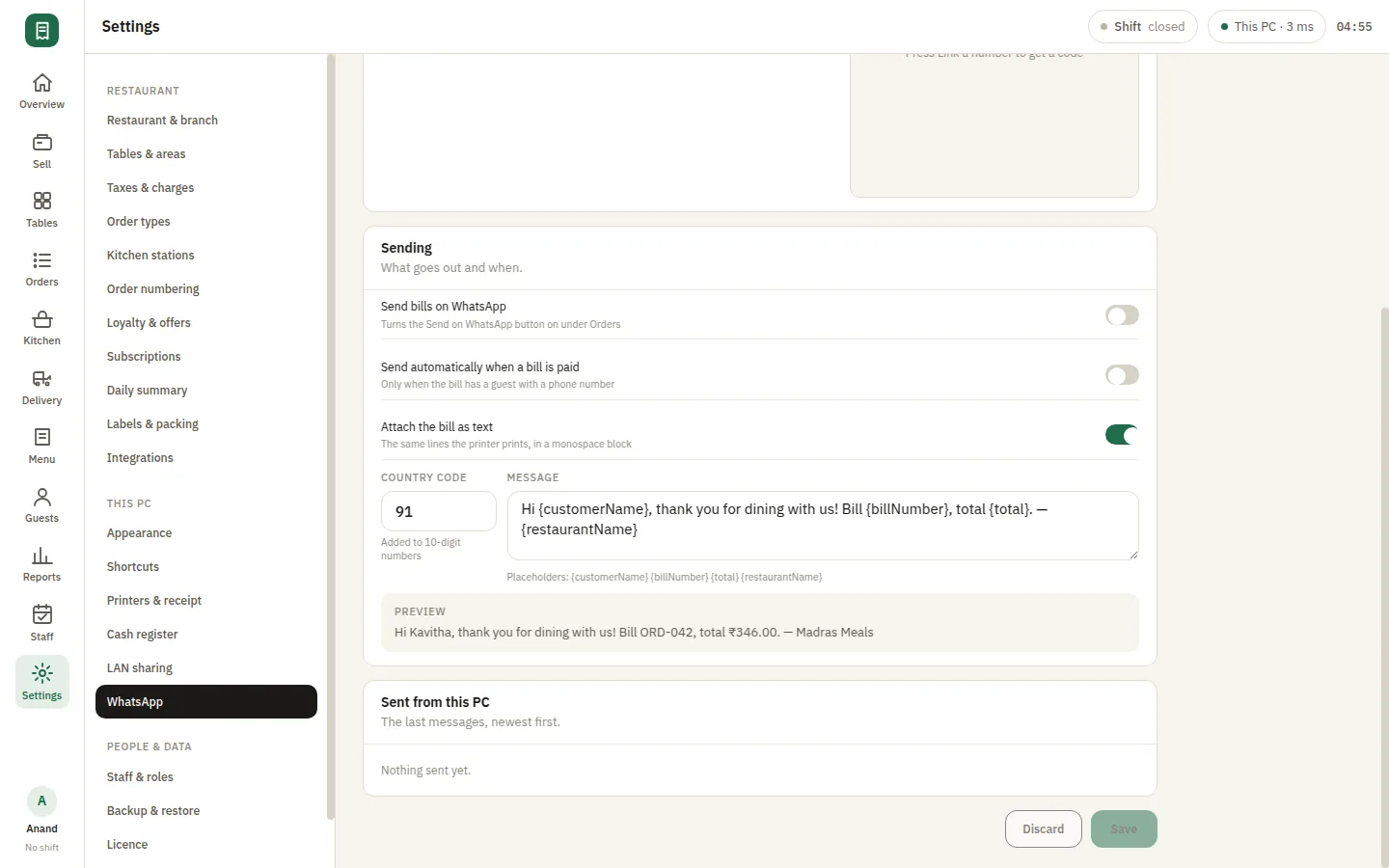
Send a bill to a guest on WhatsApp from the restaurant's own number, rather than through a bulk-messaging service that puts your customers on someone else's list. The guest gets the receipt on the app they already use, and you keep a paperless bill without paying per message to a marketing platform.
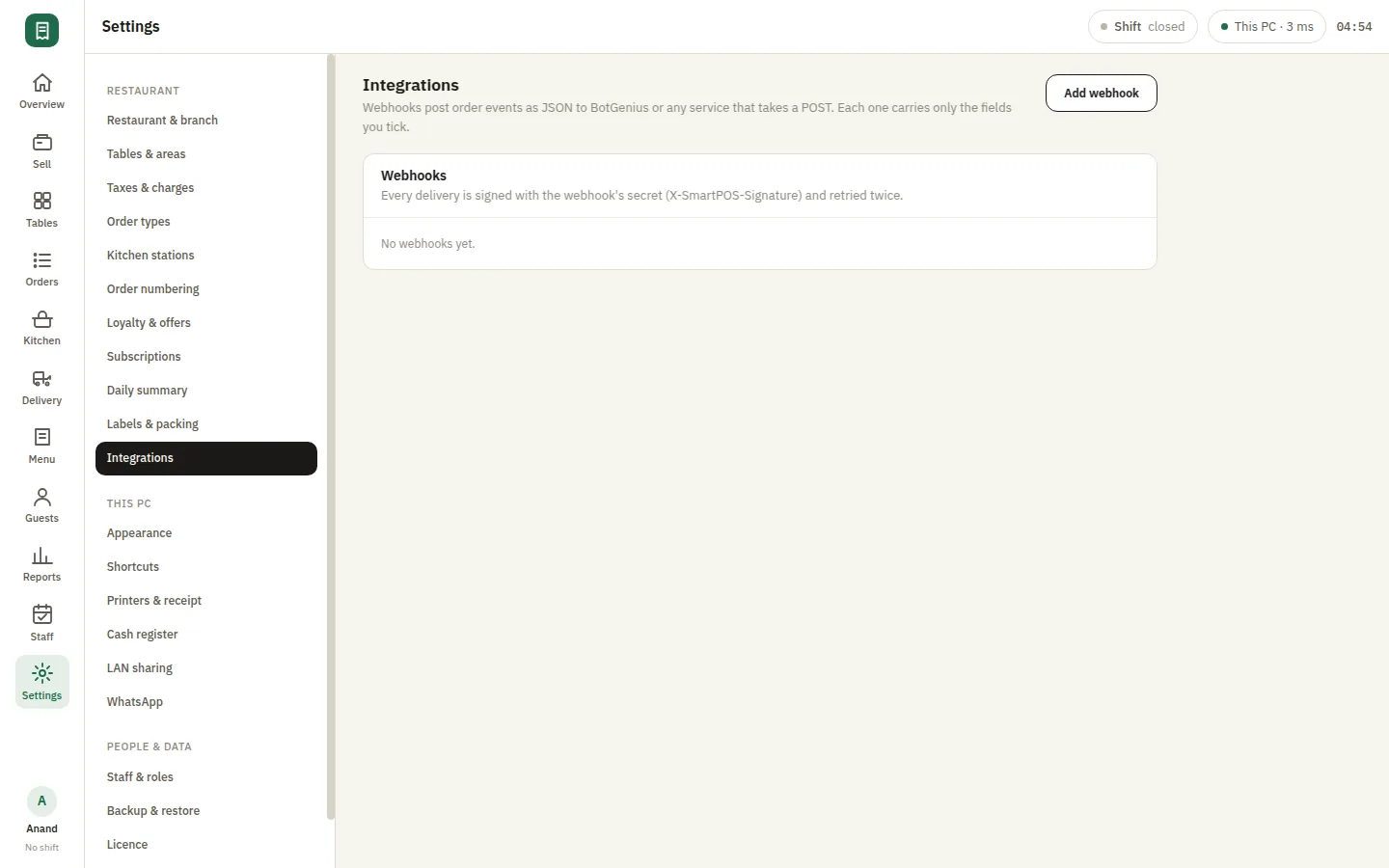
Webhooks push order events out to BotGenius or any other service you run, so SmartPOS staying on your own PC does not mean it cannot talk to the rest of your setup. You decide the endpoint and what listens at the other end, which keeps an integration something you own rather than something the POS vendor sells you access to.

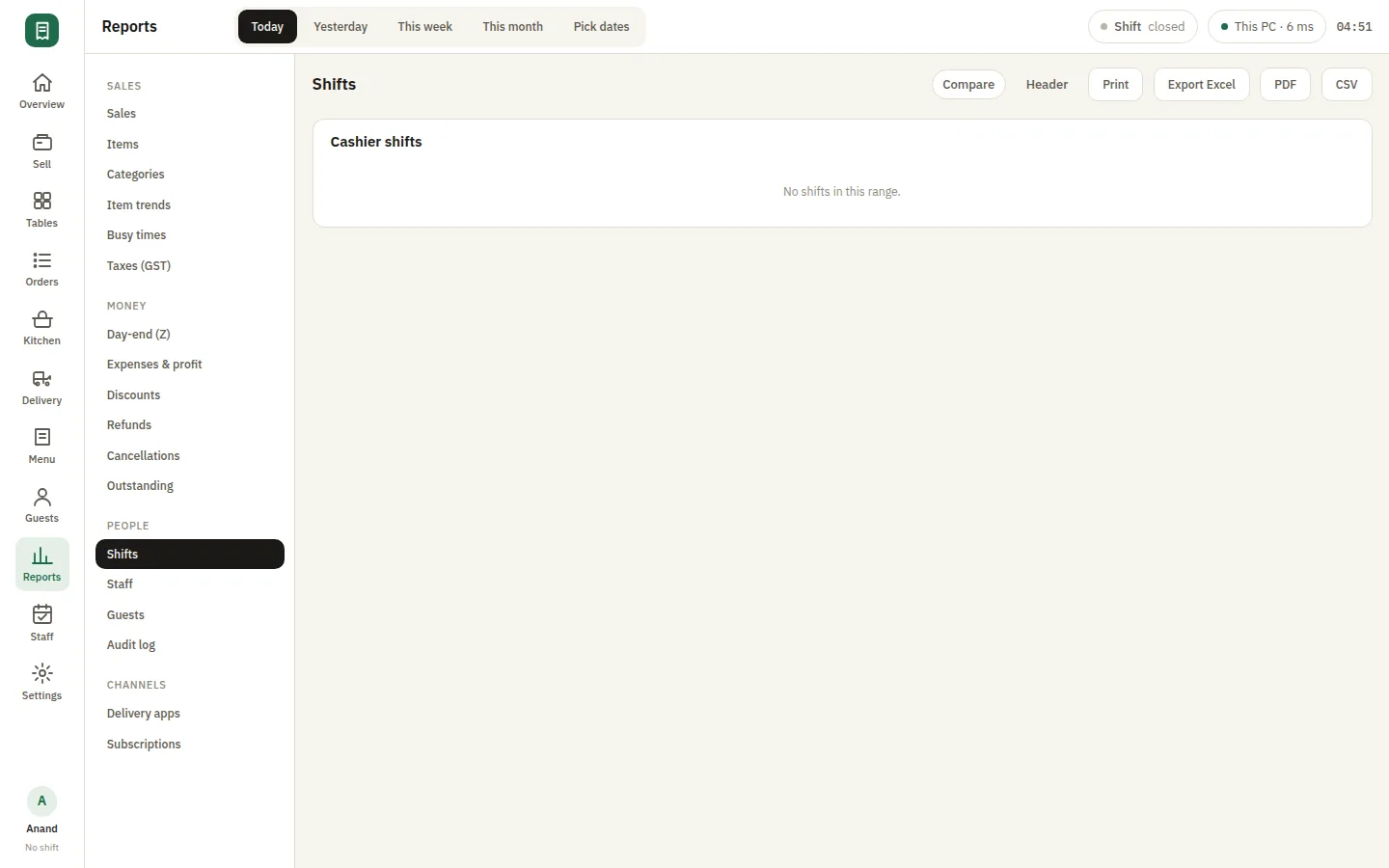
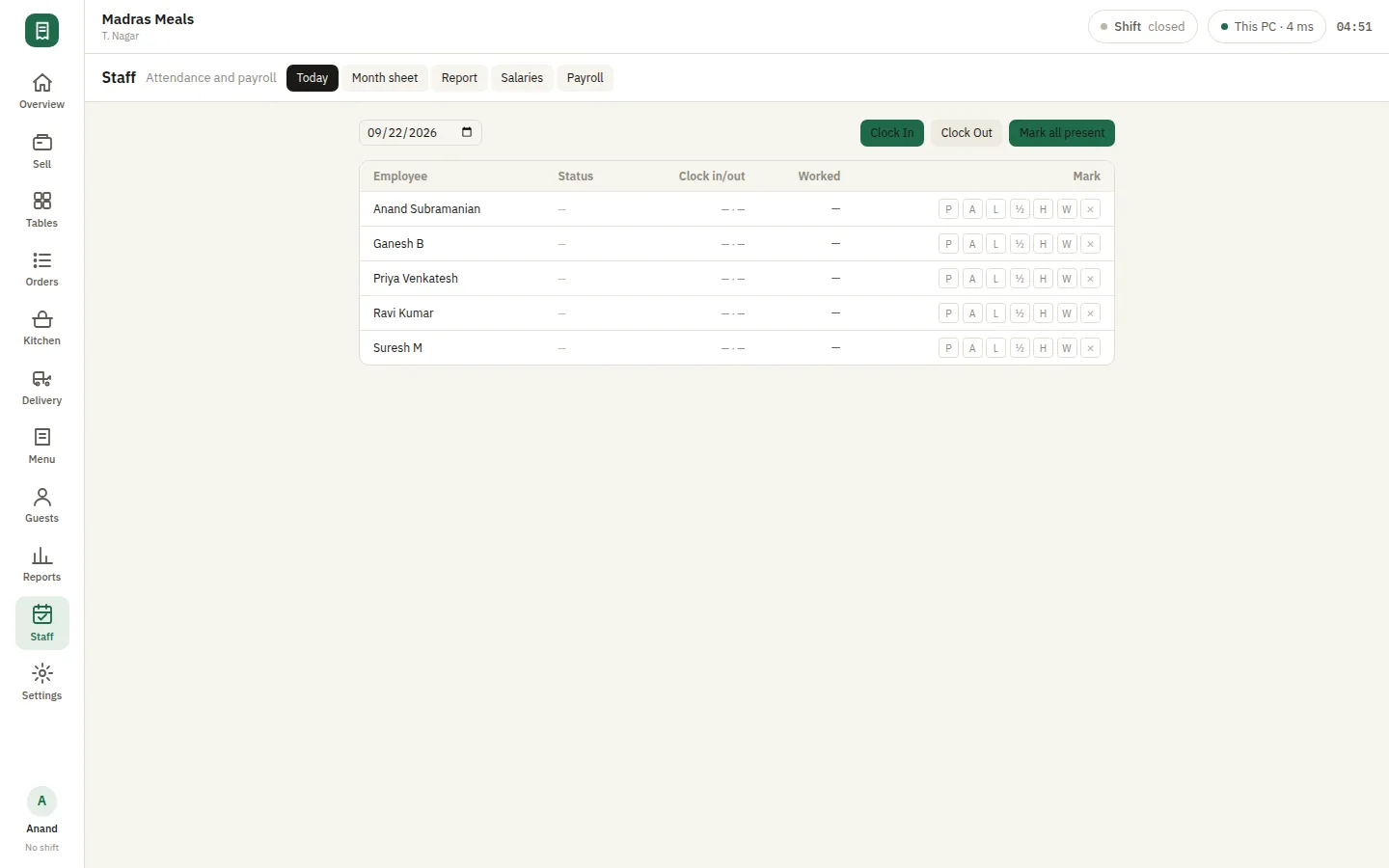
Mark daily attendance for your staff, build the month sheet from it, and run salaries, payroll periods and payslips without a second piece of software. For a restaurant where the manager is also the HR department, keeping attendance next to the till means the hours a person actually worked and the money they are paid come from the same record.
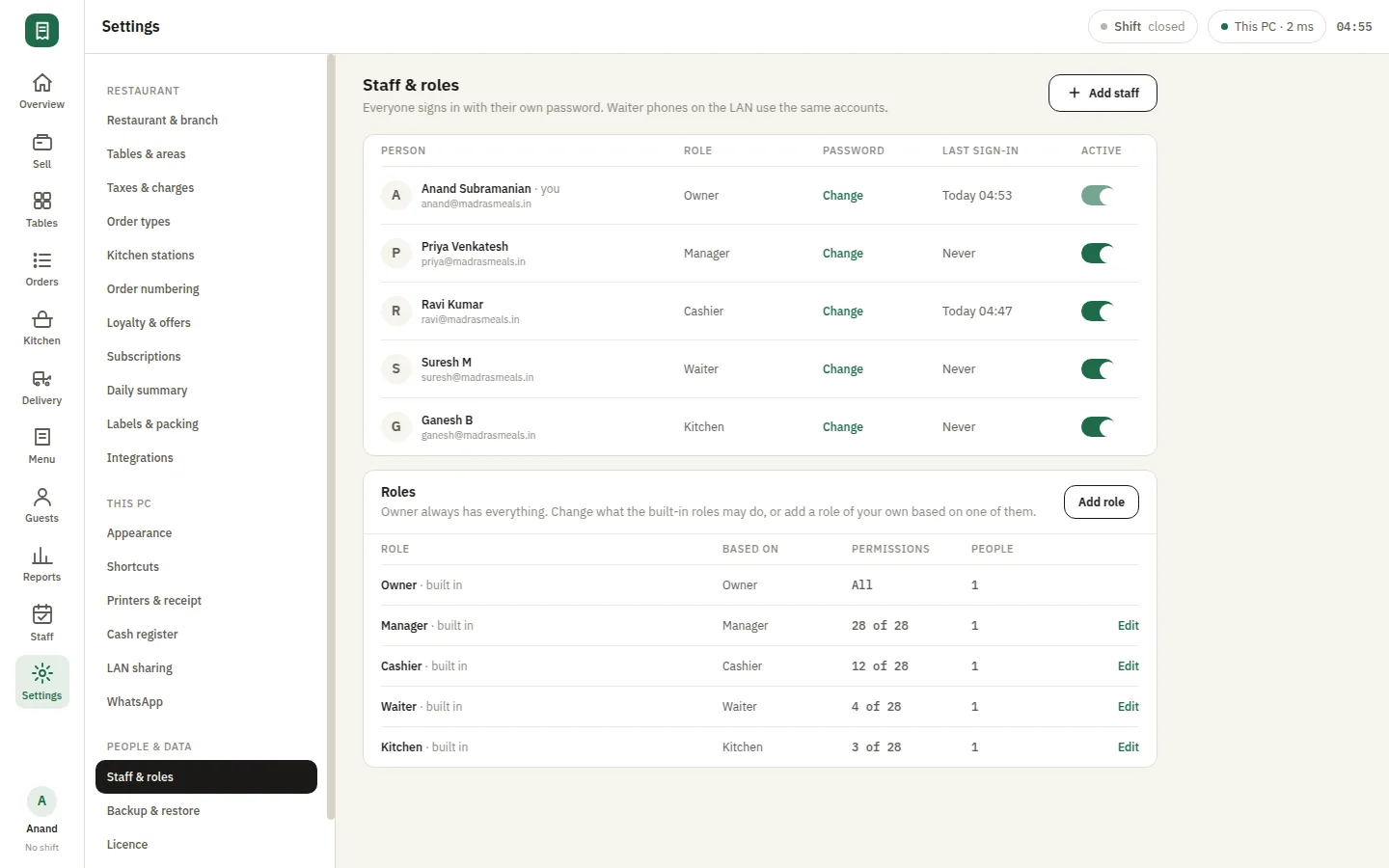
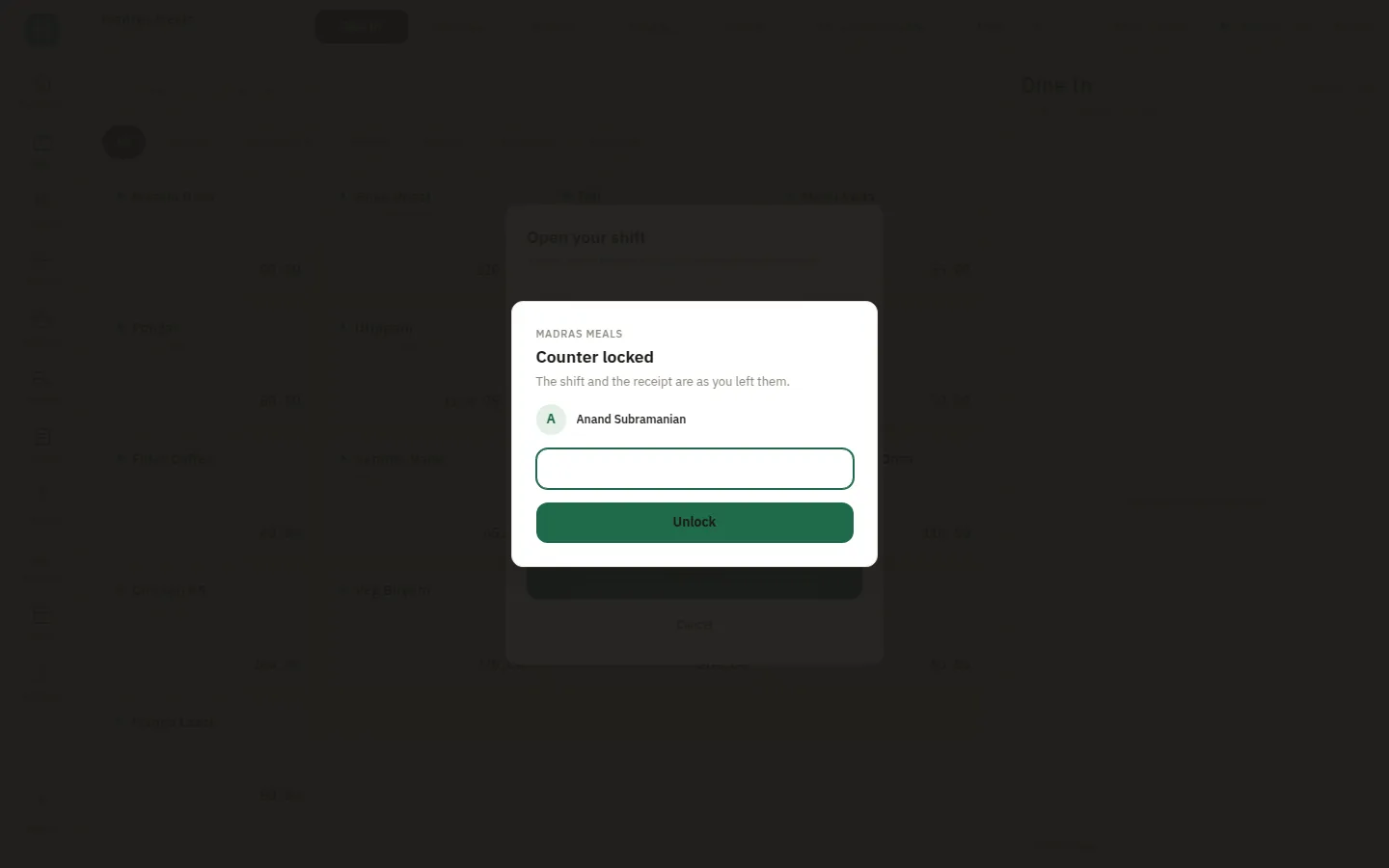
Give every person at the counter their own login, with owner, manager, cashier and waiter roles deciding what each can reach. Ctrl+L locks the terminal between cashiers without ending the shift or losing the bill on screen. Because every sale, discount and cancellation is recorded against the person who made it, the staff report and the audit log answer questions that are otherwise a matter of memory.


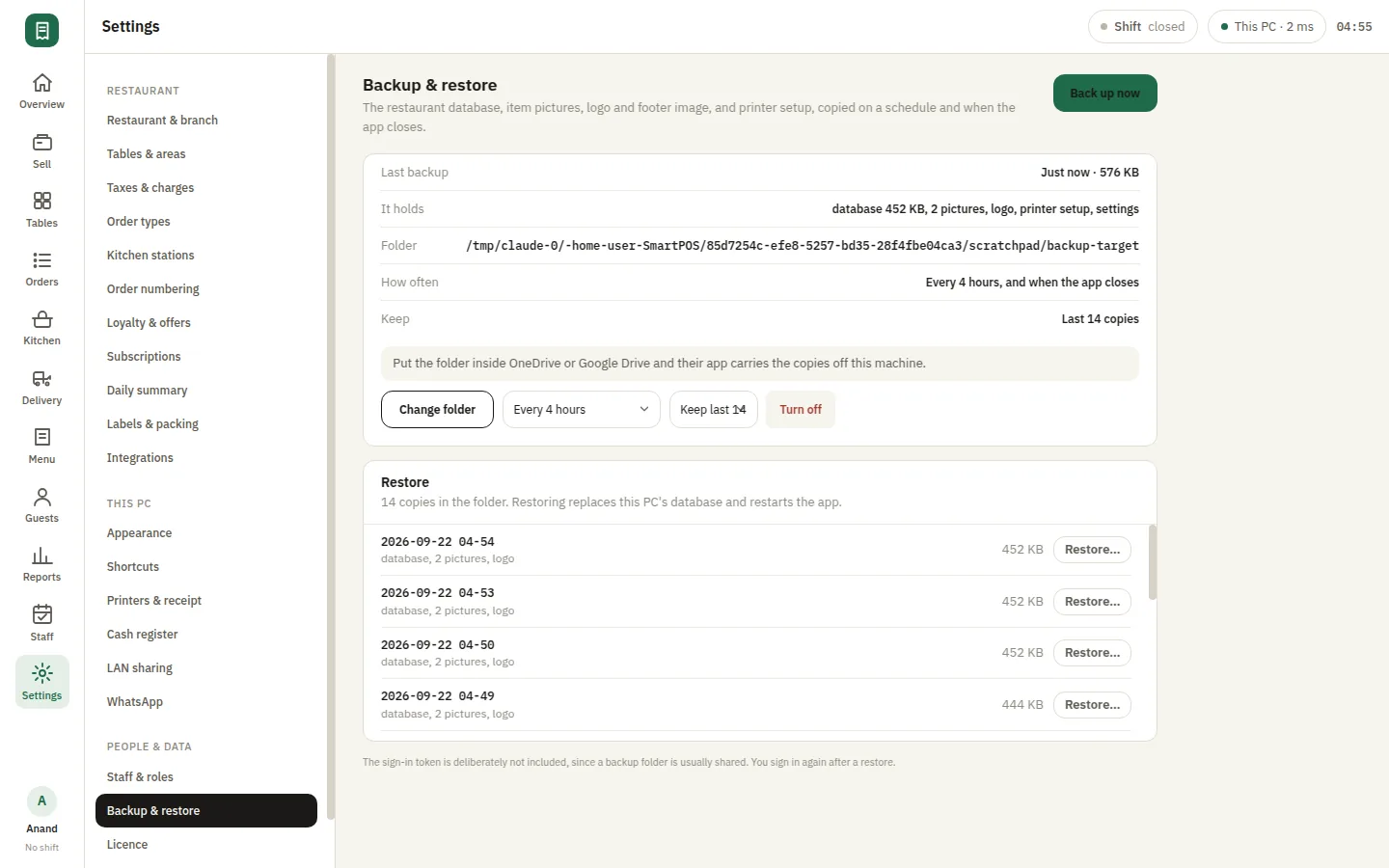
Schedule backups of the whole restaurant — orders, menu, guests, staff — to a folder on the machine or one a sync client picks up, and restore from one if a PC has to be rebuilt. Holding your own data means holding your own backups, so this is the part worth setting up on day one rather than the week after you need it.
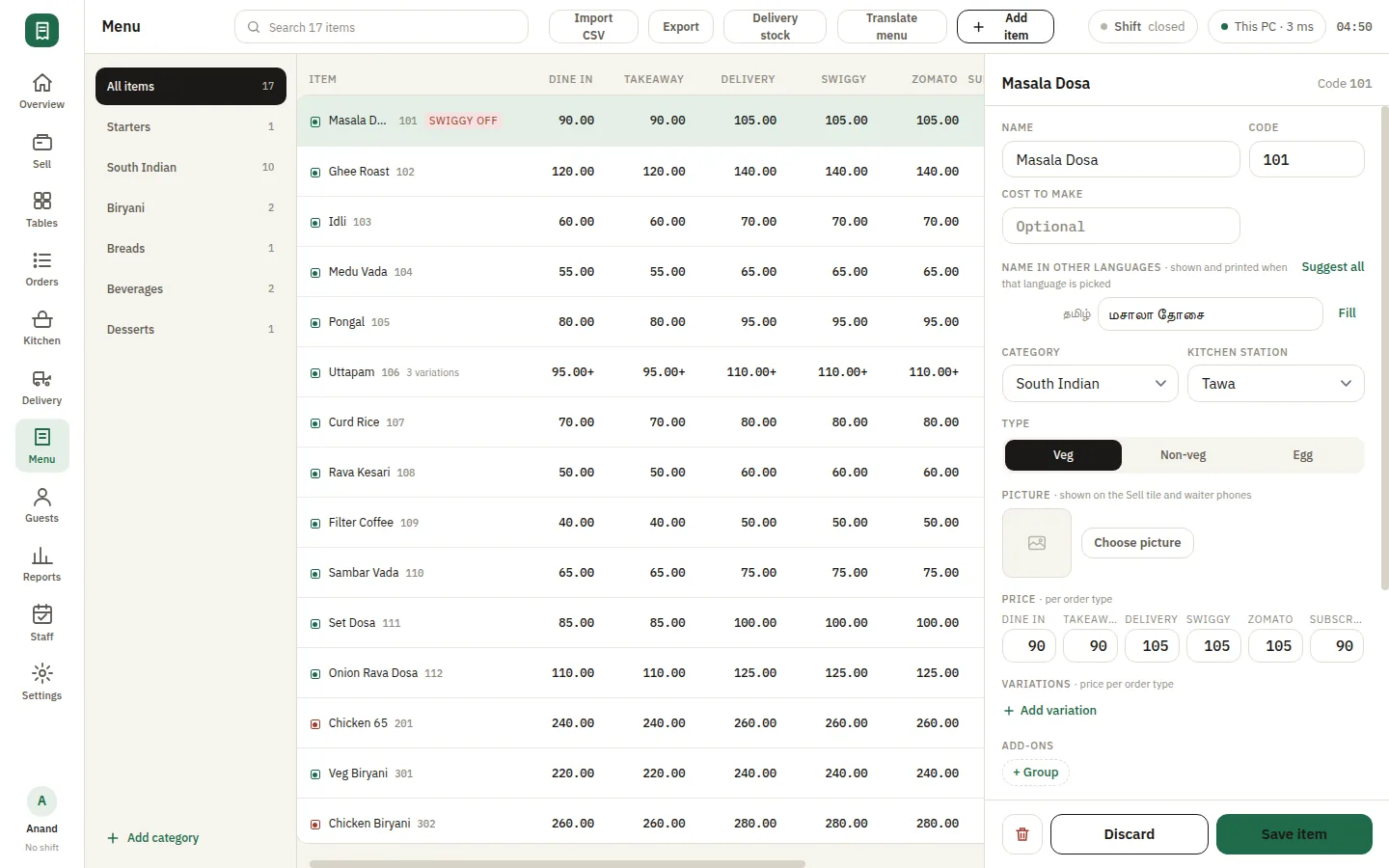
Every screen of the app, captured against a demo restaurant with a full day of trading in it. Pick a module, then click any picture to enlarge.


Yes for the work you do every day. Billing, KOTs, printing, tables, reports and the waiter phones all run on your own PC and your own Wi-Fi, with no internet at all. The internet is needed once when you activate the licence, and the counter re-checks the licence when it can reach us.
No. SmartPOS is a one-time licence for the restaurant. Optional yearly maintenance covers updates and support.
In a database file on the counter PC, under the app's own data folder. Orders, bills, guests and staff records are never uploaded. There is no analytics, crash reporting or telemetry in SmartPOS.
Yes, over your own Wi-Fi with no internet. Turn on LAN sharing and waiters open the waiter app on their phone. A tablet at the pass can show the kitchen screen, and a second screen at the counter can show the customer display.
Yes, on a multi-counter licence. A second Windows PC on the same network shares the same restaurant, menu and bill numbering.
Desktop POS is part of cloud RestoPOS: it signs in to your cloud account, syncs with the mobile, captain and kitchen apps, and lets you watch the outlet from your phone. SmartPOS has no cloud account at all — everything stays on the counter PC. They are separate products, and you choose the one that fits how you want to run.
A Windows PC at the counter, and a thermal printer over USB or your network. Waiter phones and the kitchen screen need only your own Wi-Fi.
Start your 14-day free trial today. Free onboarding, no setup fees, cancel anytime.
👋 Welcome! Let's get started
Fill in your details to start chatting with our assistant.